
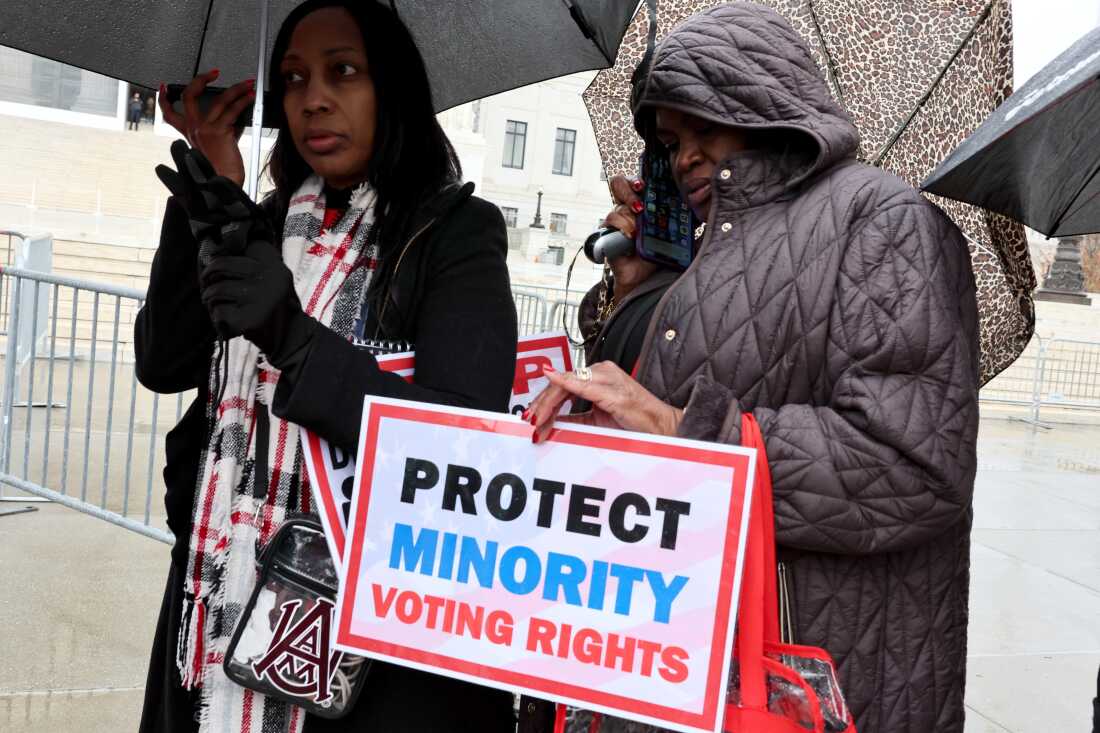
In 2025, held outside the U.S. Supreme Court in Washington, D.C., demonstrators displayed a sign demanding the protection of minority voting rights. The Supreme Court recently declined to review a lower court ruling, impacting the Voting Rights Act. This decision sustains a prior ruling from an appeals panel, which restricts the ability of private citizens and groups to enforce a specific section of the Act in seven states, primarily in the Midwest.
The states affected by this decision are those within the jurisdiction of the 8th U.S. Circuit Court of Appeals: Arkansas, Iowa, Minnesota, Missouri, Nebraska, North Dakota, and South Dakota. This ruling specifically states that private individuals and organizations lack the standing to sue under Section 208 of the Voting Rights Act. Section 208 typically permits voters needing assistance, due to disabilities or literacy issues, to receive help from a person they choose.
This move by the Supreme Court occurred nearly two months after issuing another significant ruling weakening the Voting Rights Act. In May, the court’s conservative majority chose not to address what is described as the “private right of action,” leading to additional challenges for minority voters in redistricting cases across the nation. Historically, enforcement of the Voting Rights Act has relied heavily on lawsuits from private parties.
The latest case originated from Arkansas United, an immigrant advocacy group that fought against a state law banning non-poll workers from assisting more than six voters. Arkansas United argued this violated Section 208, as they have provided Spanish-language translators at voting sites for voters with limited English proficiency. In 2022, a federal judge ruled in favor of Arkansas United; however, after state officials appealed, the 8th Circuit panel determined that private groups could not file such lawsuits.
Currently, the 8th Circuit is the only federal appeals court that has deviated from long-standing precedent regarding this legal issue. The implications of this interpretation of voting rights law could lead to a significant reduction in lawsuits due to limited Justice Department resources and changing political landscapes.