
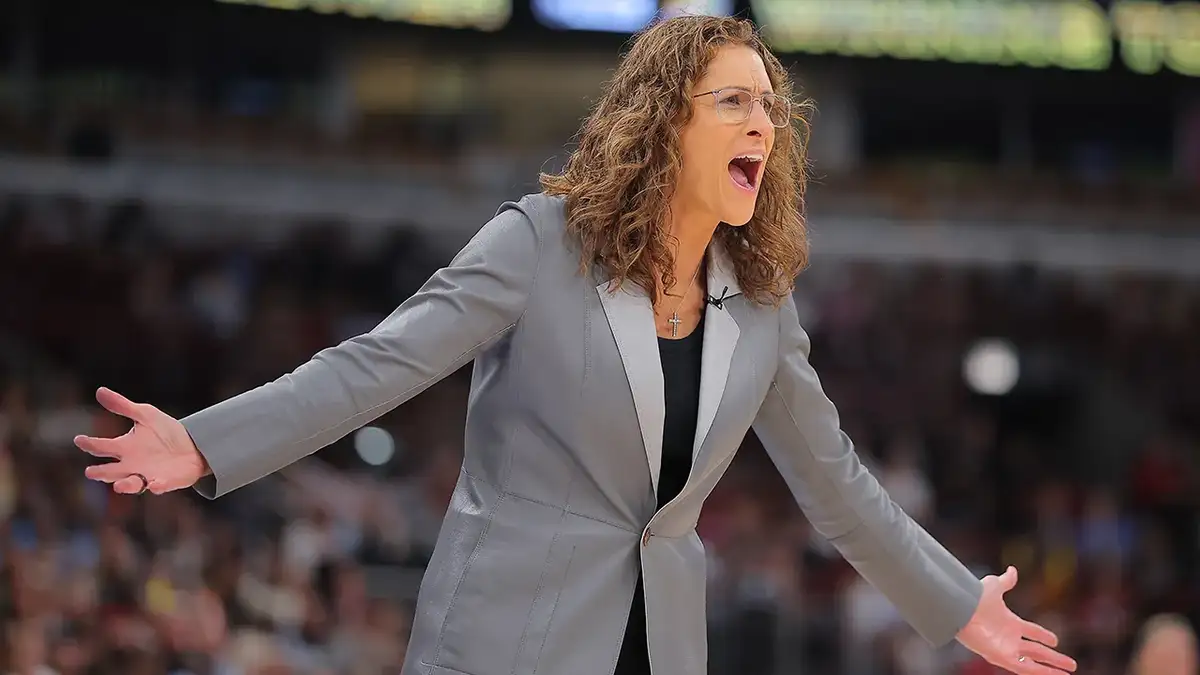
Stephanie White’s Press Conference and Statement
On Tuesday night, before the Indiana Fever faced the New York Liberty, head coach Stephanie White delivered a profound statement. She addressed issues of “hate,” “fear mongering,” and “divisiveness,” which she claims threaten to “hijack” the WNBA. White’s presentation included strong language and a dramatic exit from the press conference room without entertaining questions.
Immediate Media Reception
White’s words drew prompt acclaim from ESPN analysts and reporters. Her message was described as “passionate,” “important,” and “impassioned” by many, emphasizing her honesty and commitment to fostering love in contrast to those allegedly fueled by hatred.
The Context of White’s Reaction
White faced criticism over her response to a tough foul on player Sophie Cunningham during a previous game. She explained her initial reaction, stating she missed the incident in real time and only reviewed it post-game. Her statement on Tuesday aimed to clarify her stance and firmly oppose the divisive actions impacting the league.
“The hate, the fear mongering, the divisiveness… will not win,” White proclaimed, underscoring the unity she hopes to champion.
Media Interpretation of White’s Statement
Media outlets and analysts across the board quickly labeled White’s statement as significant. From ESPN’s Chiney Ogwumike describing her actions as an “impassioned plea” to emphasize love, to questioning the legitimacy of the criticisms against her, the coverage was largely sympathetic.
An Examination of Claims
White’s accusation of pervasive hate and division was echoed by ESPN’s coverage. Analysis by Andraya Carter and comments from other ESPN personalities suggested that the criticism White faced was fueled by hatred, although these claims lacked direct evidence.
While critics challenged her handling of player criticism, the media coverage cast any negative feedback as potentially rooted in malice.
Broadening the Discussion
Espousing love and unity, White also invoked the famous phrase, “when they go low, we go high.” This launched a broader discussion beyond basketball, reflecting the WNBA’s history of engagement with social issues. Yet, as conversations shifted, requests emerged to refocus on basketball itself.
The Changing Media Narrative
The media response, largely in defense of White, showed a shift from emphasizing issues beyond basketball to advocating a focus on the sport. This reaction highlighted the tension between sports discussion and broader societal conversations.
Conclusion
Stephanie White’s statement and the subsequent media reaction underscore the dynamic nature of discourse within the WNBA. Media coverage often aligns with the league’s broader social advocacy, though this instance marked a call to revert attention back to the game. How this balance unfolds remains an evolving narrative.