
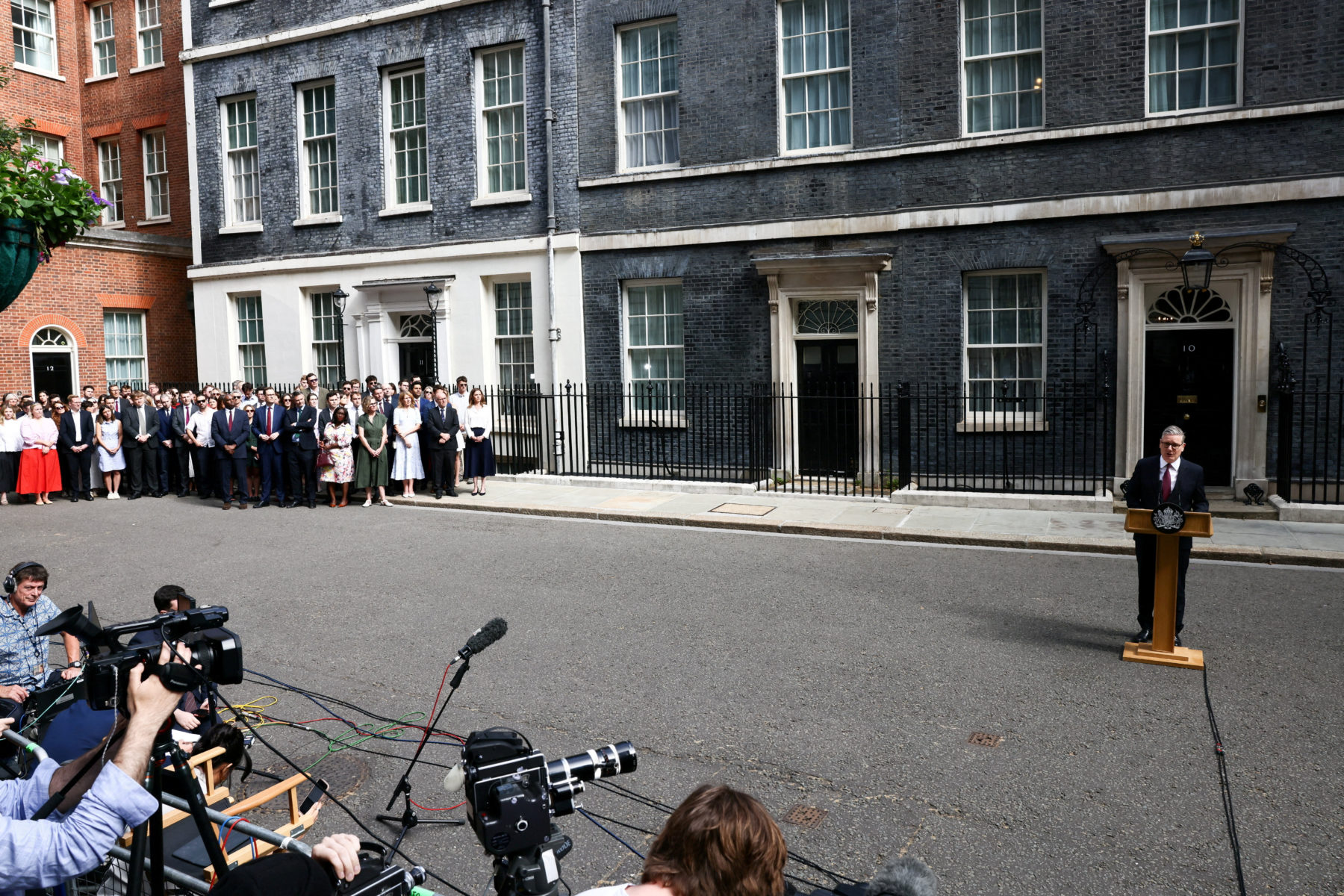
Keir Starmer’s leadership as Britain’s prime minister promised stability after a tumultuous period under the Conservatives. Yet, less than two years into his term, he is resigning due to missteps and internal party strife. Starmer made an emotional announcement about stepping down as Labour Party leader, though he will remain as caretaker prime minister until a new leader is chosen.
“The question my party is asking now is whether I am best placed to lead us into the next general election,” Starmer stated. “I have heard the answer of my parliamentary party to that question, and I accept that answer with good grace.” His tenure was intended to be devoid of what his critics called “soap opera politics,” according to Rob Ford, a political science professor. Yet, his government became embroiled in controversies that contradicted his initial promise.
The tipping point came when Labour suffered heavy losses in local elections on May 7. This defeat prompted resignations within the government and paved the way for Andy Burnham’s potential succession to Downing Street.
Starmer had initially led Labour to a grand victory, securing 411 of the 650 seats in the House of Commons. He pledged to bring “respect to politics” and to serve publicly, following chaos under past Conservative rule. His leadership style, however, faced challenges from the onset due to a broad yet fragile support base. Labour’s major win was supported by only 34% of voters, with many driven by anti-Conservative sentiment rather than a passion for Labour.
Several errors marred Starmer’s leadership, including controversies over accepting gifts and divisive policy changes. His choice to appoint Peter Mandelson as ambassador to the U.S. further damaged his standing due to Mandelson’s past ties with Jeffrey Epstein. This decision haunted Starmer’s leadership, leading to his downfall.
Throughout his career, Starmer was perceived as out of touch, despite his humble beginnings as the son of a toolmaker. He became a barrister and later chief prosecutor for England and Wales. Elected to Parliament in 2015, Starmer shifted Labour towards the political center, a departure from his predecessor Jeremy Corbyn.
Although Starmer demonstrated his forensic skills in Parliament, confronting three Conservative prime ministers, he lacked the political instinct required for domestic issues. His attempts to cut welfare benefits alienated key demographics, and his policies during international crises like the U.S.-Israeli war with Iran were met with mixed reactions. Despite forging an initial rapport with President Trump, their relationship soured as Starmer grew more critical.
Starmer highlighted accomplishments in healthcare and the economy upon his resignation, claiming he left Britain “stronger and fairer.” Yet, his inability to sway public opinion caused the Labour Party to falter. Burnham’s recent election victory marked a turning point, leading Starmer to step down as leader.
As the search for new leadership begins, the legacy of Starmer’s short-lived tenure remains a subject of debate within British politics.