
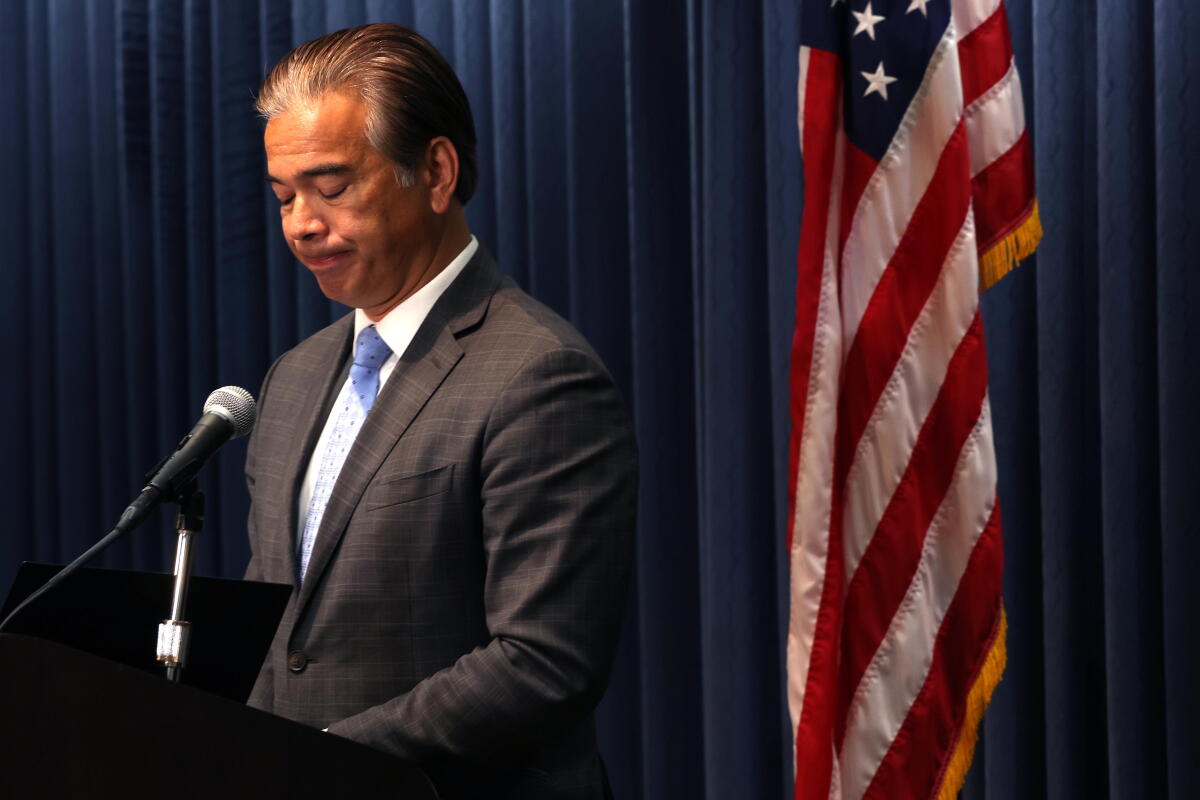
California Attorney General Rob Bonta and Paramount Skydance CEO David Ellison have reached a settlement to end California’s antitrust litigation. This agreement allows Ellison to finalize a $111 billion acquisition of Warner Bros. Discovery. The deal resolves antitrust claims initiated by Bonta and 11 other state attorneys general in July. A source revealed that Paramount will face penalties if it doesn’t distribute 30 films annually in theaters and invest $1.5 billion in Hollywood film production over five years.
The settlement, pending federal judge approval, will enable Paramount to finalize its purchase of Warner Bros. Discovery. This merger will unite two historic studios, combining assets like Batman, Harry Potter, Top Gun, and Bugs Bunny, and merge HBO Max with Paramount+. Paramount will also acquire several cable channels including CBS, CNN, TBS, HGTV, Food Network, and Comedy Central.
The settlement followed intense negotiations. Bonta cancelled a meeting with Paramount in August after a potential leak. New York Attorney General Letitia James and Connecticut Attorney General William Tong also expressed concerns that the deal did not sufficiently mitigate Paramount’s potential influence over the film and television sectors.
Ellison aimed to complete the acquisition by September’s end, before midterm elections and a deadline to increase shareholder payouts. He was supported by California Governor Gavin Newsom, Los Angeles Mayor Karen Bass, and Democratic gubernatorial nominee Xavier Becerra, all advocating for a settlement rather than proceeding to trial in March.
The urgency was driven by looming financial penalties. Starting October 1, Paramount must pay Warner investors a ‘ticking fee’ of 25 cents per quarter, per share, potentially adding $7 million daily to Paramount’s costs. The company secured nearly $80 billion in debt to finance the merger, with substantial financial backing from Ellison’s father, Larry Ellison. Additional funding came from Saudi, Qatari, and Abu Dhabi royal families providing $24 billion for an equity stake, allowing foreign investors to hold nearly 50% of the merged company.
To reassure investors, Paramount committed to $6 billion in cost reductions. According to a Los Angeles County report, the merger could result in 4,500 job losses in the region. The deal gained approval from regulators globally, including the European Commission, Canada, and the U.S. Justice Department.
Despite global approvals, Paramout battled Bonta and faced internal state disagreements. Threats to relocate production to Texas or Tennessee added pressure. Larry Ellison’s separate plans to move Oracle’s headquarters from Austin to Nashville signaled further potential relocations.
Paramount engaged Hollywood unions and cinema chains to support the deal. Bonta’s lawsuit had focused on perceived risks to theatrical distribution. Paramount’s proposal to the court involved requiring a $1.88-billion bond from opposing states and the Writers Guild of America, causing friction within the opposition coalition.
In late August, controversy erupted when actor Mark Ruffalo criticized the merger, prompting accusations of antisemitism from Paramount, supported by Jewish groups, while Ruffalo defended his free speech rights. Bonta subsequently canceled a settlement meeting, criticizing perceived leaks.
The coalition of states argued that the merger would violate the U.S. Clayton Act by diminishing competition and increasing consumer costs. Their lawsuit claimed that combining two legacy studios would grant Paramount-Warner excessive market share in wide-release films. They also argued that Paramount-Warner would control nearly 30% of the cable television network space.
Paramount faces a looming June 4 deadline to complete the merger or risk incurring a $7 billion breakup fee owed to Warner Bros. Discovery. They have already paid a $2.8 billion termination fee to Netflix after the streamer exited from the auction process.