
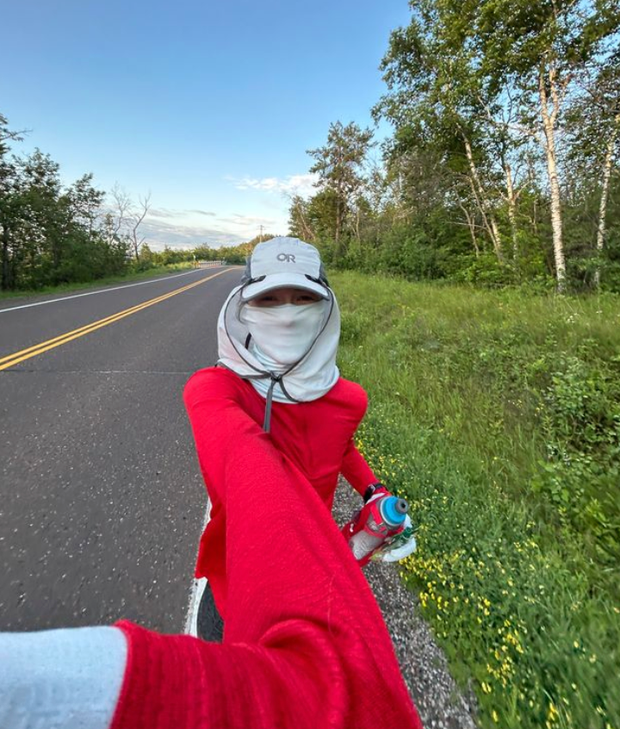
Emily Pearson began experiencing painful reactions to sunlight when she was only eight years old. Standing in the sun for mere minutes would cause her hands and feet to feel like they were being burned and pricked with needles. These symptoms remained a mystery for years.
Pearson’s family faced a challenging journey seeking answers. Sunblock offered no relief, so she stayed indoors and wore protective clothing whenever possible. Time spent at their Minnesota cabin became a test of endurance, requiring vigilance to avoid long exposure to the sun. “It was just insufferable pain. I would never wish that pain upon anyone,” she recalled. This persistent agony plagued her life until she was 17.
“It was really hard, and it was really, really stressful. It was a big mental load, and it was never-ending.” — Emily Pearson
After years of uncertainty, a doctor at the Mayo Clinic diagnosed her with erythropoietic protoporphyria (EPP), a rare condition making her essentially allergic to sunlight. This diagnosis brought both relief and a new set of challenges.
Running became one of Pearson’s few forms of solace. Transitioning from competitive swimming, she enjoyed half-marathons while meticulously avoiding sunlight. Despite the hurdles, running provided immense joy.
In 2025, Pearson’s life took a turn when she discovered a clinical trial for bitopertin at a camp for children with conditions similar to hers. Bitopertin works by reducing levels of protoporphyrin IX, the molecule responsible for painful reactions to sunlight in people with EPP. Although initially skeptical, she joined the trial’s second phase, taking bitopertin daily and tracking improvements through regular medical appointments.
Results were promising. Her ability to tolerate sunlight increased, allowing her to do what was once impossible. “The impact I’ve seen it have on my patients has been a game changer,” remarked Dr. Sioban Keel, a porphyria expert affiliated with the clinical trial.
Clinical data from Disc Medicine supported success stories like Pearson’s, revealing a significant decrease in protoporphyrin IX levels and improved sunlight tolerance among participants without notable safety issues.
Currently, bitopertin is undergoing Phase 3 trials with 183 patients enrolled, projecting results for late 2026. The FDA awaits more evidence before determining the drug’s expedited approval. Meanwhile, Pearson continues using the medication through an open-label extension, demonstrating enhanced sunlight tolerance.
“I was outside the whole day, running and having fun,” Pearson said. “I just got to wear shorts and a T-shirt. And everyone running around you doesn’t know what you’re going through, but I was really proud of myself.”
In October 2025, Pearson experienced a personal triumph: finishing a marathon she had longed to run. Later, she spent a week at her family’s cabin, enjoying full days outdoors without distress.
Looking forward, Pearson is eager to continue exploring her limits. She plans another marathon in 2027 and hopes to compete in a triathlon, joining her passion for running with her swimming background. Her condition no longer restricting her, she feels liberated from anxiety.
Emily’s story highlights how medical advancements, like bitopertin, offer optimism for individuals grappling with rare disorders, encouraging others to persevere amid challenges.