
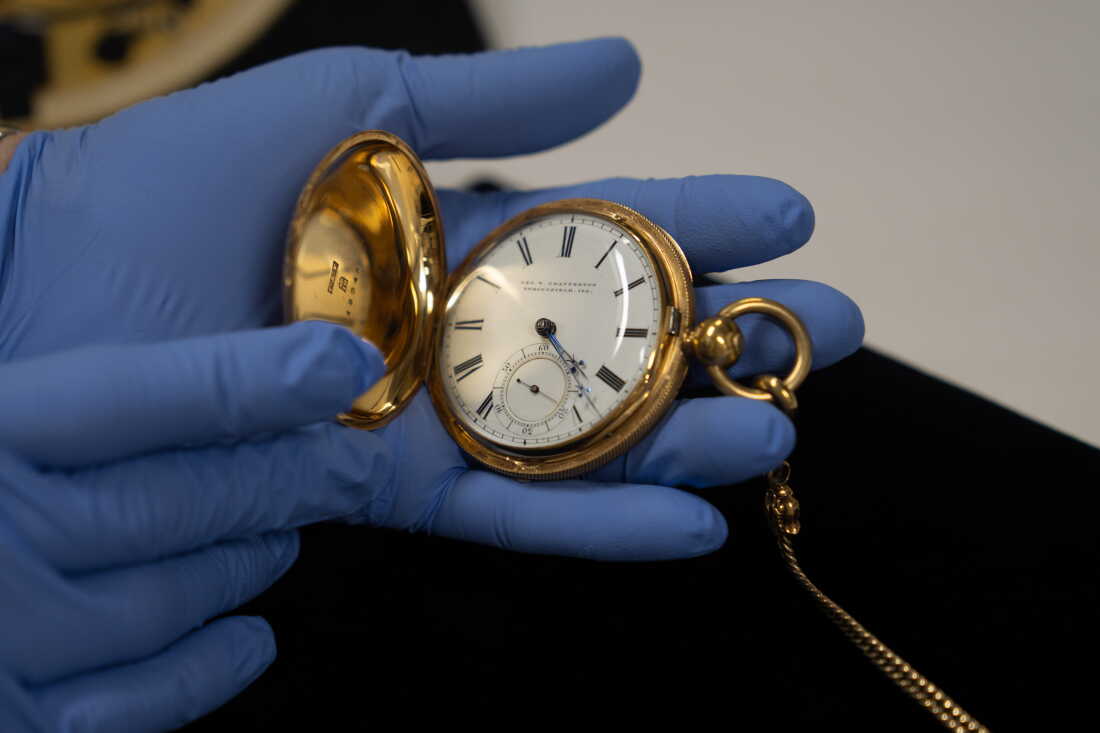
An English-made pocket watch, over 150 years old, resides in the Smithsonian National Museum of American History. This watch, once owned by Abraham Lincoln, is not on public display but holds a story worth telling.
Abraham Lincoln purchased the watch in the 1850s to commemorate his growing success. According to Lisa Kathleen Graddy, a curator of American political history at the Smithsonian, the watch symbolized Lincoln’s transition from a day laborer to a successful lawyer and eventually the president of the United States.
On April 13, 1861, as Lincoln’s watch underwent repairs by Jonathan Dillon, news reached the nation’s capital. The Confederate Army had launched an attack on Fort Sumter. A tale had been passed down in Dillon’s family suggesting he inscribed a secret message inside the watch to mark the onset of the Civil War.
Decades later, Doug Stiles, Dillon’s great-great-grandson, contacted the Smithsonian about these alleged inscriptions. Doubts surrounded the legitimacy of Dillon’s message, until 2009 when the Smithsonian opened the watch with NPR present.
Inside, Dillon had indeed marked the event with an inscription. It mentioned the attack, the date, his name, and the message, “thank God we have a government.” To the surprise of Dillon’s descendants and museum historians, other inscriptions were also discovered. The name of another watchmaker, L.E. Gross, and a reference to “Jeff Davis,” presumably Jefferson Davis, the Confederate States’ president, were found. Graddy believes the “Davis” inscription might have been a joke or a supportive statement for the Confederacy. She notes that this reflects Americans voicing their opinions and engaging with their government, even if the president would never see it.
Graddy asserts that such mixed emotions highlight American democracy. Yet, Dillon’s inscription from over 150 years ago resonates profoundly with her. “It makes me tear up every time I think about it, every time I talk about it,” Graddy remarked. “It is one of the most moving statements of faith in America that I have ever seen. And it gets me through bad days.”