
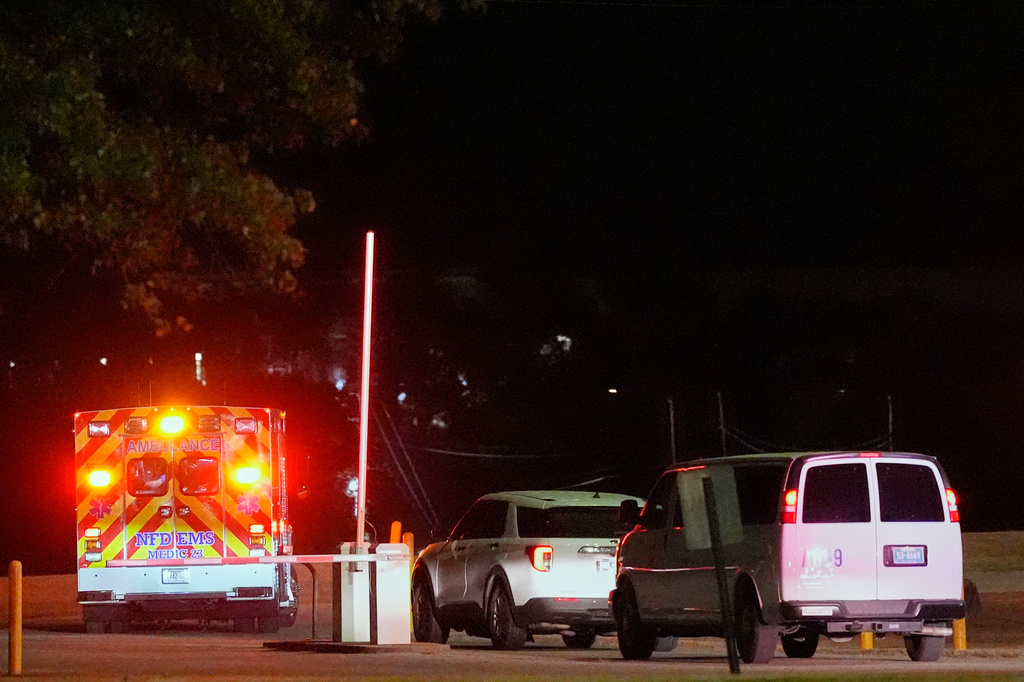
Emergency vehicles gathered at the Riverbend Maximum Security Institution, prompted by the halted execution of Christa Pike on Sept. 30, 2026, in Nashville, Tenn. In recent weeks, America has faced the harsh reality of its continued use of the death penalty. Following a bungled execution in Tennessee, the Trump administration considered broadcasting an execution globally. The severe public outcry stopped this plan, yet it highlighted the cruelty and flaws of the death penalty.
On Oct. 8, Defense Secretary Pete Hegseth revealed plans for a live broadcast of a firing squad execution of former Army Major Nidal Malik Hasan, convicted for the 2009 Fort Hood shooting. This execution would mark the first military execution in the United States in over six decades. Broadcasting it could place the U.S. alongside authoritarian regimes that use executions to exert state power. Outcry came from various quarters, including military veterans, religious leaders, and political party members. President Trump later announced that the execution would not be livestreamed, although the firing squad execution would proceed.
Days before Hegseth’s announcement, Tennessee’s attempt to execute Christa Pike failed as she survived two doses of lethal injection drugs, leading to her hospitalization. The insistence on maintaining the death penalty turns botched executions into a search for improved methods rather than questioning their necessity.
In May 2026, Tennessee’s attempt to execute Tony Carruthers dragged on for over 90 minutes, causing severe pain and trauma due to repeated failed IV insertions. Despite the ordeal, he received minimal aftercare, highlighting the violence hidden by the lethal injection process.
Efforts to make executions appear clinical do not change the cruelty involved. Federal and state authorities continue to find new and antiquated methods of execution. These grim experiments often result in failed pain-free executions. In 2024, Kenneth Smith experienced distress during an execution by nitrogen hypoxia in Alabama. In 2025, a South Carolina firing squad did not carry out Mikal Mahdi’s execution instantaneously. Similarly, Byron Black suffered visibly during Tennessee’s lethal injection execution, later revealing fluid in his lungs suggestive of drowning.
The constitutional requirement to suggest a less painful execution method, when challenging an execution’s nature, subjects individuals to choosing their own end. The Eighth Amendment, which prohibits cruel punishment, fundamentally respects human dignity. We must reevaluate our stance on executions, acknowledging the routine suffering they inflict and the false idea that concealing events reduces public awareness.
Secrecy related to executions prevents the public from witnessing their brutality. Those involved, from families to legal representatives, endure trauma firsthand. The public’s strong reaction against the Pentagon’s livestream plan offers a chance for broader introspection. Scrutiny must extend beyond stopping public spectacles. Our Constitution calls for the end of death penalties to uphold human dignity.
Yasmin Cader, Deputy Executive Director of the American Civil Liberties Union, authored this reflection.