
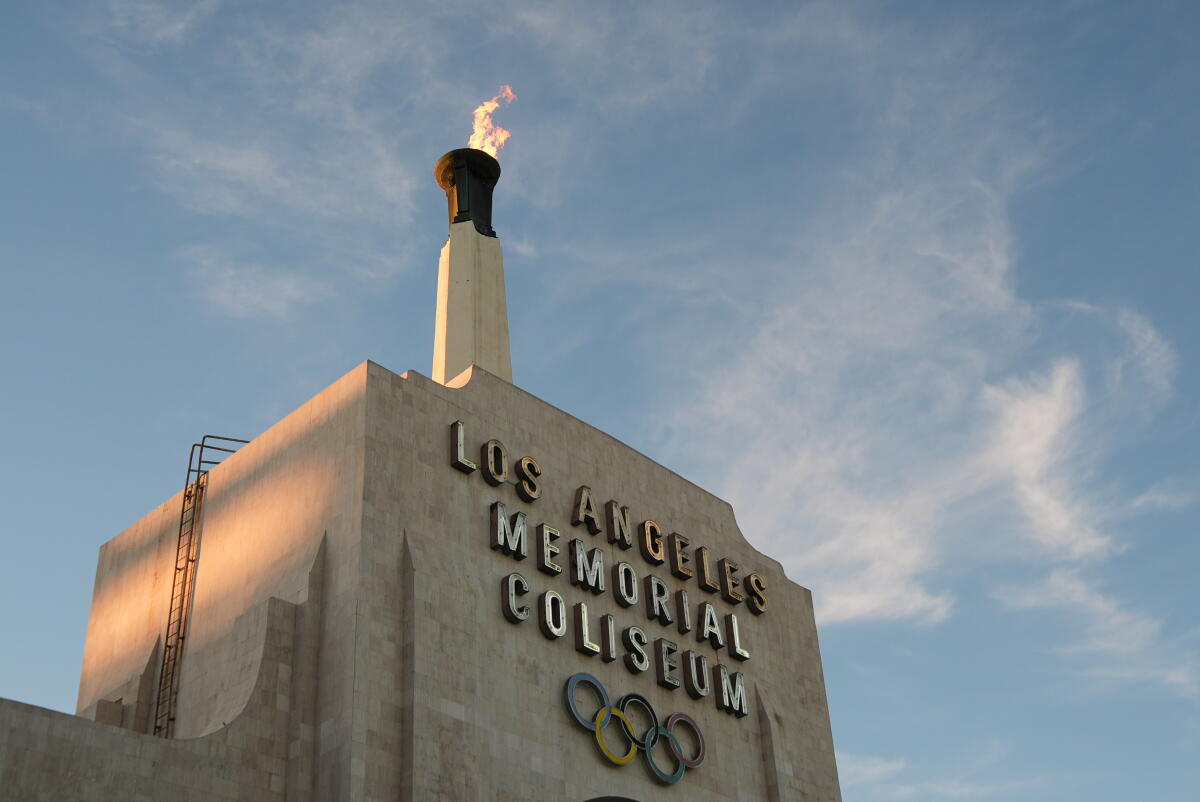
With under two years until the 2028 Olympic and Paralympic Games in Los Angeles, uncertainty surrounds the funding and coordination of the Cultural Olympiad, the arts and culture program accompanying the Games. The Cultural Olympiad measures a host city’s commitment to creative arts and can leave a lasting impact on the region’s artistic landscape. In comparison, the 2024 Olympics in Paris featured over 2,500 projects across three years. While Los Angeles arts organizations and neighboring cities are already planning projects and celebrations, critics highlight a lack of formal and cohesive planning.
Legislative Concerns
During a legislative hearing at the California Science Center, lawmakers pressed organizers on funding specifics for the Cultural Olympiad, questioning how much money will support the program and when it will reach artists and communities. Former Los Angeles County Supervisor Zev Yaroslavsky, from UCLA’s Luskin School of Public Affairs, criticized the delay in cultural planning, noting Los Angeles had nearly 11 years to prepare since being awarded the Games in September 2017. The delay has consequences, as major artists book years in advance.
Despite the challenges, Yaroslavsky insists the Cultural Olympiad is not doomed, recalling how the 1984 Olympic Arts Festival spurred cultural growth in Los Angeles. Similarly, Sofia Klatzker, Santa Monica’s cultural affairs manager, outlined Santa Monica’s cultural framework, featuring performances, exhibitions, public art, and international cultural exchanges.
Coordination and Efforts
A joint hearing of the Senate’s Special Committee on International Sporting Events and the Legislature’s Joint Committee on the Arts included about 100 officials, LA28 Cultural Olympiad leaders, and arts advocates. Presentations revealed fragmented efforts among municipalities, highlighting a need for clearer coordination and financial commitments.
Sen. Benjamin Allen (D-Santa Monica) led the hearing, with a report from City Administrative Officer Matthew W. Szabo and Chief Legislative Analyst Sharon M. Tso estimating a $7.263 billion budget for LA28’s Games. Dwayne Jones, LA28’s senior vice president for the Cultural Olympiad, did not detail the cultural budget but mentioned fundraising goals in the tens of millions, involving conversations with philanthropic donors and LA28 partners.
Program Plans and Progress
Sen. Lola Smallwood-Cuevas persistently questioned the allocation of resources to artists and community groups, acknowledging many unanswered questions. LA28 Cultural Olympiad Executive Director Nora Halpern and Jones discussed plans, including a Cultural Olympiad mark for programs and a digital calendar and mapping platform, set for 2027. Applications for the mark will open in 2027, with the platform launching in January 2028.
Separately, Halpern noted the selection of artists for 16 official posters, with unveiling in July 2027, and Jones outlined plans for free film screenings with food and music, as well as dance, theater, and spoken-word programming. More announcements are expected in 2027.
Local and Federal Involvement
Los Angeles’ Department of Cultural Affairs committed $15 million from its budget for core programs and completed 19 programs, blending sports screenings with art. Additional initiatives require further funding.
Los Angeles County’s Department of Arts and Culture plans around existing grants, youth programs, public art, and partnerships, aiming for a Year of Creative Youth and Olympic arts education curriculum. Local officials described efforts, with Long Beach investing $135,000 in cultural projects and West Hollywood starting a multiyear creative plan.
Gustavo Herrera of Arts for LA presented Mosaic LA, a community-led initiative intended for sustained cultural investment beyond 2028, yet funding remains uncertain. Discussions also addressed the federal role, with Congress appropriating $1 billion for Olympic security and $94.3 million for transportation, separate from cultural fundraising efforts.
UCLA professor Tawny Paul emphasized that local audiences and programming are key to realizing the potential benefits of the Games. Sen. Smallwood-Cuevas called for a clear, coordinated strategy to secure state support.