
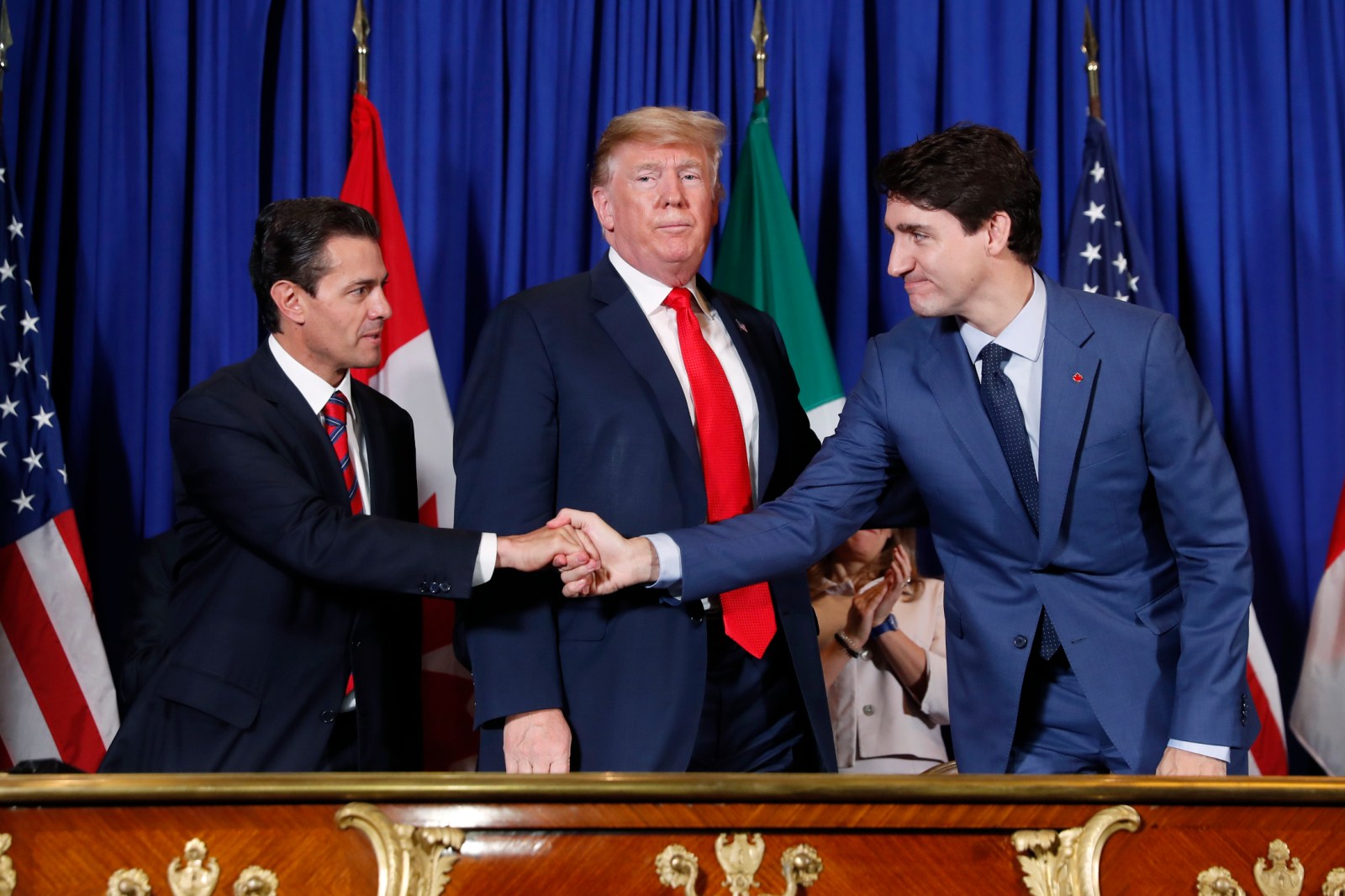
As officials from the U.S., Canada, and Mexico continue discussions on the United States-Mexico-Canada Agreement (USMCA), attention has turned to tariffs, rules of origin, and bargaining power. This focus is understandable, as trade negotiations often involve such considerations. However, the more pressing question is whether the United States is beginning to undervalue one of the core components of its economic and strategic strength.
For over thirty years, North America has been a remarkable economic success story. Countries in the region have developed integrated supply chains, expanded cross-border investments, and established a level of cooperation unmatched by many regions. This achievement was not solely a result of reduced tariffs but also due to governments creating trusted institutions.
These institutions offered assurance to businesses, investors, and workers that the fundamental rules of engagement would remain stable over time.
Washington’s recent decision doesn’t end the USMCA. The agreement persists as negotiations continue and could possibly become more robust. However, this introduces a layer of uncertainty into a framework that has supported North American integration for decades.
As a legal expert, I prioritize institutions over outcomes. Trade agreements often boil down to tariffs and technical rules, but they are also legal commitments. Their greatest benefit lies in creating predictability. Markets can adjust to new regulations or increased tariffs, but businesses struggle with uncertainty. Companies are hesitant to invest substantial amounts if the legal framework governing those investments is unpredictable.
Predictability has been one of North America’s hidden strengths. I have observed this dynamic from both sides of the border. My career spans teaching law in the United States while maintaining roots in Canada, illustrative of the impact institutional stability has on North America’s success.
Companies and governments depend on this stability to make investments. American manufacturers rely on Canadian energy and Mexican production. Canadian companies benefit from the U.S. market and Mexican manufacturing is essential to North American supply chains. These relationships flourished because investors have trusted that North America remains a predictable business environment.
Consider the Gordie Howe International Bridge, a project that exemplifies North American economic integration. It was intended as more than infrastructure; it is an investment in an integrated economy. Set to facilitate commercial traffic through the Windsor-Detroit corridor, the project became wrapped in disputes over tariffs and negotiations. The bridge will enhance the movement of goods, yet its wider potential is tied to a stable legal and political framework.
Predictability now holds even greater value amidst efforts to reduce dependence on China, bolster domestic manufacturing, and create resilient supply chains. These goals have broad bipartisan backing, raising an important consideration: should the framework supporting North American integration become unpredictable as these objectives are pursued?
Each administration has the right to negotiate in national interests, with Canada and Mexico pursuing their own. Hard bargaining is not the issue. The concern is whether uncertainty itself has become a negotiating tool.
If that’s the case, the consequences may not surface immediately. Businesses rarely halt investments abruptly. They tend to delay decisions, diversify, and explore alternatives, similar to governments. These shifts might not reflect in trade statistics immediately but manifest in investment choices and strategic planning over time, impacting how allies gauge the reliability of American institutions.
This negotiation matters because one of America’s historical strengths rests in its capability to create institutions that countries trust for their future, as seen with NATO and the Bretton Woods system. These stable rules foster long-term cooperation, granting strategic advantages unattainable by any single nation.
China can enhance its industries, manufacturing, and infrastructure but can’t replicate a continent anchored by democratic neighbors and integrated markets that support confident investments.
Geography granted the U.S. its neighbors, but institutions turned this into a significant competitive edge. The current USMCA talks will shape more than a trade agreement’s future; they will influence whether predictability remains a strategic U.S. asset.
Faisal Kutty is a professor of law at Southwestern Law School, affiliate faculty at the Rutgers Center for Security, Race and Rights, and contributing editor for the Washington Report on Middle East Affairs. The views expressed are his own.