
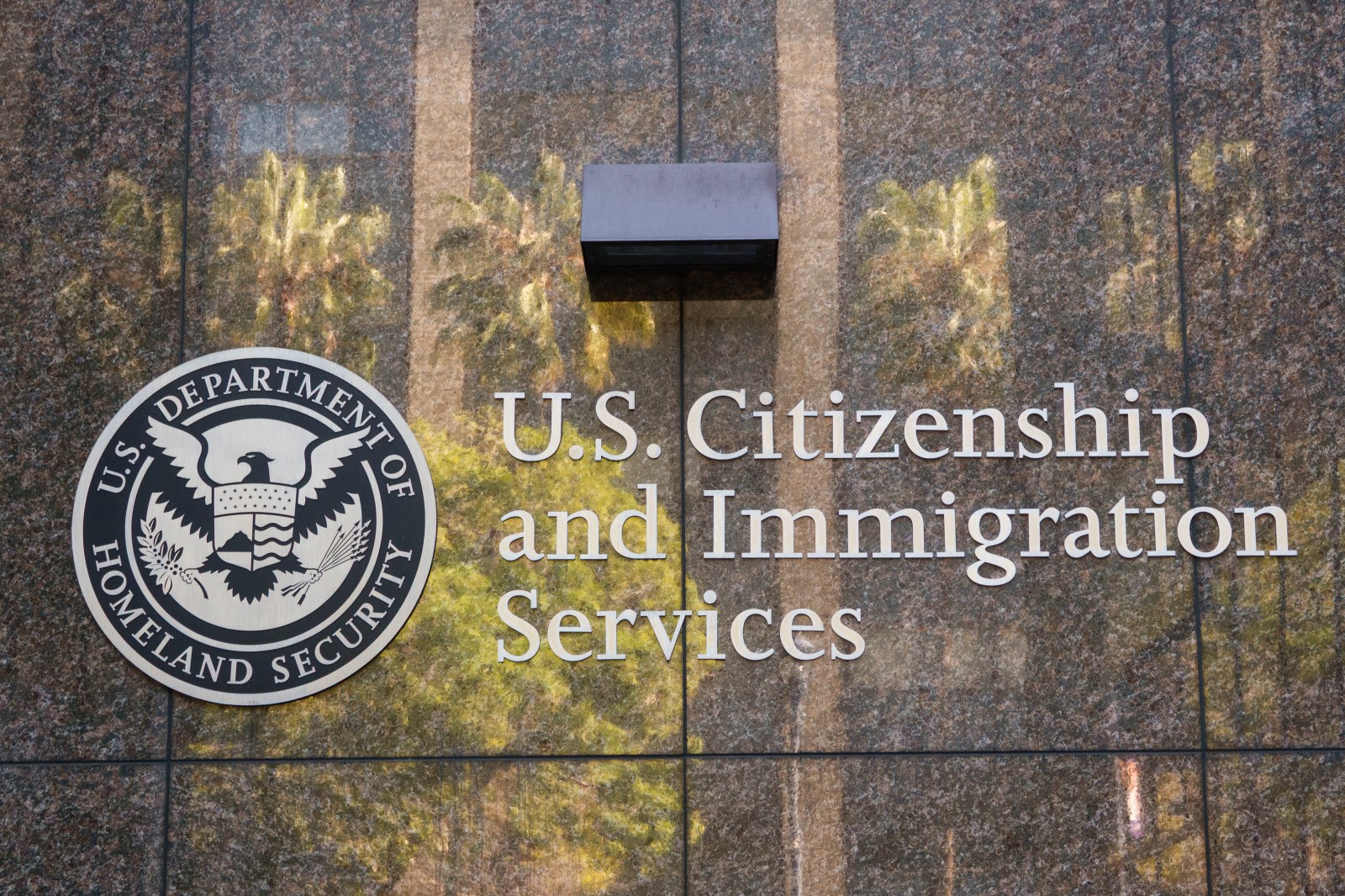
Labor unions, university faculty groups, and advocates for immigrants are taking legal action against the Trump administration over two immigration policies. They argue these policies make it more difficult for certain immigrants already in the U.S. to obtain green cards without leaving the country. The lawsuit, initiated on October 5 in the U.S. District Court for the District of Massachusetts, targets policies issued by U.S. Citizenship and Immigration Services (USCIS) in May and August. These policies influence the adjustment of status process, which enables eligible immigrants to apply for permanent residence within the United States without needing to secure an immigrant visa through a U.S. consulate abroad.
The plaintiffs claim the policies alter the rules for those seeking permanent residence. They contend that applicants who filed before the policy changes could now face denial without an opportunity to provide additional evidence. Under the May policy, USCIS officers must consider whether applicants choose to seek a green card from within the U.S. instead of through abroad consular processing. The August policy expands the authority of USCIS officers to deny applications without requesting additional evidence or issuing a prior notice of denial. This policy affects both new applications and those pending when it took effect.
The administration has implemented these changes as part of its broader strategy to reform the legal immigration system. Changes include repealing a Biden-era public-charge regulation and updating USCIS guidance on assessing green card applicants’ reliance on public benefits. The administration justifies the public-charge changes as promoting self-sufficiency and enforcing immigration law.
The lawsuit is filed by organizations such as the American Association of University Professors, its Harvard and Boston University chapters, the Service Employees International Union with affiliates SEIU Local 509 and 32BJ SEIU, Americans for Immigrant Justice, and six individual green card applicants. These groups represent academics, doctors, researchers, service workers, and immigrants seeking permanent residence, along with individuals whose relatives are seeking green cards.
The May 21 policy characterizes adjustment as an ‘extraordinary’ form of discretionary relief. While not requiring all adjustment applicants to leave the country, plaintiffs argue it unfairly penalizes those using a Congress-authorized process.
The August policy presents issues for applicants with pending cases. The plaintiffs argue that individuals applying before May were not required to provide evidence now demanded by new standards, potentially facing denial without a chance to submit additional evidence. The administration argues the adjustment process is discretionary, with some immigrants expected to leave the U.S. after their stay if seeking permanent residence.
In fiscal year 2024, out of approximately 1.36 million individuals becoming lawful permanent residents, 782,800 (57%) utilized the adjustment of status process according to DHS data.
Why the Lawsuit Seeks a Halt
Plaintiffs assert that USCIS lacks authority to penalize those choosing adjustment of status over consular processing. Congress established the adjustment process in 1952, amending it multiple times. The complaint highlights that lawmakers provided a method for eligible immigrants to gain permanent residence without leaving the U.S., without necessitating a general requirement to apply abroad.
The lawsuit outlines six claims, arguing the policies exceed USCIS’s authority, improperly apply new standards to pending cases, and conflict with existing immigration precedent. It also alleges the policies violate due process, are arbitrary, and fail federal rulemaking requirements. The court has not yet ruled on these claims.
Plaintiffs warn of practical repercussions, like family separation and disruptions to employment and education if applicants must process cases abroad. For instance, Maria Francisca Guardado, who lived in the U.S. since 1998, had her application denied despite eligibility. Another plaintiff, Miriam Esther Moreno Coto, facing similar challenges, has a son requiring ongoing care, risking family separation if pursuing residency abroad.
Skye Perryman, President of Democracy Forward stated, “Congress created a process for those in the U.S. to pursue permanent residence without uprooting their lives… These policies are changing the rules on families, workers, students… putting them at risk of separation from their loved ones.”
Todd Wolfson, President of the American Association of University Professors, remarked, “By weaponizing the green card process, the administration is undermining scientific innovation and creating hostile environments in universities for global talent.”
Legal Proceedings
Plaintiffs request a temporary block of the policies as the case proceeds, aiming for their eventual repeal. They want USCIS to adjudicate applications under the controlling Board of Immigration Appeals precedent. The court has not decided on claims regarding violations of federal immigration law, the Administrative Procedure Act, or the Constitution.