
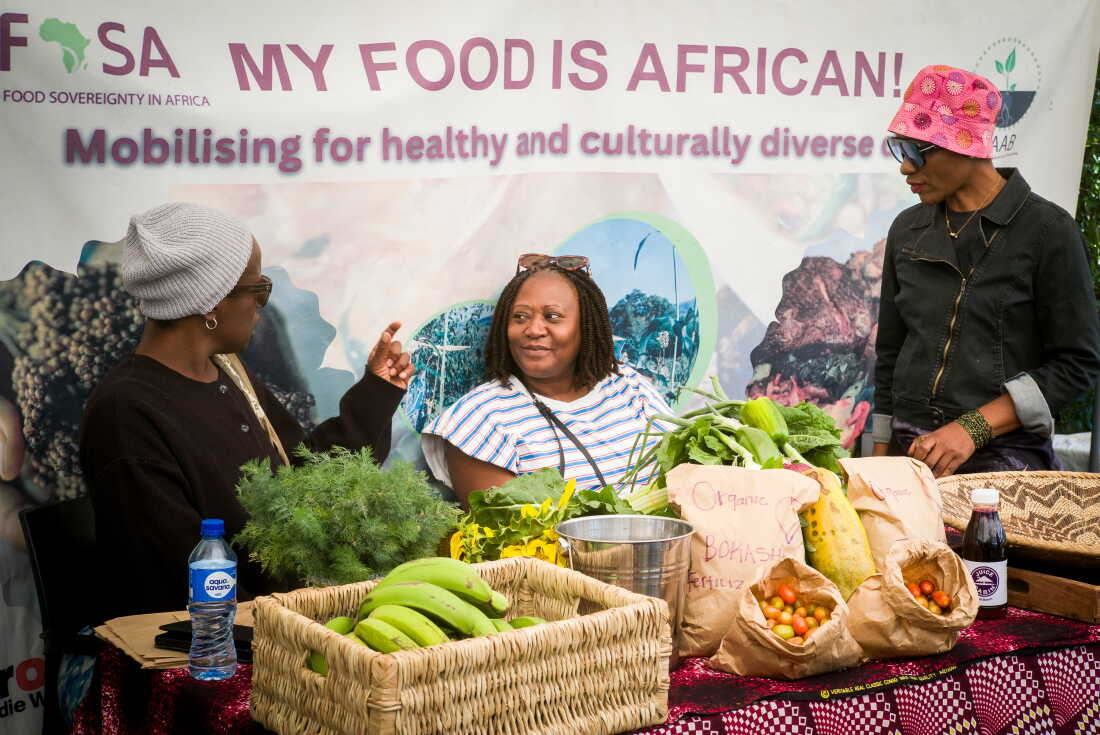
In a bustling market in Zambia, homemade bokashi fertilizer shares space with organic vegetables, available for about $2.50 a bag. This scene illustrates a shift among Zambian farmers in response to a turbulent international trade climate.
On a 12-acre farm near Lusaka, Kanangwa Newlove has cultivated a lush landscape. Her fields feature shady fruit trees alongside rows of crops like corn, pumpkins, and a leafy green called blackjack. Towering tomato vines cover trellises, and there are eleven lettuce varieties. Newlove recalls how she began by sharing vegetables with colleagues and soon found herself supplying local supermarkets. “It went on and on,” she says.
Challenges Facing Farmers in 2026
The year 2026 presented hardships for numerous farmers as the Iran war disrupted trade routes through the Strait of Hormuz. Global fertilizer prices soared, impacting smallholder farmers in Africa who are sensitive to price changes.
Unlike many, Newlove remained unaffected. She relies on bokashi, a homemade compost with roots in ancient Korean farming and later popularized in Japan. Bokashi is straightforward to produce and highly effective, delivering organic fertilizer in weeks. “It was amazing,” Newlove states. Bokashi has gained popularity in Zambia, with farmers selling it in markets and exchanging pointers online. The Kasisi Agricultural Training Centre offers bokashi training and sends students to Newlove’s farm for experiential learning.
Rebecca Mwila from the Knowledge Platform for Organic Agriculture and Agroecology in Africa notes that many Zambian farmers seek ways to cut costs while growing food, with bokashi offering a viable solution.
Bokashi Recipe and Benefits
To make bokashi, farmers ferment food scraps in a no-oxygen environment. Outdoor versions involve farm-sourced ingredients like leaves, animal dung, charcoal, and fireplace ash. Yeast and sugar sources, such as molasses or bananas, initiate fermentation. Microbial action heats the mixture, and after a couple of weeks, it is buried underground to decompose completely.
This process excites farmers, as Mwila explains, noting significant soil improvement and earthworm presence. As rainfall becomes unpredictable due to climate change, sustainable, low-cost options garner interest. Concerns arise over long-term impacts of commercial fertilizers on soil health. After global fertilizer prices soared during the pandemic and geopolitical tensions, finding alternatives like bokashi addresses food security needs.
Government Initiatives and Global Context
Zambia once depended heavily on imported fertilizer. Rising prices prompted the promotion of domestic production. A recent announcement revealed plans for a $1.5 billion Chinese-Zambian fertilizer plant. Though prices have somewhat decreased globally, fertilizers remain costly in southern African countries, affecting affordability.
Donald Zulu, a Copperbelt University lecturer, cites the high cost of fertilizers for small-scale farmers, even with subsidies. Seeking alternatives, he collaborated with WeForest to study bokashi effectivity on corn and cabbage. Results indicated equal yields to mineral fertilizers, showing promise for reduced-cost farming.
The optimal results emerged from using both bokashi and mineral fertilizers in lesser quantities. For farmers like Newlove, bokashi represents sustainable farming without harmful chemicals. “It’s all just like a labor of love,” Newlove says, emphasizing the importance of environmentally conscious agriculture.