
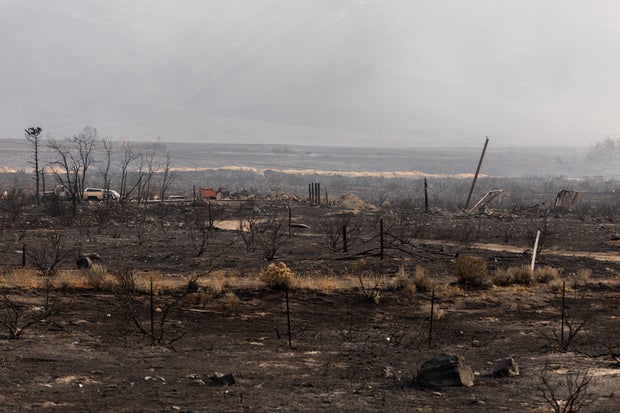
Raging Wildfire Causes Massive Evacuations in Reno, Nevada
A wildfire outbreak in northwest Reno, Nevada, has led to the destruction of homes and the urgent evacuation of thousands. The fire has expanded over fire trucks, complicating efforts to reach critical hotspots. Fierce winds have thwarted firefighters’ efforts to control the blaze, prompting authorities to urge around 90,000 residents to evacuate.
By Sunday evening, six individuals, including three first responders and three civilians, had sustained injuries. Fire officials attributed the fire to human activity, yet did not elaborate on whether it was accidental or deliberate.
The Hawk Fire Expansion
The Hawk Fire began on Saturday and as of Sunday had surged to over 23 square miles. It engulfed the Peavine Peak area within the Humboldt-Toiyabe National Forest, an area encircled by homes and commercial establishments near the California border.
Zero containment had been achieved by Sunday. Evacuation orders have affected approximately 42,000 residents, as the “GO NOW” zone reached near the University of Nevada. An adjacent warning zone encompassed another 45,000 individuals.
“Please get out if you can right now,” Washoe County Sheriff Darin Balaam urged, underscoring the potential for more erratic fire behavior.
Impact on Local Residents
Several families, such as the Kieffer family, experienced personal losses. Cari Kieffer shared how her family lost all their belongings. Her home was completely razed, leaving just a basketball hoop. While watching a football game, she discovered her area was designated for evacuation. Despite using a fire-tracking app, the family was caught off-guard when the fire rapidly approached.
In a frantic effort, Kieffer and her family managed to save their pets and some possessions. However, they were unable to retrieve crucial documents like birth certificates and childhood photos before evacuating. They later found refuge temporarily, until forced to evacuate once again.
State and Community Response
Nevada Governor Joe Lombardo declared a state of emergency in Washoe County and engaged the Nevada National Guard. They provided aerial firefighting assistance with two helicopter crews and deployed 60 troops for neighborhood security. Around 800 firefighting personnel are combating the blaze.
On Sunday, nearly 10,000 residents faced power outages, which marked a reduction from the previous count of 60,000 affected households on Saturday. Parts of the critical U.S. Route 395 highway were shut due to the fire.
The Reno-Sparks Convention Center has been opened to evacuees, although pets are prohibited there. Casinos extended hotel room discounts to displaced individuals.
University and Infrastructure Challenges
The University of Nevada skirted the immediate evacuation zone with its 20,000 undergraduate populace moving into housing over the weekend. Two hospitals began patient evacuations, while the sheriff kept tabs on a possible county jail evacuation.
While Reno-Stead Airport ceased operations for commercial flights, it continued serving firefighting and military aircraft. Conversely, Reno-Tahoe International Airport remained unaffected.
Extreme Fire Behavior and Response Challenges
Changing winds constantly altered the fire’s path, creating confusion among firefighting squads. The fire quickly gained intensity on Saturday night, creating difficulties in accessing hotspots.
Tyler Duvall voiced surprise at the fire’s rapid escalation. On Saturday, he embarked on a camping trip, unaware that just a day later, his residence would face evacuation orders.
Conditions are exacerbated by prolonged dry spells and minimal snowfall throughout the region. Similar fire outbreaks affected eastern Washington state earlier this month.
Affected Residents and Firefighting Hazard
Jaida Hargrove shared the impact on her grandfather Rick Arrate, living near the fire’s path. Firefighters endeavored to contain the flames utilizing bulldozers, tree cutting, and fire retardant, yet quickly faced evacuations as winds shifted unexpectedly.
A wider fundraising initiative has been launched to support affected residents such as Arrate and the Kieffer family.
Preparedness and Resilience
Ted Melden, a retired police officer and firefighter, encapsulates the volatility residents face. Recently relocated from South Carolina, Melden recalled battling natural disasters and now, facing wildfire threats.
Melden prepared evacuation bags should the situation worsen, determined to stay ready amidst uncertainty.