
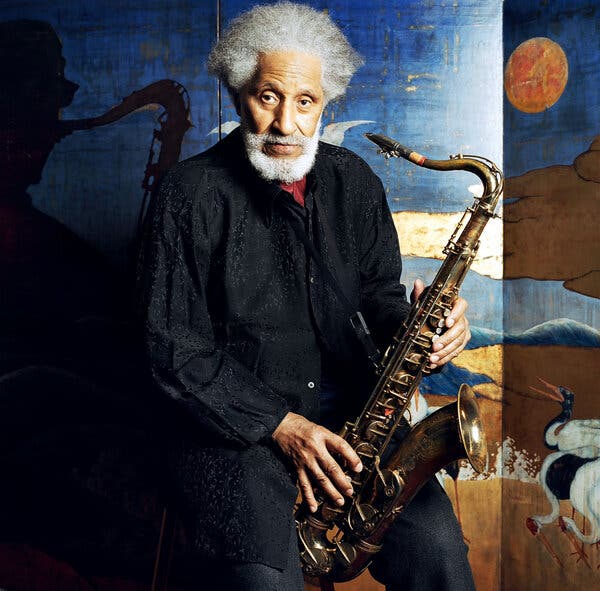
Sonny Rollins, renowned for his inventive style on the tenor saxophone, emerged as a leading figure in post-World War II jazz. He passed away at his residence in Woodstock, N.Y., on Monday at 95. His publicist, Terri Hinte, confirmed his death.
Rollins was distinguished not only by his musical talent but also by his unique personality. In the late 1940s, while most saxophonists opted for a light tone with minimal vibrato, Rollins chose a robust, full-bodied sound reminiscent of jazz’s early master, Coleman Hawkins.
In the late 1950s, just as his career was gaining momentum, Rollins took a significant hiatus exceeding two years. He later explained this was due to dissatisfaction with his own performance quality at that time.
Rollins matured during the bebop era, and although his work was infused with its complex harmonics and daring rhythms, labeling him strictly as a bebopper would miss his broader range. Throughout his career, he experimented with various styles, including avant-garde and jazz-rock fusion. His unpredictable notes and energetic performances made him a distinctive force in jazz.
In 2012, Rollins performed at the Detroit Jazz Festival, marking his last concert appearance. Two years later, he stopped playing music entirely.