
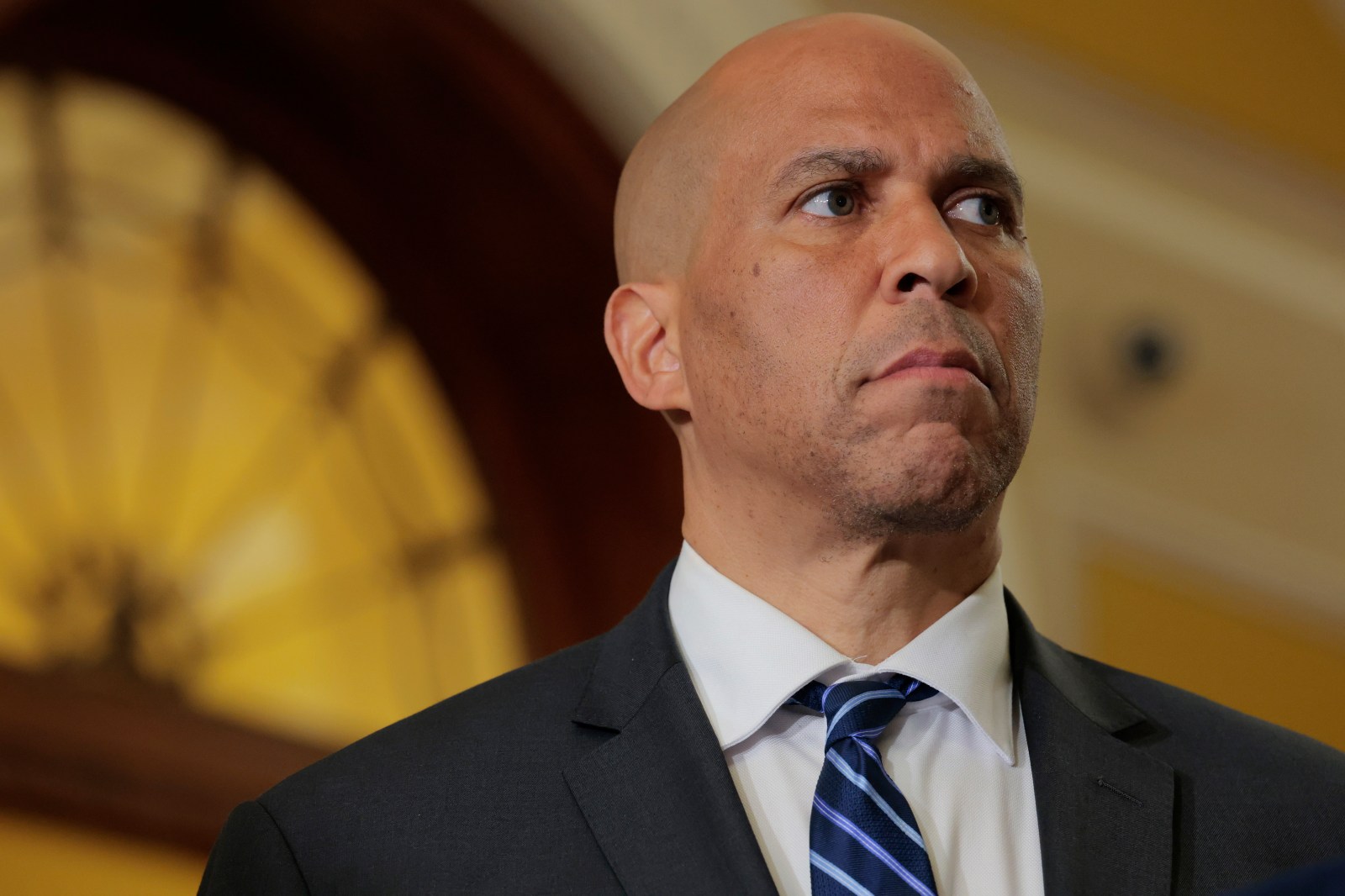
Senator Cory Booker expressed his opposition to the Trump administration’s 60-day interim agreement with Iran. He stated that, while he supports ending the U.S. conflict with Iran, he believes the current deal provides significant economic relief to Tehran without securing lasting concessions.
During his appearance on NBC News’ Meet the Press, the New Jersey Democrat highlighted the distinction between wanting to end the conflict and disapproving of the manner in which the U.S. is exiting. He warned that the approach weakens American leverage during a critical period.
“This president has led this nation into a disaster. We have surrendered our power. We have capitulated to the enemy.” – Senator Cory Booker
This position places Booker in disagreement with both the administration and some Democrats, while aligning with conservative critics who argue that the deal benefits Iran excessively.
Carville’s Commentary
The issue surfaced when Booker was asked about comments from veteran Democratic strategist James Carville. On NewsNation’s Cuomo, Carville stated that President Trump deserves credit for ending the war, a move that he likened to exits from Vietnam and Afghanistan.
Carville argued the Iran war was a mistake and called the interim agreement an “instrument of surrender.” Despite the blunder, he suggested that Trump did the right thing by exiting.
Booker dismissed Carville’s view, comparing it to rewarding an arsonist for fleeing a fire. He believes Trump should not be credited for resolving a crisis he initiated.
Framing the Agreement
Booker categorizes the agreement as one-sided, stating that it represents an “abject surrender.” He claims Iran receives significant benefits, amounting to billions of dollars, without providing lasting concessions.
The senator has consistently voted for War Powers resolutions to enforce U.S. withdrawal, and criticized Trump’s approach to Iran, including pulling out of the 2015 nuclear deal.
Details of the Agreement
The interim deal is set as a memorandum of understanding (MOU), aiming to halt hostilities while negotiators work towards a comprehensive settlement over 60 days. Its core elements include:
- Iran’s reaffirmation to abstain from nuclear weapon procurement and development
- Reopening the Strait of Hormuz for global oil transit
- Rolling back U.S. naval blockade measures
- Potential sanctions relief, granting Iran access to financial resources
- Stoppage of major military activities across various fronts
Critics argue the agreement gives Iran early benefits without guaranteed commitments. Supporters view it as a way to test compliance and prevent escalation.
The Trump administration has defended the agreement as practical, aiming to halt prolonged conflict. White House spokeswoman Olivia Wales stated to Newsweek that the MOU is designed to end fighting, reopen the Strait of Hormuz, and force Iran’s commitment against nuclear ambitions.
Rising Opposition
Conservative figures have voiced skepticism about the deal’s structure. Republican Senator Bill Cassidy noted that Iran’s nuclear ambitions remain unabated, adding that Iran might leverage the Strait of Hormuz in the future. He pointed out the losses suffered, including the death of 13 service members and the lifting of sanctions, as evidence of a foreign policy misstep.
Former Vice President Mike Pence labeled the agreement as “appeasement,” emphasizing its lack of firm commitments regarding Iran’s nuclear program, missile development, and regional proxy support. Media outlets controlled by Rupert Murdoch have also criticized the interim agreement.
Senator Booker remarked that bipartisan critique from various perspectives signifies how detrimental the deal is.