
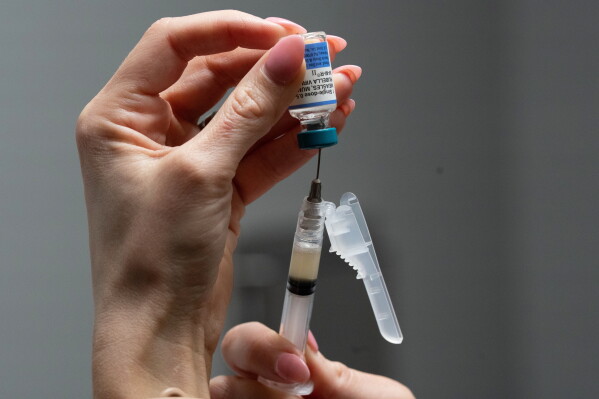
The number of measles cases in the United States has exceeded the record set for all of 2025, with five months still remaining in 2026. The Centers for Disease Control and Prevention (CDC) reported 2,318 measles cases as of Thursday, marking a higher count than the 2,289 cases recorded in 2025, the worst year for measles in over thirty years. The outbreaks in states like South Carolina, Utah, and Arizona have significantly contributed to the rise, leading to the worst year for measles since 1991.
Public health officials from the U.S. and Mexico are set to convene in November to assess whether these nations have lost their measles-free status. The U.S. managed to eliminate local measles spread in 2000 by keeping vaccination rates high. However, these rates have since fallen below the necessary 95% coverage, spurring recent outbreaks.
Measles Cases Are Undercounted
Accurately assessing the extent of measles spread is challenging. Official counts often miss cases, as not everyone seeks treatment, a common issue across various diseases. Additionally, experts warn of potentially higher spread than recognized due to the virus’s high contagion level and decreasing vaccination rates. For instance, the vaccination rate for measles, mumps, and rubella among kindergartners dropped to 92.5% in the 2024-2025 school year from 95.2% in 2019-2020.
In Utah, over 700 people have been affected in the past year, according to state health department data. Estimates indicate that an outbreak along the Utah-Arizona border might be significantly larger than reported. In South Carolina, the largest outbreak in 35 years likely surpasses the 997 documented cases. Dr. Brannon Traxler from the state health department mentions that the exact undercount is unknown and varies throughout an outbreak.
Challenges in Estimating Outbreaks
Data gaps complicate reliable outbreak size estimations. Hospitalization rates can offer some insights, yet they aren’t consistently reported across states. Damon Toth, from the University of Utah’s medical school, suggests that a better understanding of hospitalization percentages could improve outbreak size estimations.
Researchers are still analyzing the 2025 Texas outbreak, with initial findings hinting it might have been nearly double the reported 762 cases. Undercounts are not unexpected given lower community vaccination rates than the ideal 95%. Without sufficient vaccination, measles remains hard to control once present.
Community Impact and Responsibility
The CDC considers three linked cases as an outbreak. In communities with low vaccination and less disease monitoring, the situation escalates quickly. Dr. Varun Shetty, Texas’ chief state epidemiologist, highlights challenges in confirming and sharing case information, noting that reported counts often underestimate the true scenario due to incomplete information sharing. During March 2025 in Gaines County, 182 probable cases lacked confirmation due to insufficient data, with 414 confirmed cases across the outbreak.
Dr. Mark Roberts, formerly at the University of Pittsburgh School of Public Health, emphasizes the risk to “innocent bystanders” such as infants and those with compromised immune systems who cannot be vaccinated. He compares not vaccinating to driving a car without brakes, as it endangers others.
Ultimately, maintaining high community vaccination coverage is essential for protection. It ensures safety not only for individuals but also for wider community health.
The Associated Press Health and Science Department receives support from Howard Hughes Medical Institute’s Department of Science Education and the Robert Wood Johnson Foundation but retains sole responsibility for content.