
For nearly 3,000 years, Homer’s “The Odyssey” has captivated readers with its epic adventure of a king striving to reclaim his throne on the Ionian island of Ithaca. The enduring popularity of this tale is evident in its 60 translations into English and numerous film adaptations, including Christopher Nolan’s latest interpretation set to premiere globally.
Scholars often regard the story of Odysseus as fictional, but recent archaeological findings challenge this perspective. In Ithaca, ruins suggest that ancient Greeks may have seen Odysseus as more than a fictional character. Excavations on a rocky ridge have unveiled what appears to be a 2,400-year-old sanctuary dedicated to him.
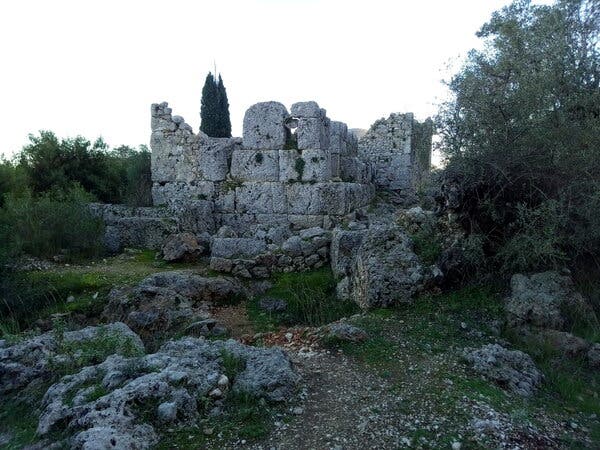
The complex, carved into the terraces of Mount Exogi, is known locally as the School of Homer. It had not been thought to relate to “The Odyssey” until recent investigations yielded intriguing results.
Archaeologists, led by Giannos G. Lolos from the University of Ioannina, built upon previous digs from 1994 to 2011. Their work revealed significant structures, including a ceremonial hall, a potential watchtower, and a Mycenaean-style cistern. Last summer, the Greek Ministry of Culture highlighted these discoveries, noting the site’s historical significance.
The ruins have sparked local speculation over their potential as the remains of Odysseus’ palace. However, no evidence supports the idea of the site dating back to 1200 B.C., when Odysseus’ mythical journey would have occurred. Despite this, the findings bridge ancient lore and reality, demonstrating Odysseus’ status among the Greeks of the past.