
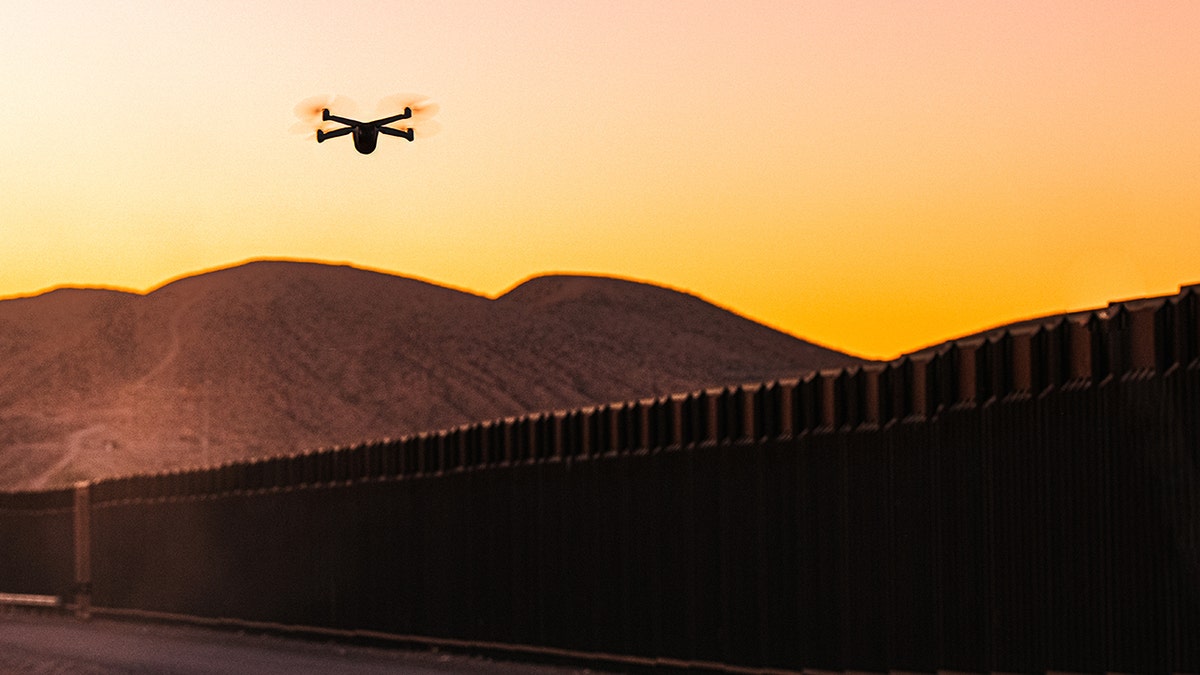
Overview: Mexican cartels are utilizing drones for surveillance and smuggling along the U.S. southern border while authorities work to counter these activities. The increase in drone incursions calls for attention from the U.S. Military and law enforcement agencies.
Drone Activity on the Border
Brigadier General Brian Filler of the Joint Task Force-Southern Border reported the detection of 378 drone incursions in the past 30 days. Cartels mostly use commercial drones with cameras for these operations, primarily for surveillance and reconnaissance to establish routine patterns of U.S. security personnel. This supports smuggling operations across the border.
Austin Doctor, from the National Counterterrorism Innovation, Technology and Education Center at the University of Nebraska, explains how cartels are using drones. He highlighted the use of commercial drones, although agricultural drones capable of carrying larger payloads are emerging. This innovation focuses on resistance to countermeasures and improved operational capabilities.
Law Enforcement and Countermeasures
Recent legislation in Arizona permits law enforcement to shoot down drones suspected of criminal activity along the U.S.-Mexico border. A spokesperson for U.S. Customs and Border Protection expressed concern over these threats. They noted that unmanned aircraft systems (UAS) technology rapidly advances, presenting challenges such as counter-surveillance, illicit cargo movement, and potential attacks.
A confirmed threat comes from cartels exploiting UAS for surveillance, illicit activities, law enforcement monitoring, scouting crossing points, and coordinating smuggling operations.
CBP reported detecting over 42,000 UAS flights near the border in fiscal 2025 and over 37,000 in fiscal 2026. Under congressional authority, the Department of Homeland Security has approved counter-UAS measures for CBP. These operations cover detection, identification, monitoring, and tracking of UASs across the Southwest border.
Incidents and Cartel Strategies
Doctor identifies the Jalisco New Generation Cartel as a major force behind drone innovation among Mexican cartels. Smugglers also use drones for kinetic attacks internally in Mexico on rival factions, civilians, and security forces.
Cartel drone use was evident in a 2025 seizure in Reynosa, Tamaulipas. Soldiers detained a suspect and seized 18 drones, various explosives, and counter-drone devices. While no cartel was officially identified, connections to the Gulf Cartel’s Los Metros faction were suggested.
In a separate incident in Tijuana, a drone dropped explosive devices on a prosecutor’s office, damaging vehicles but causing no injuries. Such attacks are less common at the border but emphasize ongoing risks.
Efforts against Drone Threats
Mexico implements interdiction strategies, counter-drone equipment, military interventions, and new criminal penalties to tackle these challenges. In the Tijuana-San Diego area during Operation Águila Alta, Mexican forces neutralized drones, seized weapons, and coordinated with U.S. Customs and Border Protection.
Drone-related conduct became a federal crime in Mexico in 2024, addressing activities like dropping explosives, weaponizing aircraft, and surveilling public officials.
Recently, Mexico deployed soldiers, National Guard members, counter-drone systems, and drones in Tamaulipas municipalities. The Navy also reported personnel and resources under Operation Sable. Joint Task Force-Southern Border and U.S. agencies continue monitoring and detecting threats along the border.
Challenges remain in understanding the scale of cartel-operated drones and the effectiveness of countermeasures. While increased resources are vital, cartels are likely to persist in evolving their tactics.