
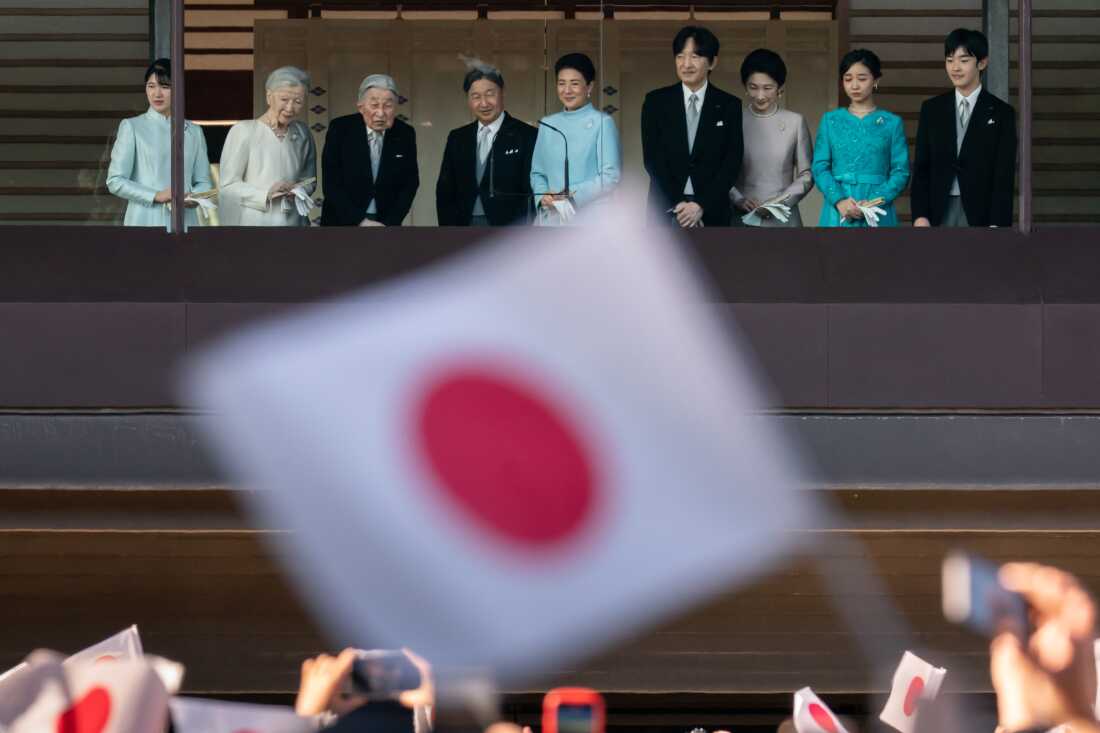
Japan’s upper house of parliament has recently passed controversial amendments to a law that determines imperial succession. This decision follows the lower house’s approval and aims to address the declining number of imperial family members. The changes intend to ensure the continuity of their public responsibilities as the family ages and decreases in size.
Critics argue the amendments have a hidden agenda: preventing the possibility of a female emperor. Seiichiro Noboru, a former diplomat connected to the imperial family, voices this concern. Noboru points out the reforms’ objective is to avert a future woman emperor.
The revisions permit princesses to remain in the imperial household after marrying a commoner. Additionally, the law allows the adoption of male-line descendants from former imperial branches. However, these adopted males, though born as commoners, will not be entitled to inherit the throne. Any male offspring they have could be eligible to ascend to the throne.
Currently, the imperial family faces a succession challenge with only one young heir, 19-year-old Prince Hisahito, Emperor Naruhito’s nephew. The situation raises public concern about the future of the imperial lineage. Noboru argues that recognizing a female emperor would eliminate complexities related to adoption lines.
Support for Female Emperors
Princess Aiko, the daughter of Emperor Naruhito and an advocate for female emperors, attracts significant public support. She holds a Japanese literature degree and works at the Japanese Red Cross Society. Polls indicate that between 60% to 90% of the Japanese population favor allowing women to ascend to the throne.
Despite this support, Japan’s first female prime minister, Sanae Takaichi, disagrees. She cites historical precedent, emphasizing the tradition of male-line succession as a pillar of imperial authority and legitimacy. Notably, throughout Japanese history, there have been eight female emperors, all linked to the male lineage.
Historical Context of Male-Only Succession
The practice of male-only succession began in 1889 with the Imperial Household Law under the Meiji government. Male emperors were viewed as military leaders and ancestral patriarchs, while women were considered legally powerless under the Meiji civil code.
The Meiji government addressed the scarcity of male heirs by legalizing concubinage, leading to many emperors born to concubines. Noboru argues that denying women the right to reign today violates constitutional protections against gender discrimination. He believes government actions contradict public sentiment and constitutional principles.
Japan’s constitution grants sovereignty to the people and designates the emperor as a national symbol determined by public will. Although the emperor traditionally remains apolitical, Emperor Naruhito recently expressed hope for understanding and consensus regarding the sustenance of the imperial family.