
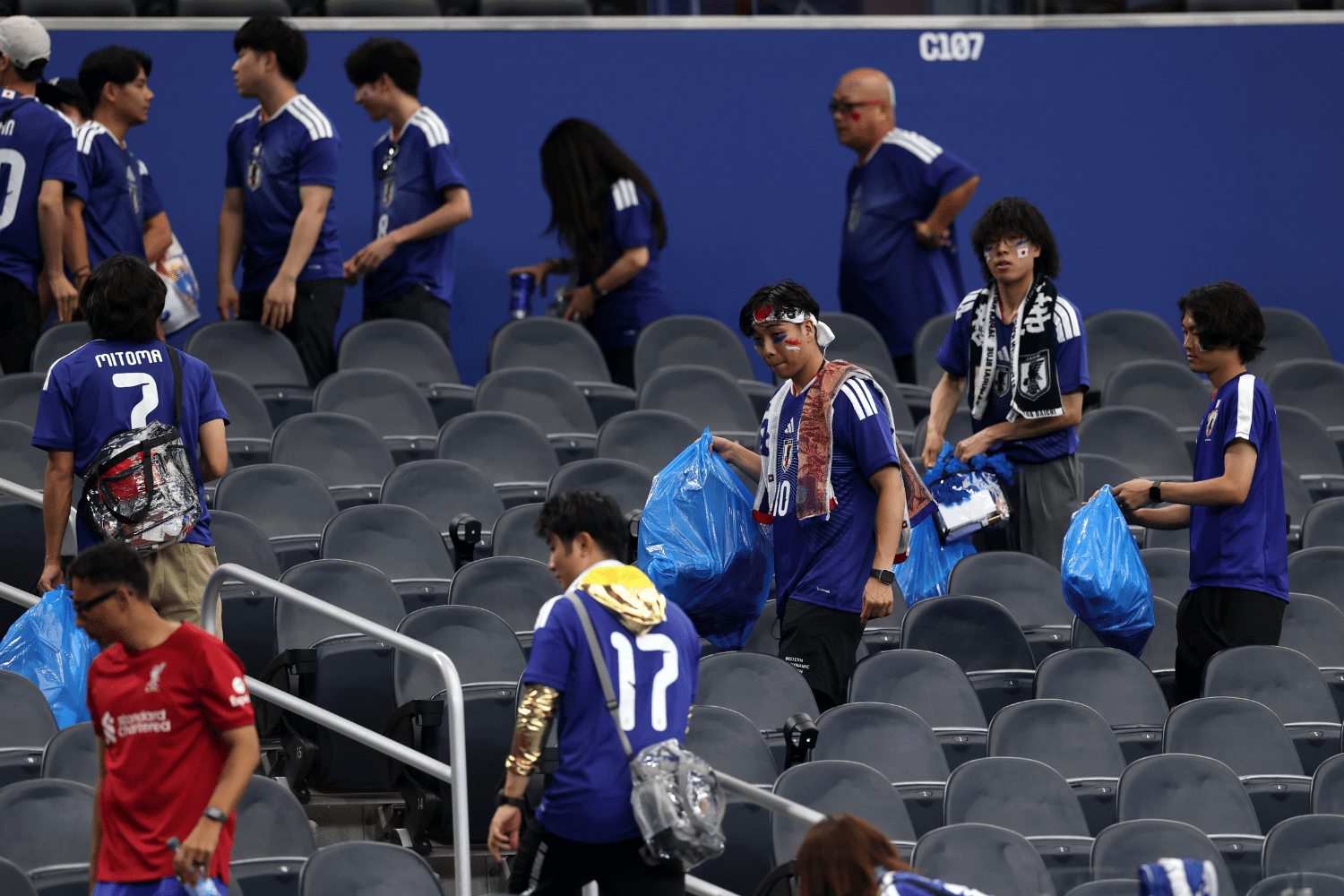
After the World Cup match between the Netherlands and Japan at Dallas Stadium on Sunday, Japanese fans began cleaning the stands. Rather than continuing celebrations, they chose to collect trash, placing it in bags after a 2–2 draw on June 14.
Footage shared by FIFA has been viewed over 6.3 million times. One fan in the video explained this act of cleanliness, stating, It’s the culture, but it’s like a respect for everything—respect for the players, supporters, and also for the stadium.
This reflects the honor they feel in being present, wanting to leave the stadium clean.
A Familiar Tradition Worldwide
Japanese fans have gained international attention for tidying up stadiums after matches in recent tournaments. The scenes in Dallas mirror actions at previous events, like a friendly in England’s Wembley Stadium earlier this year, where they were praised for keeping venues tidy.
Tournament Scale and Waste Generation
The incident also emphasizes the vast amount of waste produced during the World Cup, one of the largest global sporting events. The 2026 tournament, spanning the U.S., Canada, and Mexico, expects 6 to 8 million fans across 104 matches. It’s estimated that each attendee might generate around 0.6 to 0.8 pounds of waste. This includes items like cups, especially since FIFA has banned refillable water bottles in stadiums, along with food containers, programs, and merchandise packaging. Altogether, this could total 4 to 5 million pounds of waste.
Individual host cities are preparing for these impacts. For instance, in Miami, it is projected that World Cup events may result in more than half a million pounds of trash over just seven games.
Handling the Waste
FIFA and local organizers stress that waste reduction and sustainability are central to 2026 tournament planning. In Dallas, nine matches will be hosted, more than any other city, in a stadium accommodating over 70,000 fans. A comprehensive waste management strategy includes expanded recycling, composting, reducing single-use plastics, and promoting public awareness to encourage waste sorting.
Previous tournaments have tested similar initiatives. During the 2022 World Cup in Qatar, approximately 80 percent of stadium waste was recycled or composted, with thousands of tons processed through sorting systems.