
Edible flowers have long enhanced the aesthetic appeal of dishes, but they offer much more than mere decoration. Chefs use these blossoms to introduce unique flavors and textures to various recipes. Among the numerous types of edible flowers, almost 200 species exist, each contributing distinct taste profiles.
The Versatility of Edible Blooms
Chef Randy Rucker from Philadelphia emphasizes the transformative nature of flowers in cooking. When processed by drying, fermenting, or blending, their flavors undergo remarkable changes. For instance, sdao flowers, common in Cambodian cuisine, have a bitter taste, whereas Eastern redbuds provide a mild sweetness.
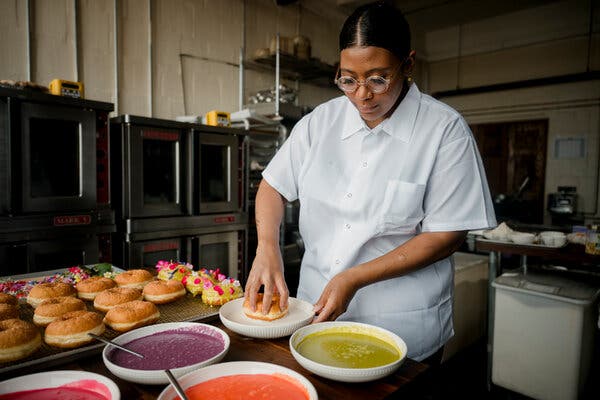
Three Philadelphia-based chefs shared their insights and recipes that celebrate summer’s fleeting bounty of flowers. Rhonda Saltzman from Second Daughter bakery uses jasmine blossoms not just for decoration but as a key ingredient in her doughnuts.
Rhonda Saltzman’s Jasmine Blossom Doughnuts
Rhonda Saltzman incorporates her Philadelphia bakery’s ethos of tradition and community into her unique challah doughnuts. Challah, a staple of Shabbat, transforms into a versatile dough for various pastries.
Saltzman’s jasmine blossom doughnuts feature two applications of flowers. Jasmine blossoms infuse the glaze, imparting a delicate sweetness. A variety of edible flowers add color and texture atop the doughnuts.
Ingredients for the Dough
- 575 grams (4 ¾ cups plus 2 tablespoons) all-purpose flour
- 120 grams (½ cup) water
- 150 grams (10 tablespoons) whole milk
- 85 grams (¼ cup) honey
- 35 grams (3 scant tablespoons) white sugar
- 75 grams (⅓ cup) extra-virgin olive oil
- 2 large eggs, room temperature
- 5 grams (1 ½ teaspoons) instant yeast
- 5 grams (1 ¾ teaspoons) kosher salt
For the Jasmine Glaze
- 1,100 grams (9 cups plus 3 tablespoons) powdered sugar
- 120 grams (½ cup) whole milk
- 80 grams (⅓ cup) heavy cream
- ½ cup whole dried jasmine flowers
- 20 grams (1 tablespoon plus 1 ½ teaspoons) vanilla extract
- 4 grams (⅔ teaspoon) salt
Frying and Finishing
- Neutral oil for frying
- Fresh edible flowers for topping
To prepare the dough, use a stand mixer with a dough hook. Combine water, milk, honey, sugar, olive oil, and eggs. Briefly mix before adding flour, yeast, and salt.
These recipes illustrate the culinary potential of edible flowers. By using creative techniques, chefs can transform the humble bloom into a key component of their dishes.