
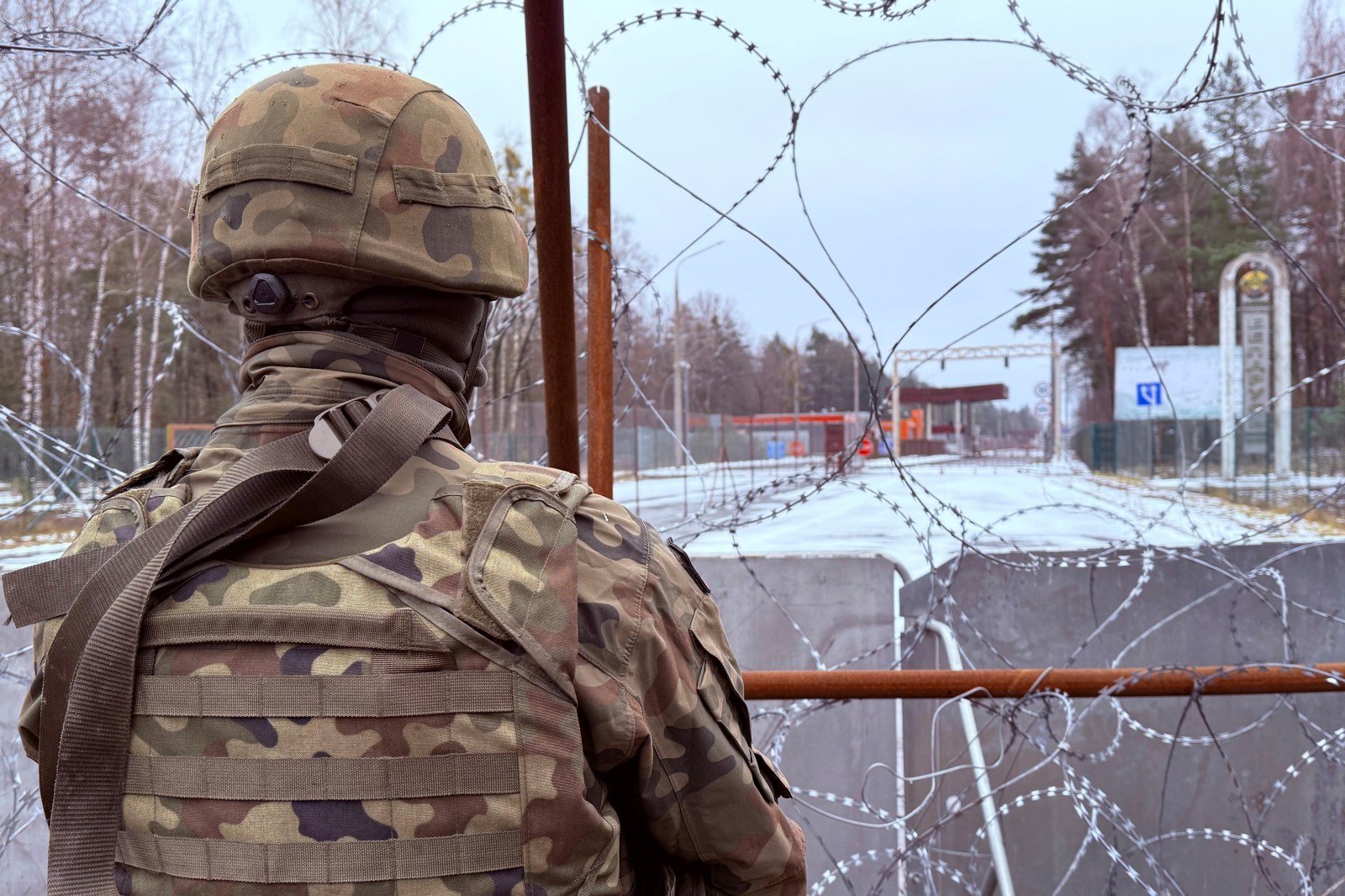
Polish media reports indicate that lawmakers are working on legislation to prepare for a “pre-war period.” This response comes amid concerns from NATO officials about a potential attack by Russia on a NATO member this year.
The Polish defense ministry has drafted a law aimed at enhancing Poland’s defense capabilities. The legislation seeks to strengthen the connection between Poland’s military and internal security services, according to the Rzeczpospolita newspaper.
A source close to the president described this move as getting the state ready for a pre-war period. Newsweek sought a comment from the Polish defense ministry on this matter.
In 2022, Poland unveiled significant changes to its military. The plan involves expanding the size of its army, purchasing new weapons (often American-made), and streamlining military recruitment.
By 2039, Poland aims to increase its army to 300,000 active-duty soldiers, according to RMF24, an online news portal. This goal represents more than a three-fold increase from 2015. Additionally, 200,000 reservists are planned.
Poland has remained a strong supporter of Ukraine since Russia’s invasion commenced over four years ago. It leads NATO in military spending as a percentage of its GDP, committing more than 4.81 percent this year.
Concerns Over Hybrid Warfare
Recently, NATO officials have warned of possible Russian escalations in hybrid warfare tactics against members. Such tactics could include cyberattacks, disinformation campaigns, or targeting infrastructure like power grids.
European governments are on alert due to incidents described as hybrid warfare attacks potentially involving Russia. Moscow’s embassy in London rejected such claims, attributing mishaps in Europe to other causes without investigation.
A recent fire at a Starlink satellite site linked to Ukraine was labeled as sabotage by Polish authorities. Prosecutors connected the incident to Russia. Moreover, a Russian drone struck a train engine on the Kyiv-Warsaw route near the Polish border.
Incidents of airspace violations have occurred, such as a Russian helicopter entering Polish airspace from Kaliningrad. European NATO nations, especially those near the Russian border, remain uneasy due to drone and missile incursions. Officials suggest Russia tests NATO reactions, aiming to weaken support for Ukraine.
Polish Prime Minister Donald Tusk emphasized intelligence reports predicting more drone and missile entries into NATO airspace soon. Russia, Tusk said, calls incidents like these “accidental.”
Poland’s Deputy Prime Minister Władysław Kosiniak-Kamysz stated that Warsaw would increase helicopter and fighter jet flights due to Russia’s provocations, which endanger previously safe areas.
The Danish military and intelligence services, in a clear statement, announced that Russia has ramped up cyberattacks in Europe. Danish intelligence predicts that Russia may intensify its hybrid warfare against NATO, causing greater damage.
Kaliningrad and Nuclear Tensions
Russian President Vladimir Putin promised to use all means, including nuclear weapons, to protect Kaliningrad if it faced attack. NATO condemned Russia’s nuclear rhetoric, asserting that military exercises in the Baltic Sea do not threaten Russia.
Kaliningrad, a Russian territory between Poland and Lithuania, hosts a key naval fleet and missile launchers. The area is surrounded by NATO members. The Suwałki Gap, a narrow land strip, connects it to Belarus.
Recently, British media speculated on a hypothetical Russian attack on the UK, which might trigger operations against Kaliningrad. This scenario drew notable attention in the UK.
The Danish Defence Intelligence Service (DDIS) reported a growing risk of a “limited military attack” by Russia on eastern NATO countries. This type of military action, possibly a small-scale land grab, poses a realistic threat to NATO.