
Iconic buildings often capture the public imagination, becoming landmarks that define cities. Many architects applaud their design, yet some see flaws, questioning choices related to design, context, and function, which may not be obvious to the public.
In recent times, the architectural conversation has shifted away from creating new icons. Gordon Gill, the architect behind the world’s tallest building, emphasizes the importance of updating older buildings to maintain longevity and relevance.
The trend in the United States reflects this perspective. A significant number of structures are over 50 years old, as stated by the American Institute of Architects. Adaptive reuse is on the rise, with nearly 25,000 apartments created from converted buildings in 2024, marking a 50% year-on-year increase, according to RentCafe.
Amidst these trends, criticism of renowned buildings ignites a broader debate on architectural success.
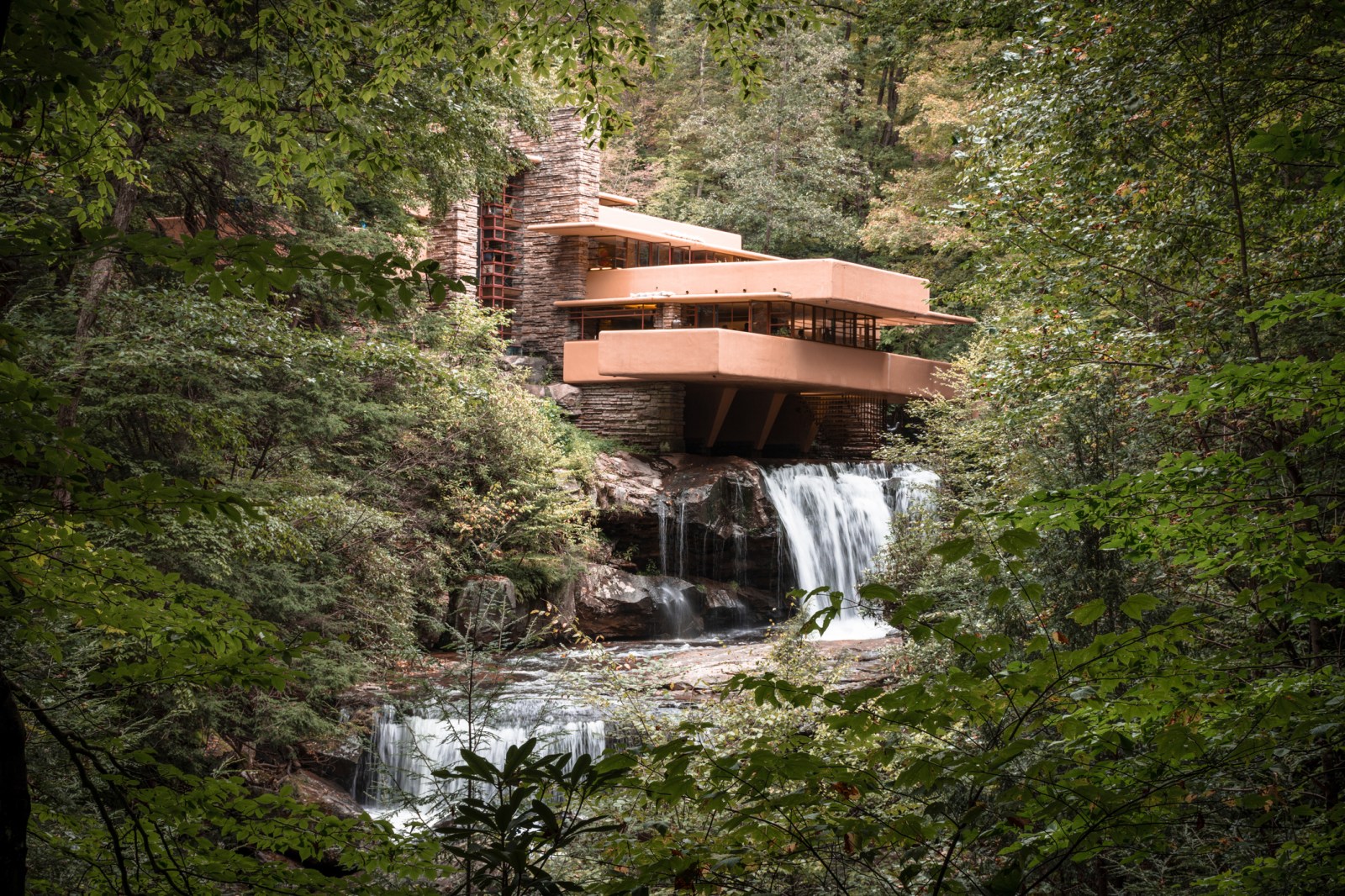
Fallingwater, Pennsylvania
Frank Lloyd Wright’s Fallingwater is a celebrated masterpiece, dramatically positioned over a waterfall and recognized as a UNESCO site. Nevertheless, skepticism exists.
“Controversial take, but I’m not a fan of Fallingwater…yes, the home is iconic. But Wright chose the wrong location,” architect Dan D’Agostino shared.
Wright’s decision to place the home atop the waterfall blocked the desired view. D’Agostino also criticized the engineering, noting the absence of additional steel reinforcement despite contractors’ suggestions, calling it a great idea but a problematic design.
Miles Smith, an architect at Graphisoft, shared mixed feelings. He finds the form compelling and enjoyable to witness, yet considers the project a travesty.
The Guggenheim Museum Bilbao, Spain
Designed by Frank Gehry, the Guggenheim Museum Bilbao is famous for its sculptural form and city transformation. Still, design issues are highlighted.
Architect Miles Smith notes curvilinear and organic massing appears untethered. However, Gehry’s passing softened many critiques as architects began acknowledging his influence.
The Glass House, Connecticut
Philip Johnson’s Glass House, known for minimalist transparency, receives mixed reviews compared to similar projects.
Miles Smith remarks the design is initially conceptually pure but overshadowed by Mies van der Rohe’s Farnsworth House, criticizing structural columns at corners that hinder the intended transparency.
McCormick Place, Illinois
Chicago’s McCormick Place holds the title of largest convention center in North America, yet faces critiques despite its engineering accomplishments.
Brian Turcza, an architectural design director at DyeLot, views it as disconnected from the surroundings, failing to serve the city or foster human-centered connections.
Despite praise for the awe-inspiring main hall, Turcza notes a lack of clarity in movement and orientation. Moreover, environmental impacts are significant, with bird collisions causing thousands of deaths, although retrofits have reduced strikes.
The Shard, United Kingdom
The Shard, London’s tallest structure, designed by Renzo Piano, is celebrated yet critiqued for urban design aspects.
“Structurally impressive? Absolutely. But as a piece of urban design, it feels like a missed opportunity,” commented Zaeem Chaudhary.
Chaudhary argues the Shard disrupts the dialogue between different architectural eras in London, asserting its isolated form lacks interaction with surrounding streets.
For Chaudhary, great architecture enhances its context, while the Shard merely tolerates it.
If you have a story related to architecture or design, share it via [email protected], and it might be featured by Newsweek.