
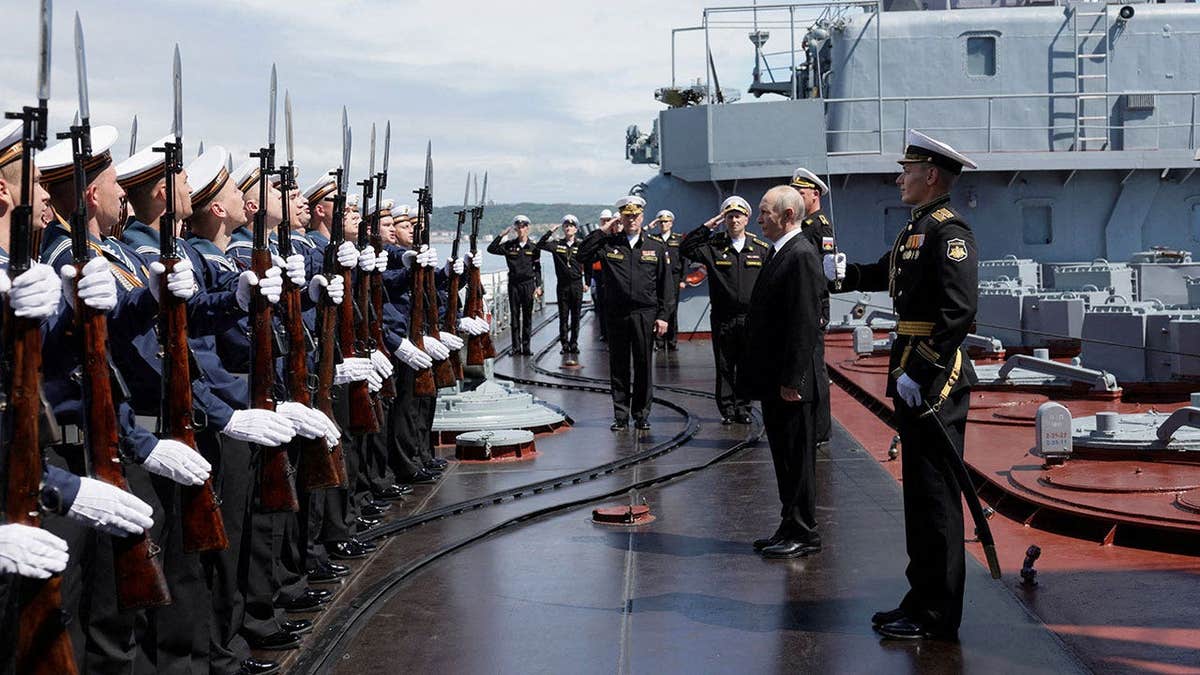
Russian President Vladimir Putin issued a threat on Wednesday, stating that Russia could seize European vessels if European countries start confiscating Russian merchant ships. This comes after Ukraine launched a significant attack on a Russian naval and commercial hub in the Black Sea. Meanwhile, Moscow conducted extensive naval exercises in the Pacific.
The developments highlight an intensifying maritime confrontation. Ukraine targeted a critical Russian Black Sea port, while Russia threatened retaliation and showcased naval strength in the Pacific. These events suggest that the conflict’s impact is reaching beyond traditional battlefields to affect strategic ports and international shipping routes.
Ukraine Strikes Novorossiysk
Ukraine recently launched a major drone attack on Novorossiysk, a prominent Black Sea export hub. The attack reportedly incapacitated two major grain terminals, as per Russian industry sources. Novorossiysk is not only crucial for exports but also houses Russian warships, relocated there after multiple Ukrainian attacks on the Black Sea Fleet in Crimea.
Ukrainian President Volodymyr Zelenskyy took responsibility for the operation against the naval base, calling it the last significant Russian fleet stronghold in the Black Sea. In a social media post, he detailed the use of Palianytsia drones, Neptune missiles, and unmanned naval systems in the offensive, targeting air defense sites, piers, and port facilities.
“The occupation fleet and all the infrastructure supporting it will not be safe as long as Russian aggression continues,” Zelenskyy stated.
The attacks resulted in significant damage. The governor of Russia’s Krasnodar region reported casualties, including an 8-year-old child. The local mayor noted multiple buildings were damaged, and the water supply was disrupted. Consequences of the assault included a rise in Chicago wheat futures by approximately 3% due to concerns about potential disruptions to Russian grain exports.
Moscow’s Response and Naval Exercises
Apart from the Black Sea events, Putin reviewed naval drills in the Pacific, onboard the missile cruiser Varyag. He issued a warning to European nations increasing scrutiny of Russia’s shadow fleet. The European Union has ramped up sanctions, detaining ships and crews suspected of evasion.
Russia’s Foreign Ministry quoted Putin, “Attempts to seize Russian vessels & sell off our property are outright piracy. If such plans are implemented, Russia will respond in kind – wherever we deem necessary, including within the Pacific Fleet’s area of responsibility.”
Over 13,000 personnel and about 60 ships participated in the Russian naval exercises, covering the Sea of Japan, Sea of Okhotsk, and Northwest Pacific. Video footage depicted Russian forces firing anti-ship missiles at simulated targets from various locations, including Kamchatka and the Kuril Islands.
During his Pacific visit, Putin also criticized NATO’s presence expansion in the Asia-Pacific and Arctic regions. He highlighted new military alliances and prospective weapon deployments that could heighten regional tensions.
Continued Aggression
Both sides remain engaged in ongoing hostilities. Reports indicate Russian strikes on the Ukrainian port of Odesa and a separate attack on a shopping mall in Zaporizhzhia, maintaining pressure on ports and logistic hubs amid the prolonged conflict.
In a separate incident, Romania destructed two suspected Russian Gerbera drones over the Black Sea, displaying regional security concerns. Romania’s naval forces acted roughly 90 nautical miles from Constanta to eliminate the threats.
NATO convened its North Atlantic Council due to ongoing Russian airspace incursions in Poland and Romania, alongside drone incidents. A spokesperson confirmed support for Ukraine and solidarity with affected allies, condemning Russia’s actions.
Effie Lachter, an experienced reporter for Fox News Digital, contributed to this coverage. Her extensive background includes documenting war zones and crises, providing insights into human trafficking, and reporting from conflict areas worldwide.