
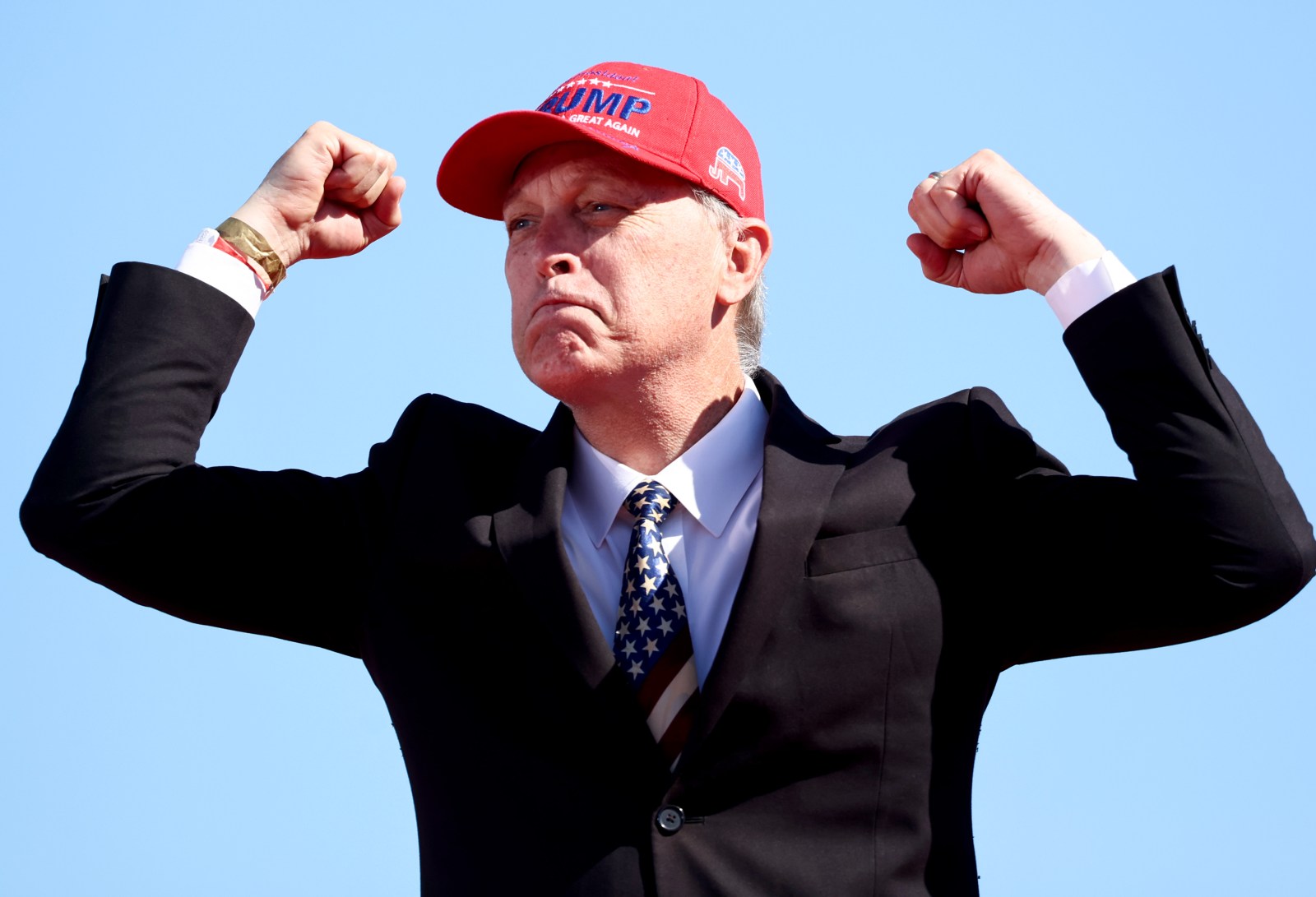
President Donald Trump’s low approval ratings in Arizona pose a significant challenge for Republican gubernatorial nominee Andy Biggs. As elections approach in November, Biggs trails behind his Democratic opponent, Governor Katie Hobbs, in the polls.
Biggs, a strong supporter of Trump and endorsed by him, is struggling in the crucial battleground state. A poll conducted by Quantus Insights found that 55.4% of respondents disapprove of Trump, while 43.4% approve. Although these findings do not directly blame Trump for Biggs’s lagging numbers, Quantus noted that a president polling poorly can turn a competitive race into a difficult one.
Another poll by Noble Predictive Insights also highlights the obstacles facing Biggs, showing a wider margin for Hobbs and illustrating how Trump’s reputation is affecting Republican candidates down the ballot. News outlets are awaiting comments from the offices of Biggs, Hobbs, and the White House on the situation.
Despite a strong showing in the Republican primary, where Biggs secured nearly 74% of the vote, Trump’s approval rating in Arizona is troubling for his campaign. Quantus reports a net rating of −12.0 for Trump, with 53.2% strongly disapproving and 38% strongly approving. Their survey, involving 780 voters with a 4.1% margin of error, showed Hobbs leading Biggs by almost six percentage points—49.1% to 43.2%, with six percent undecided.
When focusing on voters choosing between the candidates, Hobbs holds a lead of 53.2% to 46.8%. Hobbs, who faced no opposition for the Democratic nomination, narrowly won the 2022 governor’s race against Kari Lake with 50.3% to Lake’s 49.6%. Quantus further revealed that 50% of likely voters in Arizona believe Hobbs should be reelected, while 47.6% desire someone new; 2.4% are undecided.
Young voters are more inclined to support Hobbs, with 80.6% of those aged 18 to 29 and 63.3% of those aged 30 to 44 backing her. In contrast, only 48% of voters aged 45 to 64 and 44% of older voters express support for her. Urban voters lean towards Hobbs at 56%, whereas Biggs finds strength among rural and town voters at 47.6%.
The campaign’s focus is on demographic divides, such as older versus younger and urban versus rural, according to Quantus. Meanwhile, Noble shows Hobbs leading Biggs with 48% to 35%, with 12% undecided—indicating a wider gap than Quantus’s findings. Noble points out that Arizona’s political landscape presents challenges for Republican candidates due to national political conditions and volatility among independents and suburban voters.
For additional commentary and analysis on this evolving story, contact Newsweek editors Daniel Orton and Robert Greenall.