
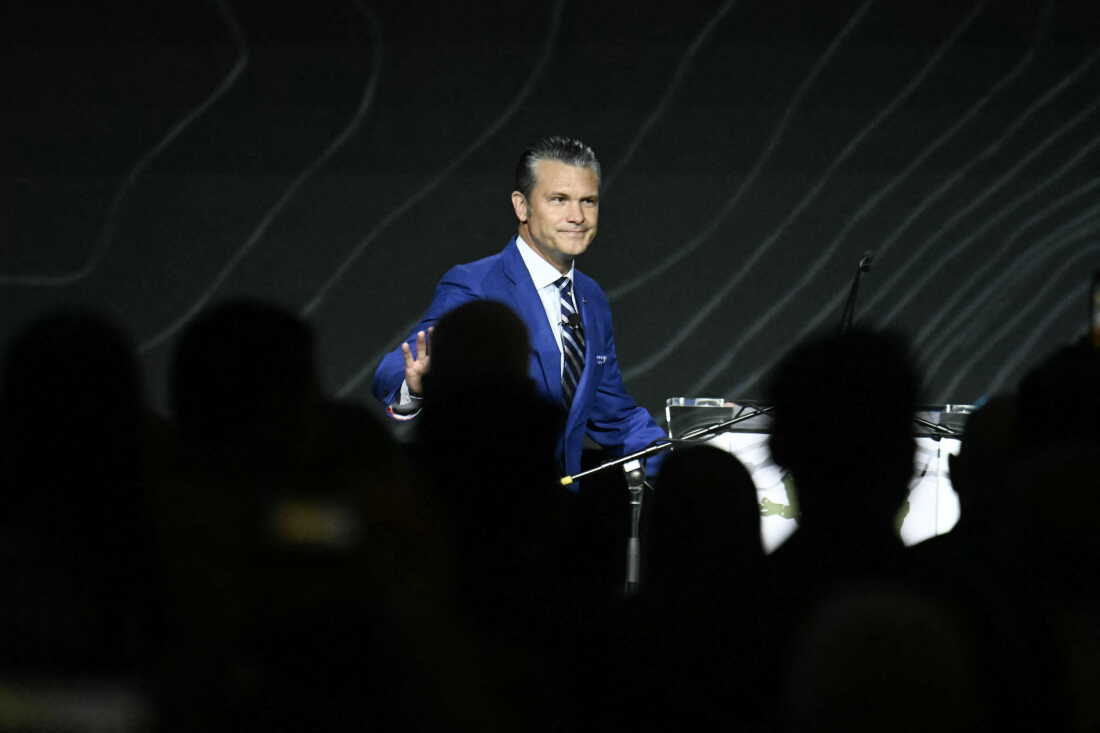
At the Association of the United States Army 2026 Annual Meeting in Washington, D.C., Secretary of Defense Pete Hegseth discussed plans for a public execution. His remarks have sparked considerable debate. Attorney General Jim Watson attended alongside other officials. Questions remain about the planned livestreaming of Nidal Hasan’s execution, which Hegseth suggested would deter future attacks.
President Trump addressed the issue, indicating the decision is still under review. Vice President JD Vance expressed his personal disinclination to view the execution. The last U.S. public execution occurred 90 years ago, marking this proposal as unprecedented in modern times.
“One of the most worrisome parts of this development is that … it pushes the boundaries of what’s acceptable,” stated Professor Julie Ingersoll, a religion expert specializing in Christian Reconstruction.
Religious scholars have expressed concern about normalizing public executions. Ingersoll noted that mere discussion of such acts shifts societal norms. Hegseth, linked to the Communion of Reformed Evangelical Churches (CREC), promotes views outside mainstream Christianity.
CREC’s leader advocates for a theonomous America, where women lack voting rights and slavery receives defense. Matthew Taylor of Georgetown warns that Hegseth’s objectives could inject these extreme beliefs into military policies.
The CREC strongly supports the death penalty, aligning with Hegseth’s views on execution. Ingersoll indicated that Hegseth’s religious community widely endorses harsh punishments reflected in ancient texts. Reaction to his proposal has been divisive among religious and political leaders.
Concerns about religious bias in this case have emerged. Joshua Salaam, from the Association of Muslim Chaplains, challenges the disparate handling of Hasan’s case, suggesting religious discrimination.
“I think he sees himself as engaged in a battle on behalf of God against the infidels,” Ingersoll stated, highlighting Hegseth’s apparent bias against Islam.
Hegseth’s tattoos, including phrases from the Crusades, underline his religious fervor. His book, American Crusade, promotes this ideology further. Ingersoll explained how this perspective idealizes medieval Christendom in pursuit of a modern dominionist society.
This dominionism is part of a larger trend of Christian nationalism challenging democratic ideals. Taylor voiced concerns that Hegseth uses his military position to push these personal religious objectives.
Discussion of public executions is not limited to religious circles. Organizations across political spectrums have entertained similar ideas. Charlie Kirk, an activist, suggested corporations could sponsor such events for public revenue. Despite this, public backlash remains significant.
While the execution plan faces jeopardy, the conversation highlights potential shifts in cultural norms. Taylor stressed the risks of normalizing radical changes within powerful institutions. Reflecting on moral impacts, Salaam warned about the societal damage from promoting public executions.