
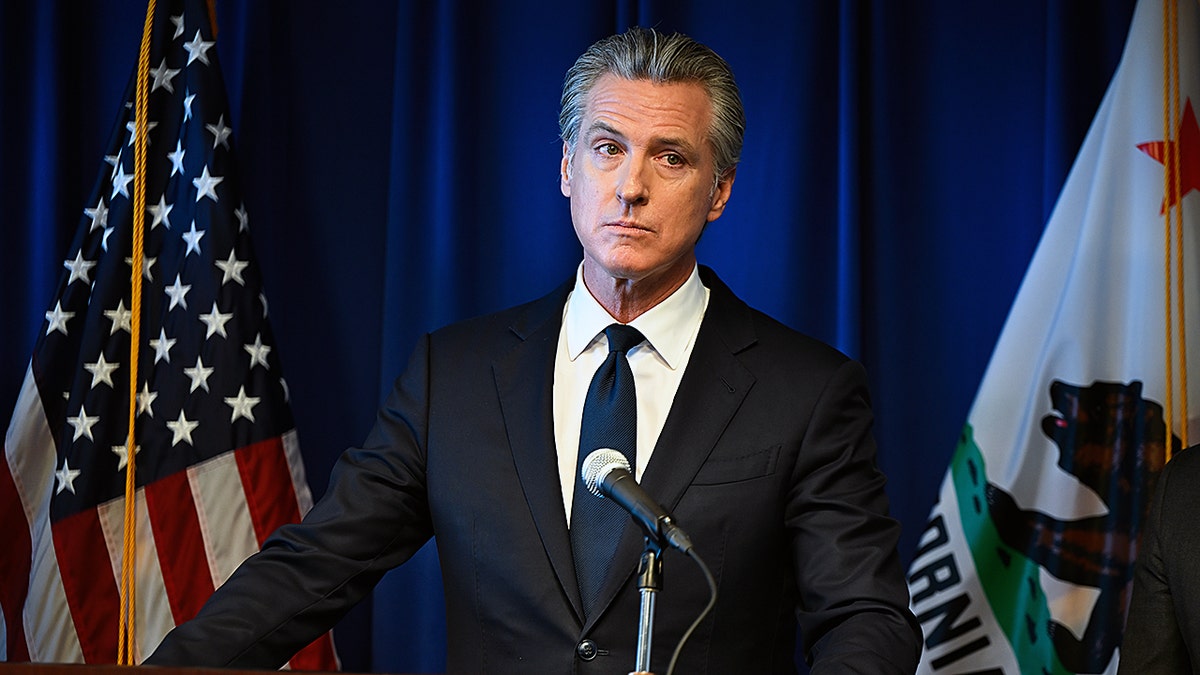
California Governor Gavin Newsom plans to sue the Trump administration over its efforts to limit mail-in voting. This decision follows the Supreme Court’s recent ruling, which allows the administration to enforce aspects of President Donald Trump’s executive order aimed at ‘election integrity’ while legal proceedings continue.
The Supreme Court ruled 6-3 in favor of the Trump administration. This decision lifts a previous injunction that had blocked the order in 23 states before the November midterm elections. However, the Court emphasized that this ruling was about the injunction and not the overall legality of the order, indicating further challenges could arise.
Newsom criticized this ruling in a statement from his office, expressing concern that the administration’s plan could disenfranchise voters nationwide. He announced California’s intention to file another lawsuit to prevent these regulations from taking effect.
Protective Measures in California
Newsom’s office highlighted two piece of legislation making their way through the California Legislature designed to safeguard election integrity. AB 282 aims to establish new criminal offenses related to seizing ballots, election records, or certified voting technology before results are certified. Another bill, SB 259, seeks to establish penalties for interfering with mail-in ballot delivery, including felonies punishable by up to four years in prison in some circumstances.
The governor’s office has branded these measures as an “Election Protection” package. These bills build on election-related laws signed by Newsom earlier in the summer.
Trump Administration’s Actions
The U.S. Postal Service (USPS) and Department of Justice announced plans to implement the new mail-ballot restrictions following the Supreme Court’s decision. The executive order from President Trump requires federal agencies to create lists of eligible voters based on citizenship and mandates that the USPS deliver mail-in ballots only to those on approved lists.
The Supreme Court’s ruling found that the order’s requirement for the Department of Homeland Security to generate and distribute state citizenship lists placed burdens on federal agencies but not on states. This meant states experienced no tangible harm, providing them no legal standing against this provision.
Justices Sonia Sotomayor, Elena Kagan, and Ketanji Brown Jackson opposed the ruling.
A representative for Newsom did not provide a comment immediately in response to Fox News Digital’s inquiry. Brittany Miller, a breaking news writer for Fox News Digital and a Syracuse University graduate, initially reported this story.