
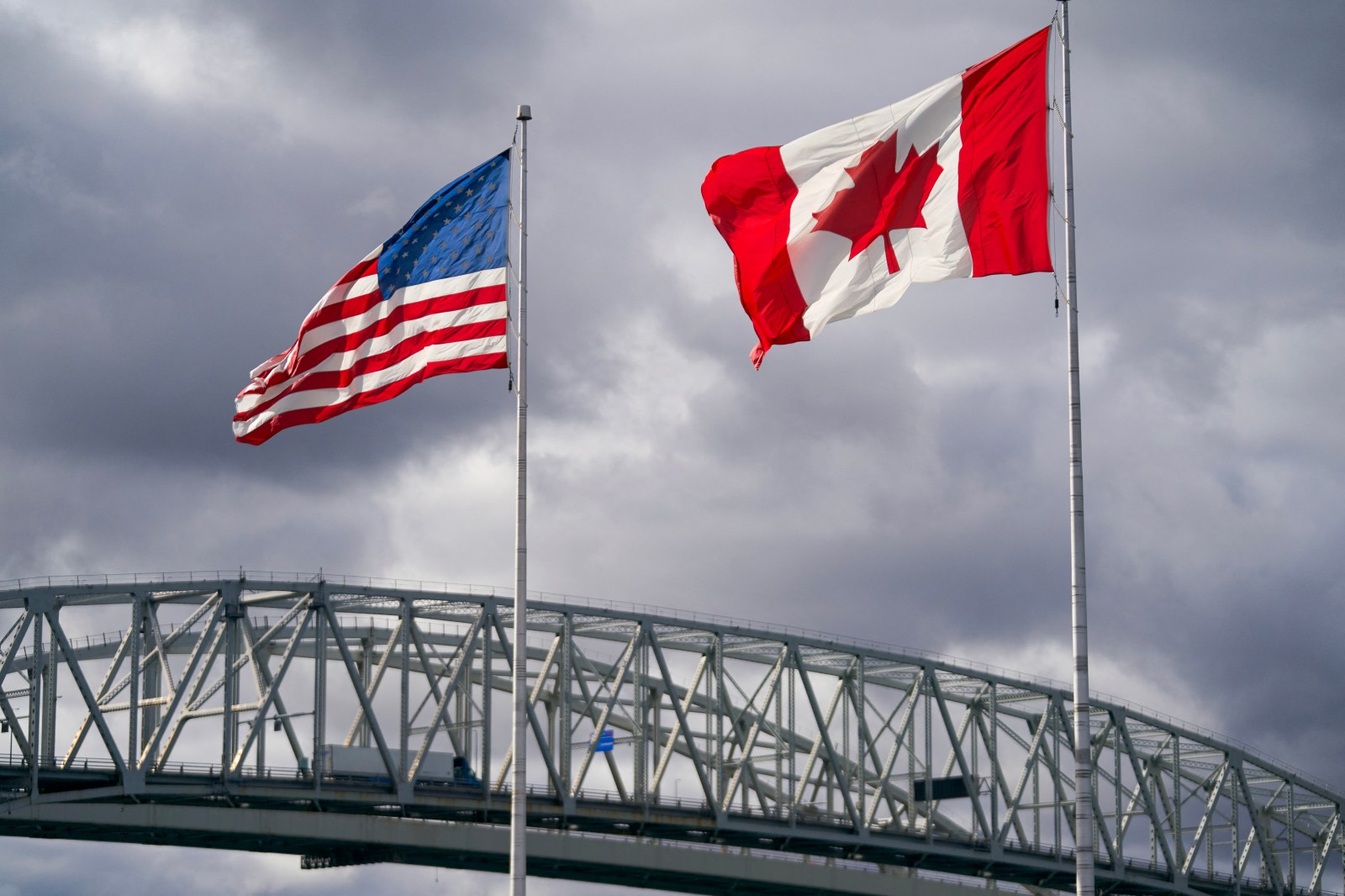
President Donald Trump’s trade conflict with Canada presents a significant political challenge for Republican contenders in key Senate races. On Tuesday, Canada announced retaliatory tariffs on U.S. goods after trade talks with Washington faltered. This followed the administration’s decision to impose tariffs on approximately $20 billion in Canadian imports.
Economists predict that these tariffs will increase costs and disrupt supply chains, notably affecting several competitive Senate battleground states that could determine control of the chamber in November’s midterm elections. Alex Beene, a financial literacy instructor from the University of Tennessee at Martin, emphasized the impact on Americans’ budgets, particularly in Michigan, Ohio, and Alaska, where Canada is a crucial trading partner.
Democrats aim to reclaim the Senate by targeting traditional battlegrounds and Republican-held states like Alaska, Iowa, Ohio, and Texas. Michigan is among the most contested open-seat races, while Maine provides a promising opportunity for Democrats.
Why It Matters
The U.S.-Canada trade relationship is one of the largest globally, supporting sectors like auto, agriculture, seafood, forestry, and energy. States with competitive Senate contests are especially vulnerable due to Canada’s role as a major export market or essential supplier.
Any extended tariff dispute could impact jobs and consumer prices as voters prepare to vote.
Senate Battleground States Most Exposed to Canada Tariffs
Here are the Senate battleground states most vulnerable to Canada tariffs:
- Michigan
- Ohio
- Iowa
- Maine
- Alaska
- Texas
Michigan: Auto Industry in the Crosshairs
Michigan exemplifies a state caught between economic concerns and political dynamics. It channels about one-third of its exports to Canada, relying heavily on cross-border supply chains for its automotive sector. Canada’s tariffs target products related to steel, aluminum, and manufacturing.
Democratic candidate Abdul El-Sayed has criticized the tariffs as a campaign issue, targeting his Republican opponent, Mike Rogers.
Ohio: Manufacturing and Agriculture at Risk
Ohio exported roughly $21.8 billion worth to Canada, its largest international trading partner. The state faces challenges from tariffs impacting manufacturing, steel, aluminum, and agriculture.
The Senate contest between Republican Jon Husted and Democrat Sherrod Brown represents a prime opportunity for Democrats in Republican territories.
Iowa: Farmer and Farm Equipment Pressure
Iowa’s economy is tied to North American trade through agriculture and farm manufacturing. Canada’s retaliation includes farm equipment and dairy-related goods, affecting Iowa’s exports to Canada and Mexico.
The Senate race between Republican Ashley Hinson and Democrat Josh Turek has gained competitiveness.
Maine: Lobster, Blueberries and Lumber
Maine Senator Susan Collins voiced opposition to new tariffs on Canada, warning of their effects on Maine’s lobster, blueberries, and lumber industries.
Maine’s economy relies heavily on trade in forestry, seafood, tourism, and agriculture.
Alaska: Seafood Exports
Canada serves as a major market for Alaska’s seafood, with retaliatory tariffs potentially impacting this sector. Democratic Mary Peltola aims to unseat Republican Dan Sullivan in a critical race.
Texas: Biggest Dollar Exposure
Texas faces substantial economic exposure due to its large trade volume, despite Canada’s smaller share in the state’s economy. The Senate contest between Republican Ken Paxton and Democrat James Talarico has unexpectedly tightened.
Canada’s tariffs may influence economic conditions, offering Democrats leverage on economic issues.
What Happens Next
Canada’s retaliatory tariffs are set to commence on September 8, potentially affecting businesses and consumers shortly before elections.
With Senate control potentially hinging on select races, the economic impact of the Canada tariff dispute may become a pivotal campaign issue.