
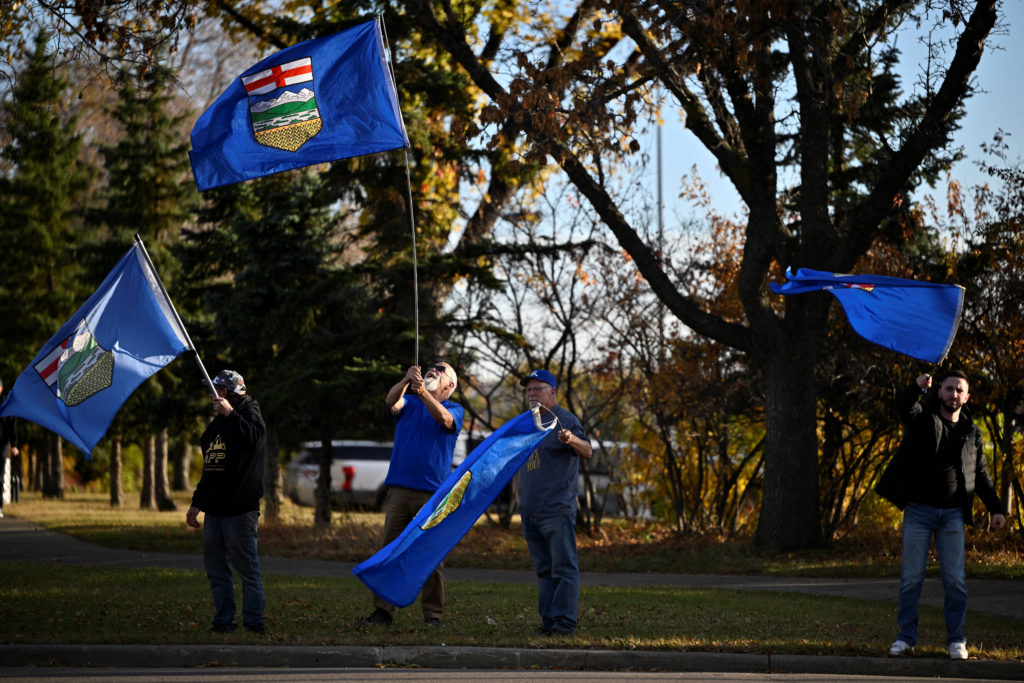
In Edmonton, Alberta voters are considering whether to set the stage for a future referendum on leaving Canada, not an immediate exit. This decision for October 19 is whether to remain part of the country or begin a legal separation process. Premier Danielle Smith supports staying in Canada but noted that the support for separation, recently at 23%, is worryingly high.
Alberta, Canada’s center for oil with the fourth-largest reserves globally, has frequent clashes with the federal government over oil and power distribution. Liberal Prime Ministers, particularly Justin Trudeau and his father Pierre, have been unpopular here due to energy policies such as national carbon taxes that are believed to undermine Alberta’s oil industry. Despite low historical support for separatist parties, the separatist sentiment has recently gained traction, partly sparked by pandemic conditions.
Pandemic Impact on Separatist Movements
During the pandemic, federal restrictions like vaccine mandates intensified Alberta’s separatism. Jeff Rath, leading the independence movement, cited travel restrictions as his switch, telling friends he’d rather move his province than comply. The 2022 Freedom Convoy, opposing cross-border vaccine requirements, grew into a broad protest against pandemic measures.
According to former Premier Jason Kenney, social media has connected isolated activists, transforming separatism into a cause. It has gained professional backing, organized efforts, and funds. Some activists share views with pro-Russia sentiments and Trump’s ideology, according to Kenney.
Prime Minister Mark Carney’s Role
Prime Minister Mark Carney is pushing for Alberta oil to reach new markets and supports a pipeline project to the West Coast. His business-focused policies and stance against U.S. trade tensions have earned him surprising support in Alberta. Despite adversities from major political figures, Jeff Rath considers Carney a formidable opponent and noted the challenge the separatists face in securing more than 30% of the vote, far from a majority.
Carney emphasizes unity, stating, “We are stronger together,” which resonates with his efforts to maintain national cohesion amid threats to Canada’s economy and security.
Engaging with the U.S.
Alberta exports approximately 90% of its crude oil to the U.S. Separatists have engaged directly with U.S. officials, hinting at unprecedented negotiations for possible economic alliances. Although the U.S. State Department acknowledged these meetings, it maintained that Alberta’s political future should be determined by its people. These discussions, as described by Kenney, lack democratic mandates and involve speculative scenarios of Alberta as an independent state.
The Future of Alberta’s Separatism
Prominent figures like Keith Wilson, connected to the convoy protests, see the referendum as a strategy to gain leverage, not outright independence. Asserting Alberta’s position could lead to restructuring relations with Ottawa. Kenney believes that even a modest support ranging from 10% to 20% would eclipse historical trends and strengthen their position.
The separatist wave extends beyond Alberta. In Quebec, the Parti Quebecois returned to power as separatists remain active, yet independence support hovers around 30%. Similar movements were previously rejected in Quebec’s past referendums.
A free press is a cornerstone of a healthy democracy. Support trusted journalism and civil dialogue.