
Fundraising Dynamics
Democratic contender Troy Jackson has significantly surpassed Republican incumbent Susan Collins in fundraising efforts. As per Jackson’s latest financial disclosures, he accumulated $20.4 million within his first three months in the race. This is four times the amount that Collins raised during the same timeframe.
Jackson’s campaign highlighted the substantial grassroots support, asserting it as a movement to prioritize working people in Washington. His expenditures reached $16.5 million compared to Collins’ $10.9 million, leaving Jackson with slightly less cash on hand.
I owe Donald Trump and the billionaires nothing. I owe the people of Maine everything,Jackson stated in a press release shared with Newsweek.
Financial Disclosures
Jackson’s campaign finances have drawn attention due to his entry into the race after Graham Platner’s departure in July. His first quarterly report was submitted this week. Collins’ team expressed concern over the delay, questioning transparency in Jackson’s fundraising and spending.
Jackson reported receiving 350,000 donations from 200,000 donors, 95% of which were under $100. His campaign spent $16.5 million in the quarter, closing with $4 million on hand and approximately $1 million in debt. In comparison, Collins raised $5.2 million and spent $10.9 million, remaining debt-free with $5.4 million.
Despite Jackson’s impressive fundraising, the Republican party maintains a broader spending advantage in Maine and other Senate contests. AdImpact’s data shows $259 million spent on Maine ads, with Republicans accounting for 58% ($149 million), and Democrats 42% ($109 million).
This results in Maine being the most expensive race per voter in the current midterms, with a cost of $221.55 in advertising per voting-age resident.
Polling Insights
Jackson holds a slight lead in most polls following his announcement to join the race in July. InsiderAdvantage’s latest survey shows Jackson with a two-point advantage, echoed by Suffolk University’s poll that surveyed 500 Maine voters from October 8-11. Jackson garnered 49% support, Collins 47%, while 4% remain undecided.
Despite these figures, numerous polls fall within their margins of error. Collins has historically surpassed polling expectations, evidenced by her victory against Sara Gideon in 2020, where she overturned a nearly 4-point polling deficit to win 51% to 42%.
Debates and Developments
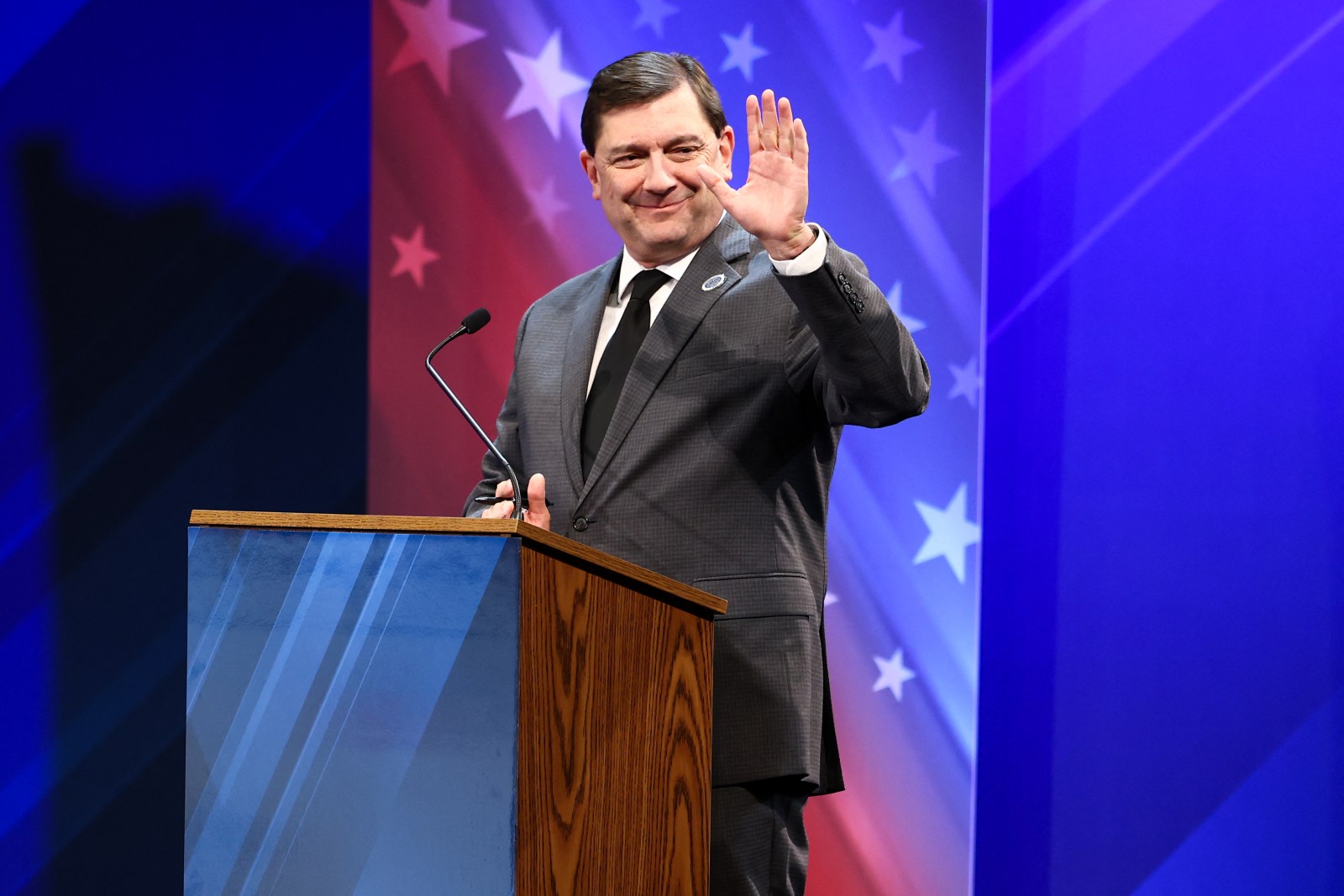
Jackson and Collins wrapped up four debates ahead of the November 3 election. Collins emphasized her bipartisanship and experience, while Jackson sought to highlight her alignment with Trump. The debates encompassed topics such as the U.S. Supreme Court, campaign finances, and immigration.
During the final debate, an interruption emerged from a protester concerning climate impacts of data centers. Collins jested that the individual was a Jackson supporter, to which Jackson retorted, denying any association.
Newsweek has been contacted for further editorial insights on this development.