
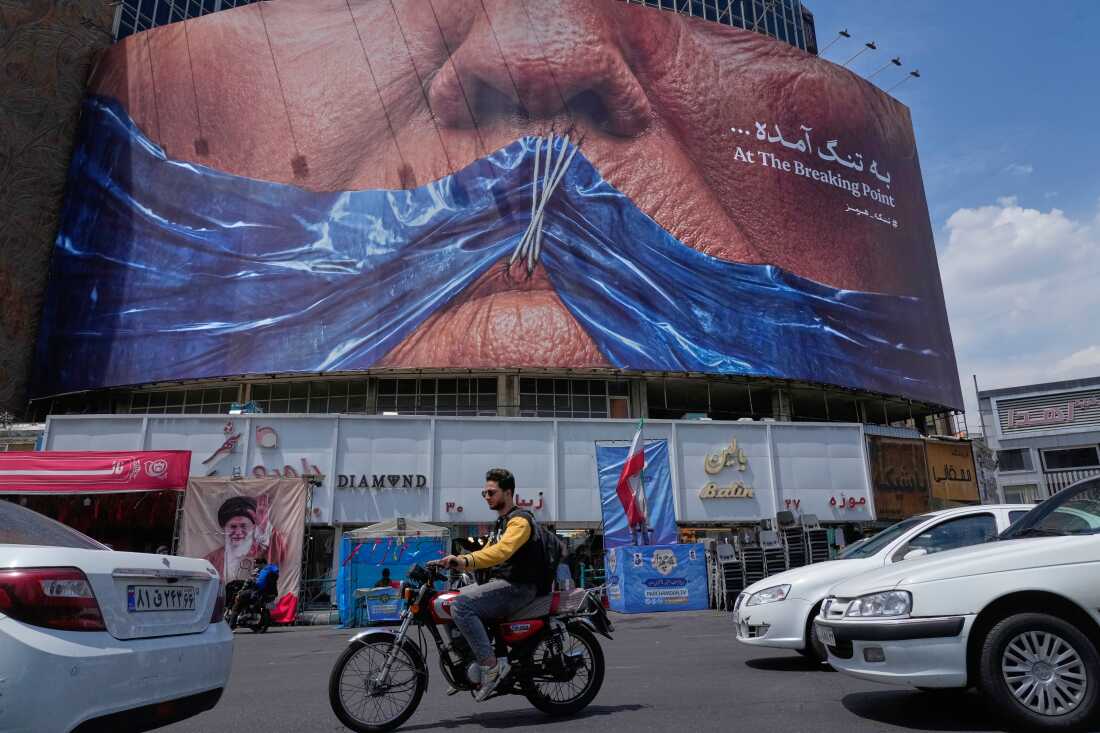
Vehicles pass by a billboard in downtown Tehran showing an illustration of the Strait of Hormuz and a depiction of President Trump with his lips sewn. As the U.S. and Israel’s conflict with Iran lingers, President Trump’s early promise of swift victory looks unattainable. Six months into the war, a failed ceasefire has left the U.S. engaged in an extended military campaign. This conflict has destabilized the global economy, strained relations with Gulf allies, and depleted U.S. resources. Trump’s ambitions have shifted from nuclear containment to seeking regime change, now focusing on controlling the Strait of Hormuz.
Economic Sanctions Intensify
Amid these developments, U.S. Treasury Secretary Scott Bessent announced a new sanctions drive against Iran. This campaign aims to cut off all financial means sustaining Iran’s government until it stands isolated. Bessent warned nations still engaging economically with Iran that they risk sharing in this isolation. Historically, different U.S. administrations tried similar economic strategies, but Iran’s government, accused of various smuggling operations, has withstood such pressures. Esfandyar Batmanghelidj of Bourse & Bazaar Foundation notes that heightened pressure tends to provoke greater resistance from Iran.
Regional Reactions and Sanctions Repercussions
Following retaliatory actions by Iran’s Revolutionary Guard against U.S. allies, the UAE, Iran’s largest trading partner valued at $21 billion in 2024, decided to cease all trade and financial transactions with Iran. Miad Maleki from the Foundation for Defense of Democracies observes that regional measures have evolved, complicating Iran’s evasion of sanctions.
A key factor remains whether countries like China will align with U.S. sanctions. Despite President Trump’s threats of an imminent ‘ECONOMIC D-DAY,’ China’s response, overseen by its Foreign Ministry, opposed unilateral sanctions. The Chinese position is crucial, as they bought $31 billion of crude oil from Iran in 2025. This exchange constitutes a vital segment of Iran’s budget. Secretary Bessent reported a 40% drop in these imports due to the U.S. blockade, leaving open the question of whether China will comply or face potential U.S. penalties.
The Iranian Perspective
Inside Iran, citizens face severe economic hardship due to the U.S. blockade and longstanding sanctions. One resident recounted her father’s struggle to obtain cancer treatment, attributing the lack of medications to restrictive blockades. Economic conditions have made essential goods unaffordable, while financial infrastructure falters under suspected cyberattacks. The shipping costs for imports have soared, exacerbating the trade crisis, as noted by Majid-Reza Hariri from the Iran-China Chamber of Commerce.
Iranian officials adopt a defiant stance. Iran’s security chief Mohsen Rezaei vowed retaliation against those supporting Trump’s economic strategies. He threatened unilateral control over oil routes if provoked, highlighting the broader impact of economic strategies on the region. According to Foad Izadi, a government-aligned analyst, Iran’s resilience is being tested, aiming to ensure regional wealth is shared or entirely withheld to counteract long-standing pressures.