
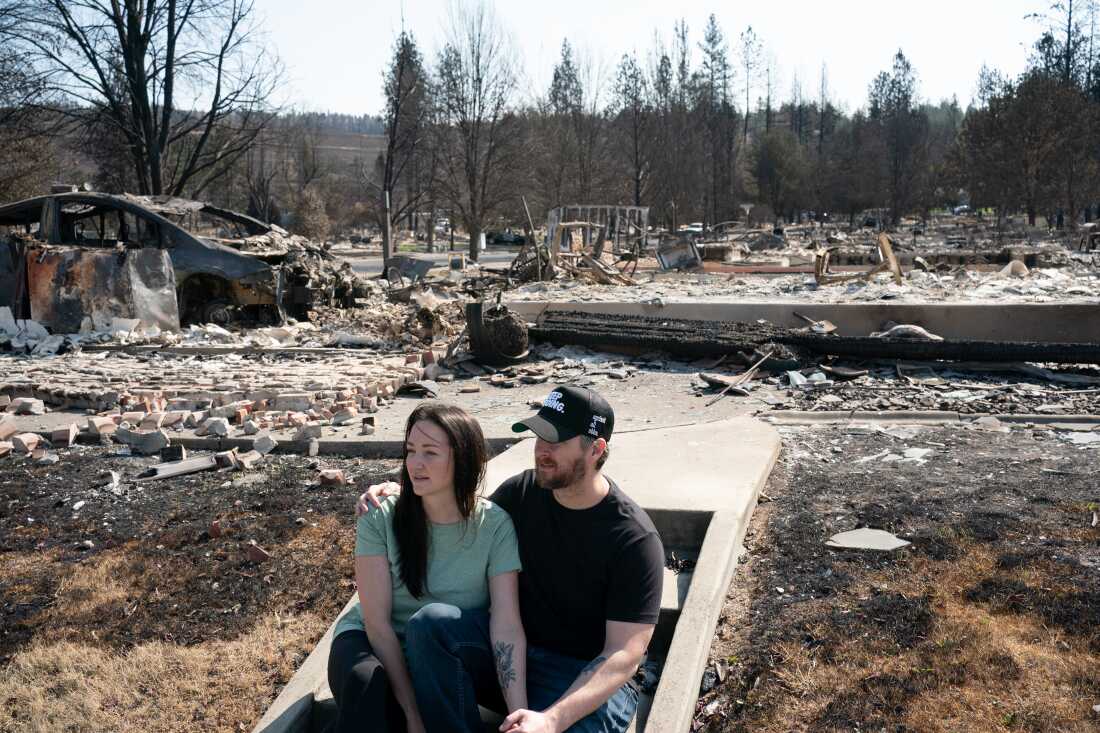
In Spokane, Washington, the aftermath of the Spokane Complex fires is daunting. Melissa and Christopher Matthews stand before their destroyed home, a stark reminder of the disaster. These fires have destroyed over 900 structures, causing widespread displacement.
Weeks after the fires, evacuees return to their homes amid safety concerns. Sarah Nuss, Spokane’s director of emergency management, highlights the ongoing hazards. Toxic debris, including lithium-ion batteries and hazardous chemicals, remain in the burn zones. Before rebuilding, removal of dangerous debris is crucial.
“While folks are allowed to go back into those areas, there is still a hazmat situation going on,” says Nuss.
The Environmental Protection Agency has begun debris removal, a process that could take months or even years. Educating residents about risks is a priority for city officials, as they lack legal power to keep people away. Understanding and documenting the risks is vital.
Survivors’ Perspective
The devastation is personal for Melissa and Chris Matthews. They lost nearly everything, including their home and car. The scene is surreal; to them, it resembles a war zone.
“It looked like a bomb went off here,” remarks Melissa as she surveys her property.
Expecting a lengthy recovery, the Matthews have filed an insurance claim but face uncertainty. Past wildfires in Colorado, Hawaii, and California show that rebuilding can be a long process. Even years later, only a fraction of burned areas are rebuilt.
Local Recovery Efforts
Across from the Matthews’ devastated neighborhood, some homes remain untouched. Nearby, the memory care center is reopening, welcoming residents back. City signs urge homeowners to wear protective gear and get their properties inspected.
Contamination of water sources is a major concern post-wildfire. City officials continue to test Spokane’s water for safety. The destruction and recovery process evoke memories of past disasters, yet there is hope in learning from other communities.
“We know what to do,” states Nuss, reflecting on lessons learned from other wildfire-affected areas.
Lessons from Other Communities
Environmental engineer Andrew Whelton emphasizes the need for detailed soil testing. He played a key role in Paradise, California, after the Camp Fire. His advice to Spokane is to rigorously test for hazards on properties.
With federal aid pending and hotels booked, many survivors must return to their homes. Don Simpson, a local resident, faces uncertainty after losing much of what he loves about the area. His experience during the fire highlights the community’s resilience and support.
“Everything I love about this place is gone,” Simpson shares, watching recovery work near his apartment.
Despite challenges, the community aims to rebuild and recover. Many know it may take years to feel normal again, but the spirit of support remains strong.