
Lunar Eclipse Overview
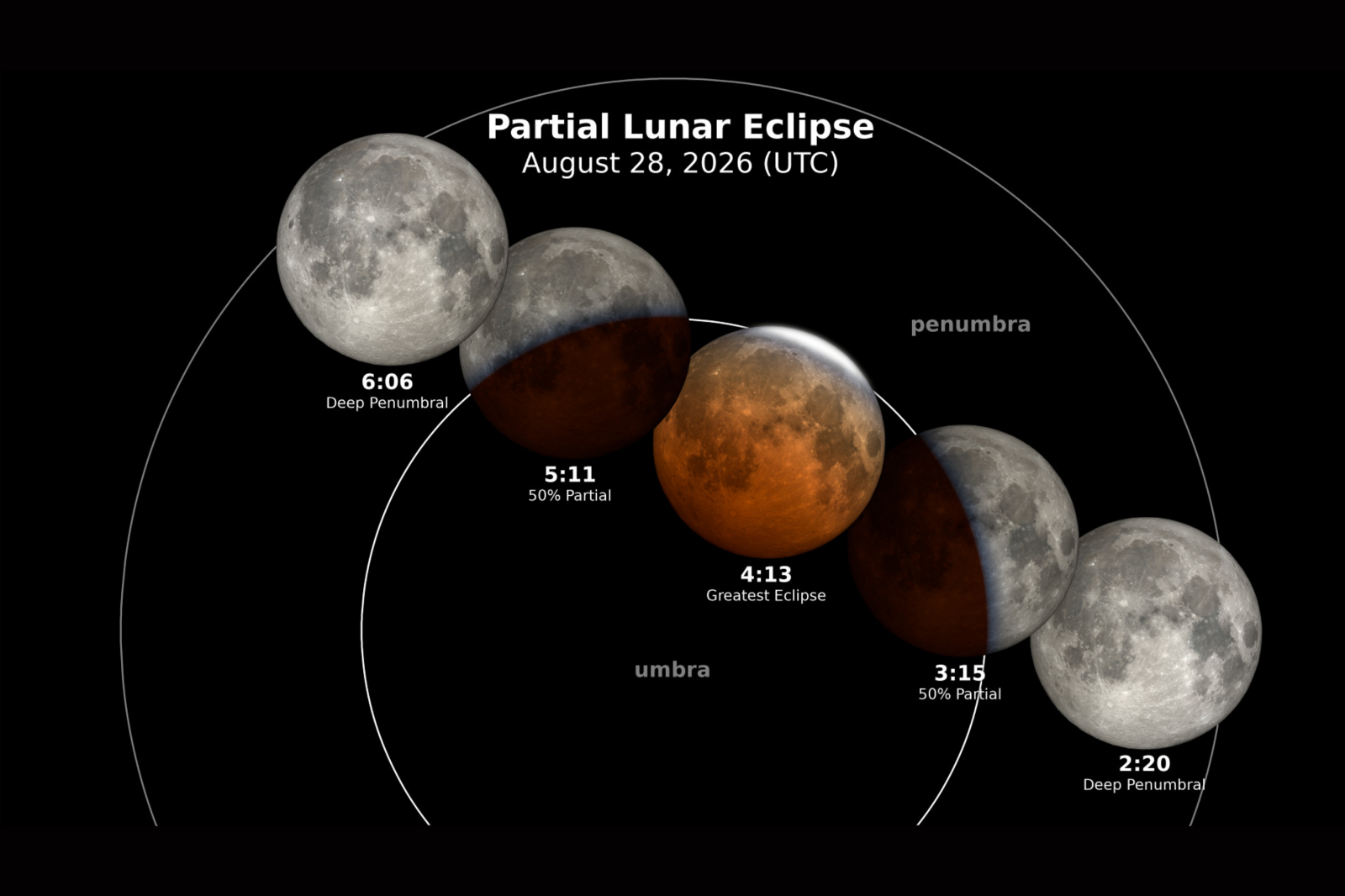
Skywatchers across the United States have an opportunity to see a rare deep partial lunar eclipse this week. During this event, 96.3 percent of the moon’s surface will be overshadowed by Earth. The eclipse is scheduled for the nights of August 27 and 28.
NASA explains that the eclipse starts when Earth moves between the sun and a full moon. This configuration lets Earth cast a shadow over the moon’s surface. A thin strip of the moon will still receive sunlight, making this eclipse nearly total.
Rarity of This Eclipse
Partial lunar eclipses occur often, but deep partial eclipses like this are infrequent. This event belongs to Saros 138, a series of eclipses recurring every 18 years and roughly 11 days. The previous occurrence in this series was on August 16, 2008, with the next expected on September 7, 2044.
Due to its dramatic nature, astronomers are keenly observing it. Unlike typical partial eclipses, this one will result in views similar to a total lunar eclipse, potentially causing much of the moon to display reddish or copper hues.
What to Expect
Throughout the night, viewers will see the moon gradually darken as shadows cross its surface. Initially, the moon will appear slightly dim, entering Earth’s penumbra or outer shadow. As the partial phase starts, Earth’s darker umbral shadow will create a pronounced effect on the moon.
Toward maximum eclipse, a thin crescent of sunlight will remain visible. The shadowed areas may appear red or orange as filtered sunlight bends through Earth’s atmosphere, a phenomenon that also causes red sunsets.
Visibility Times
The peak of the eclipse, according to NASA, occurs at 4:13 a.m. UTC on August 28. Here are local times across the U.S.:
- 12:13 a.m. EDT (East Coast) on August 28
- 11:13 p.m. CDT on August 27
- 10:13 p.m. MDT on August 27
- 9:13 p.m. PDT (West Coast) on August 27
Visibility Across Regions
Many regions in the United States will have optimal viewing conditions. NASA notes that North America, especially cities like Los Angeles, Portland, New York, and Jacksonville, will witness the event well.
The eclipse is also visible in much of South America, parts of western Europe, and western Africa.
How To Safely Watch
Unlike solar eclipses, the lunar eclipse is safe to watch without any protective eyewear. EarthSky advises no need for glasses or special filters. A spot with a clear sky and low light pollution will provide the best experience.
Though visible without equipment, binoculars or a small telescope will enhance details of craters and maria on the moon. Weather and cloud cover will affect viewing quality for skywatchers.
Time and Date will host a live webcast for those unable to view it in person, capturing the eclipse from several global locations.