
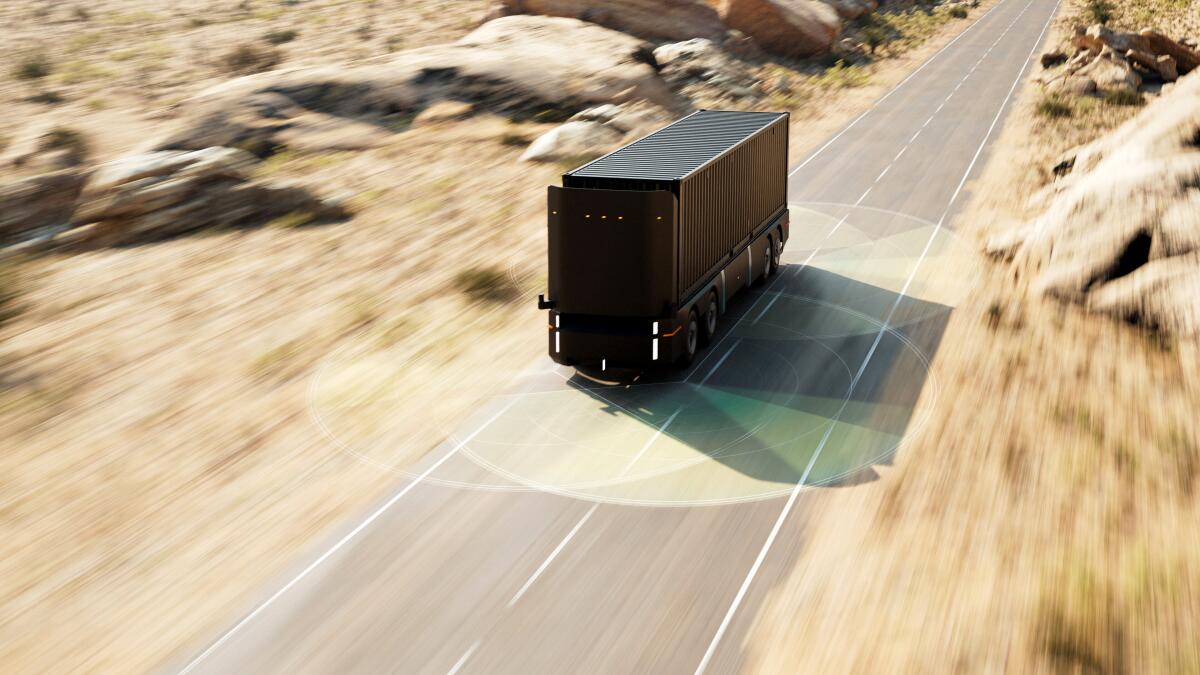
A startup in the Bay Area is working to transform semitrucks by transitioning them into electric, autonomous, and efficient vehicles. Humble Robotics, established last year in San Francisco, raised $24 million to create a cabless freight truck. This innovative design lacks a steering wheel, gas pedal, or driver’s seat. The company aims to move freight across states like California, saving costs and reducing carbon emissions.
Humble Robotics recently unveiled its electric, autonomous truck model, the Humble Hauler. The company received seed funding led by Eclipse Capital, a Palo Alto-based firm, and Energy Impact Partners.
This venture seeks to capitalize on new California regulations that could permit autonomous trucks on public roads soon. However, experts note that challenges remain for this technology. Labor groups such as the Teamsters express concerns about safety and job availability.
CEO Eyal Cohen, with significant experience in electric and autonomous vehicles at companies like Uber and Apple, leads Humble Robotics. Their driverless truck could start customer pilots this year.
California’s DMV recently revised regulations for autonomous vehicles, allowing testing of autonomous trucks over 10,001 pounds. These vehicles must begin with a human safety driver and accumulate 500,000 miles of testing per certification stage. Initially planning tests in Texas, Humble Robotics is now adjusting to California’s new rules.
Despite competition from companies like Aurora and Kodiak, which develop self-driving trucks with traditional features, Humble’s unique cabless design faces additional regulatory challenges. Dan Sperling of UC Davis notes approval for such trucks may be further off.
Humble Robotics aims to implement cabless vehicles on roads around major ports like Los Angeles. Collaboration with port authorities and shipping companies is part of the initial deployment strategy.
The company uses radar, lidar, and 360-degree cameras in its trucks, primarily relying on AI for driving decisions. Radar and lidar serve as backups.
The Humble Hauler is a Class 8 vehicle, suitable for carrying varied cargo types, with a range of 200 miles and a maximum speed of 55 mph. It focuses on short, repetitive routes, as long-haul electric trucks require large batteries.
California is a significant market for zero-emission trucks. In 2024, approximately 23% of new medium- and heavy-duty truck sales were zero-emission models. The state also allocated $165 million to support Tesla’s electric semitruck development.
Concerns over job loss arise as California employs over 130,000 truck drivers. Following the lift of the ban on autonomous trucks, Teamsters California opposes the DMV’s decision, citing safety and job concerns as major issues.
Cohen argues that autonomous trucking will not replace human jobs immediately, as the transition to automated fleets will take time.
As communities slowly adapt to driverless technology with services like Waymo and Zoox, autonomous trucks may face more resistance. Dan Sperling mentions the potential for public concern, especially when seeing a large driver-free truck on the road. The impact of any issues could be significant.