
France and Spain have faced massive wildfires since the start of the month. These fires have been described as resembling scenes of large-scale devastation. The blazes have destroyed buildings and forests, fueled by a record-breaking heat wave affecting much of Europe. The intense heat has already resulted in thousands of deaths.
Causes Beyond Heat
The wildfires stem not only from high temperatures. Last week, the renowned Fontainebleau Forest near Paris burned, destroying 2,000 hectares (4,942 acres) of woodland. Around 1,000 people had to evacuate, and 850 emergency firefighters were deployed. Ending the fire might take weeks.
According to France’s Ministry of Agriculture, human actions cause nine out of ten wildfires. Common causes include campfires and discarded cigarettes. Extreme heat has turned scrub grassland into a fire hazard. Protective regulations in France and Spain complicate the clearing of certain lands. Daniel Lacalle, an economist at Tressis, highlighted that these policies make clearing accumulated brush difficult.
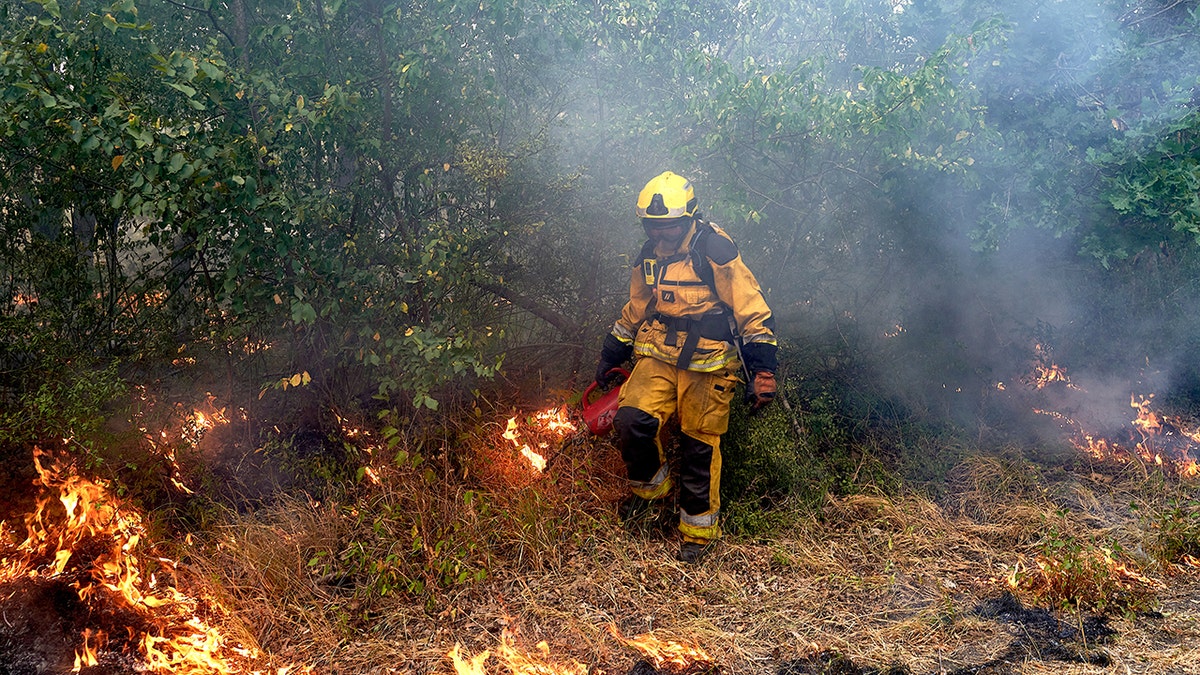
Firefighters conducted controlled burns in the Fontainebleau Forest to manage the fire that began on July 12, 2026. The fire, believed to be arson, burnt thousands of acres. (Pierre Crom/Getty Images)
Fire Origins and Control Efforts
Similar issues exist in the United States, where 85% of fires are human-caused, according to the National Interagency Fire Center. Lightning-caused fires, however, tend to burn more remote and vast areas. France’s Interior Minister, Laurent Nuñez, noted the strategic use of ignition points to suggest arson, as reported by France Insider.
French President Emmanuel Macron visited the Fontainebleau forest, stating France has not seen so many fires since World War II. He emphasized zero tolerance for arsonists, as each fire threatens national territory. (Mohammed Badra/Pool/AFP via Getty Images)
Arrests for fire-related offenses are rising. France 24 reported numerous arrests across the nation for accidental or deliberate fire setting.
Challenges in Spain
Spain battles separate wildfires, with one in Zaragoza burning 12,000 hectares (29,653 acres) and causing several village evacuations. Fires in Madrid and Guadalajara have affected at least 2,000 people. Lacalle remarked that the speed of these fires surprises even seasoned firefighters.
A fire in Spain’s Andalusia region resulted in fatalities, including a 93-year-old woman. Emergency crews continue to tackle the blaze. (Pablo Blazquez Dominguez/Getty Images)
Spain’s rural areas often have uncleared vegetation, creating fire risks during heat waves. This vegetation becomes highly flammable, even from minor sources like cigarette stubs.
Human Exposure and Environmental Trends
The University of East Anglia study notes a 40% increase in people exposed to wildfires from 2002 to 2021, driven by population growth in fire-prone areas. Nevertheless, burned land area decreased by 26% during the same period.
France’s heat over the past month has led to elevated death rates. Reports indicate around 2,000 people died in late June. The heat wave is expected to persist through August.
Outdoor events in southern France are being canceled due to the heat. Shawn Hackett, from Hackett Financial Advisors, suggested the Mediterranean’s warm surface and cold Atlantic water drive the weather changes.
Europe continues to struggle with these extraordinary heat and dryness conditions. The situation is projected to extend into August.
Simon Constable is a journalist and fellow at Johns Hopkins Institute, writing for major publications.