
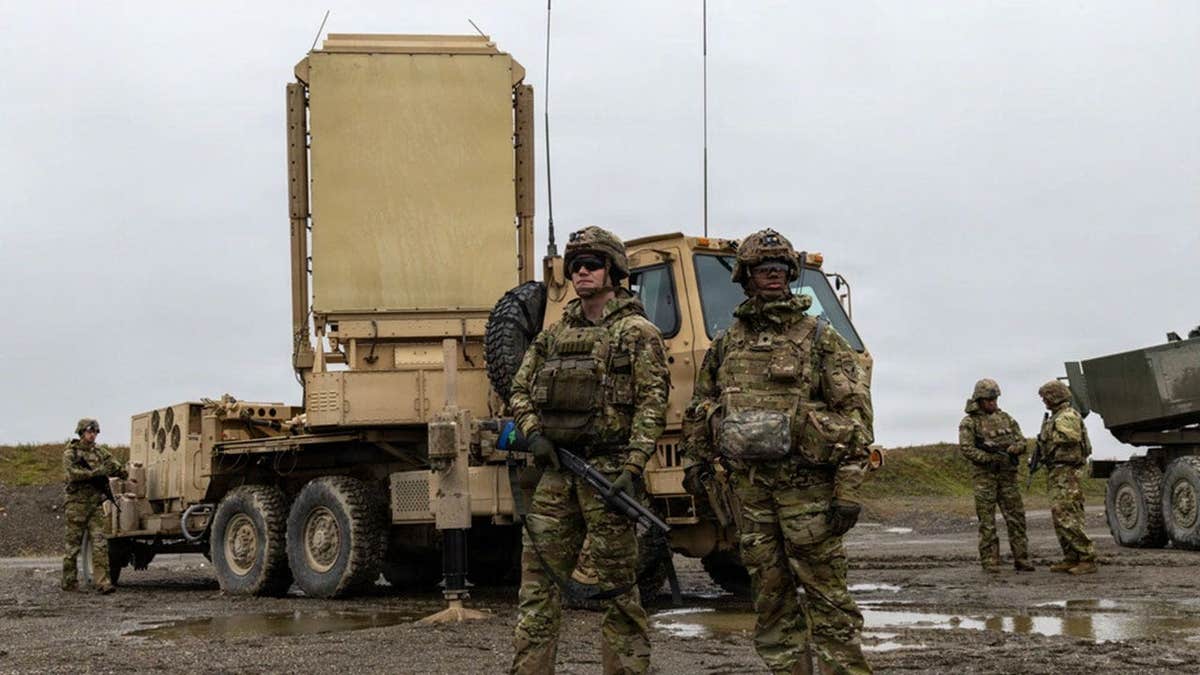
American forces are honing their skills in Alaska’s harsh conditions, focusing on rapid deployment across land, sea, and air. Utilizing rocket systems, fighter jets, and coordination with Canadian warships, they aim to defend the northern homeland effectively.
Operation Tundra Merlin
Tundra Merlin is an ongoing military campaign. Its goal is to demonstrate that U.S. and allied forces can quickly assemble combat power in Alaska’s vast and challenging terrain. The operation is a response to a shifting security landscape influenced by Russian and Chinese activities in the Arctic.
“The melting sea ice has increased Arctic accessibility,” said Lt. Gen. Robert Davis, highlighting heightened commercial and military activities.
Davis also noted that China and Russia are advancing military capabilities in the Arctic, raising concerns for U.S. defense strategies. The Pentagon’s 2024 Arctic Strategy warns of changing stability due to Russia-China cooperation, pushing for more U.S. presence and readiness in the area.
The Role of Alaska
Alaska’s strategic position makes it a vital hub for defense and power projection. The state hosts major military bases and contains significant missile-defense infrastructure. At its closest, Alaska is only 55 miles from Russian territory across the Bering Strait. Around 22,000 active-duty personnel, along with National Guard and Reserve members, are stationed in Alaska.
Davis emphasized that the geographical location allows U.S. forces to project power globally. Within 10 hours of flight, forces can reach almost anywhere in the Northern Hemisphere.
Exercise Highlights
Tundra Merlin aims to convert Alaska’s geographic advantage into military strength. Davis described it as a set of military options available to deter or respond to threats. The exercises involve synchronized operations using various military systems, like the HIMARS mobile rocket system and advanced fighter jets.
The exercises also include joint U.S.-Canadian maritime operations, engaging multiple vessels and aircraft. Information sharing and cooperation among diverse military units are tested, aiming for seamless integration and rapid threat engagement.
Environmental Challenges
Alaska’s extreme environment challenges equipment and personnel. Conditions require specialized training, clothing, and equipment modification to ensure sustained military operations.
NORAD recently intercepted Russian and Chinese military aircraft in the Alaskan Air Defense Identification Zone, highlighting ongoing geopolitical tensions. Although not viewed as immediate threats, these activities signify increased cooperation between Russia and China.
Davis assures that Alaska remains prepared for anticipated threats but notes that significant escalations might require additional forces and resources. Tundra Merlin’s purpose is to ensure readiness across Alaska, proving forces can be mobilized swiftly under challenging conditions.
Efrat (Effie) Lachter, an experienced reporter for Fox News Digital, covers global affairs, human rights, and political accountability. Her extensive work in conflict zones and crisis areas provides valuable insights into international security dynamics.