
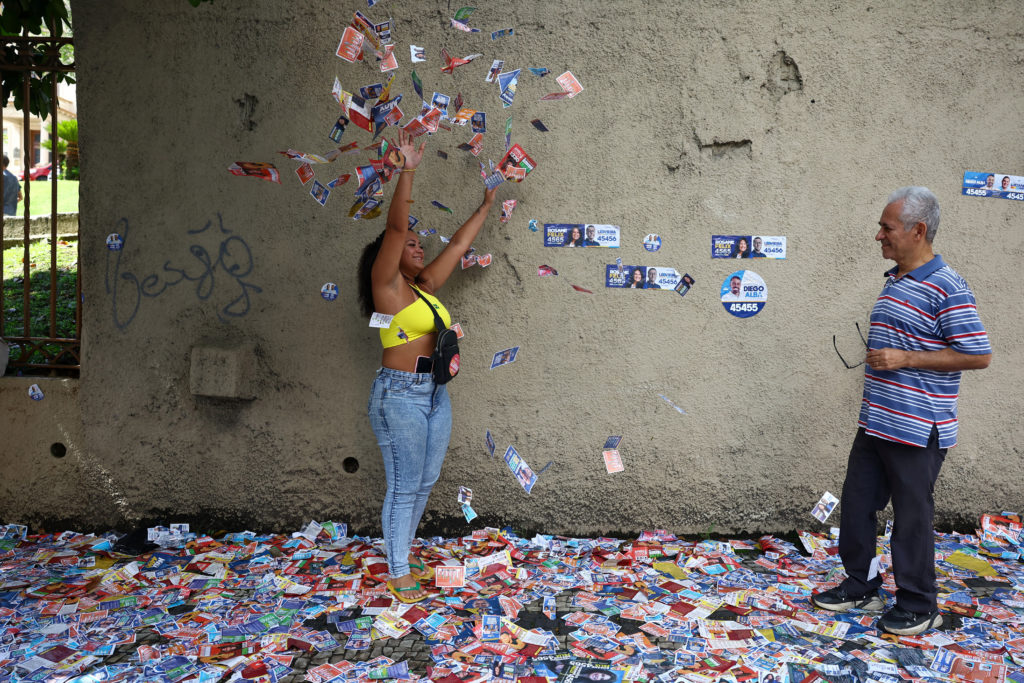
On Sunday, Brazilians started voting in a pivotal presidential election between incumbent Luiz Inácio Lula da Silva and Senator Flávio Bolsonaro. These candidates represent opposite ideologies and are both contenders for an outright victory. If no candidate secures over 50% of the votes, the top two will enter a runoff on October 25.
Lula has a long-standing presence in Brazilian politics, running for president for the seventh time at the age of 80. He has focused on strengthening Brazil’s relationship with China. Flávio Bolsonaro, aged 45, is the son of the far-right former President Jair Bolsonaro and has allied with U.S. President Donald Trump. His campaign emphasizes better Brazil-U.S. relations, particularly in the rare minerals sector.
Brazilians are choosing more than just their president. They are also electing 27 state governors, all 513 members of the lower house of congress, 54 of the 81 senators, and members of state legislatures.
Flávio Bolsonaro seeks the release of his father, who is serving a 27-year prison sentence for attempting a coup. He aims to restore his father’s political influence. Meanwhile, Lula criticizes U.S. interventions, highlighting high tariffs and visa revocations imposed during the Trump administration.
Voter perspectives are varied. Rosane Wink, a 67-year-old lifelong conservative voter, supports Bolsonaro’s son for his tough stance on crime. Maria Ribeiro, a 50-year-old vendor, supports Bolsonaro due to his stance on religious freedom and alignment with his father’s policies. On the other hand, Rosangela Resende da Rocha, aged 69, appreciates Lula’s social programs and his opposition to Trump.
Lula’s earlier victories stemmed from dissatisfaction with Jair Bolsonaro’s handling of the COVID-19 pandemic and threats to democracy. Carlos Melo, a political science professor in São Paulo, suggests some voters are growing weary of Lula, who would be among the oldest presidents if re-elected.
Corruption accusations plague both candidates. Bolsonaro, under scrutiny for alleged financial misconduct, may alienate Catholic voters with his concessions to evangelical supporters. Meanwhile, Lula faces challenges from an affordability crisis and ongoing corruption scandals.
Thomas Traumann, a political consultant, believes last-minute errors could sway undecided voters. The polarized election forces voters to choose between two starkly contrasting candidates.
Associated Press writers Eléonore Hughes, Anna-Catherine Brigida, and Helena Alves contributed to this report.