
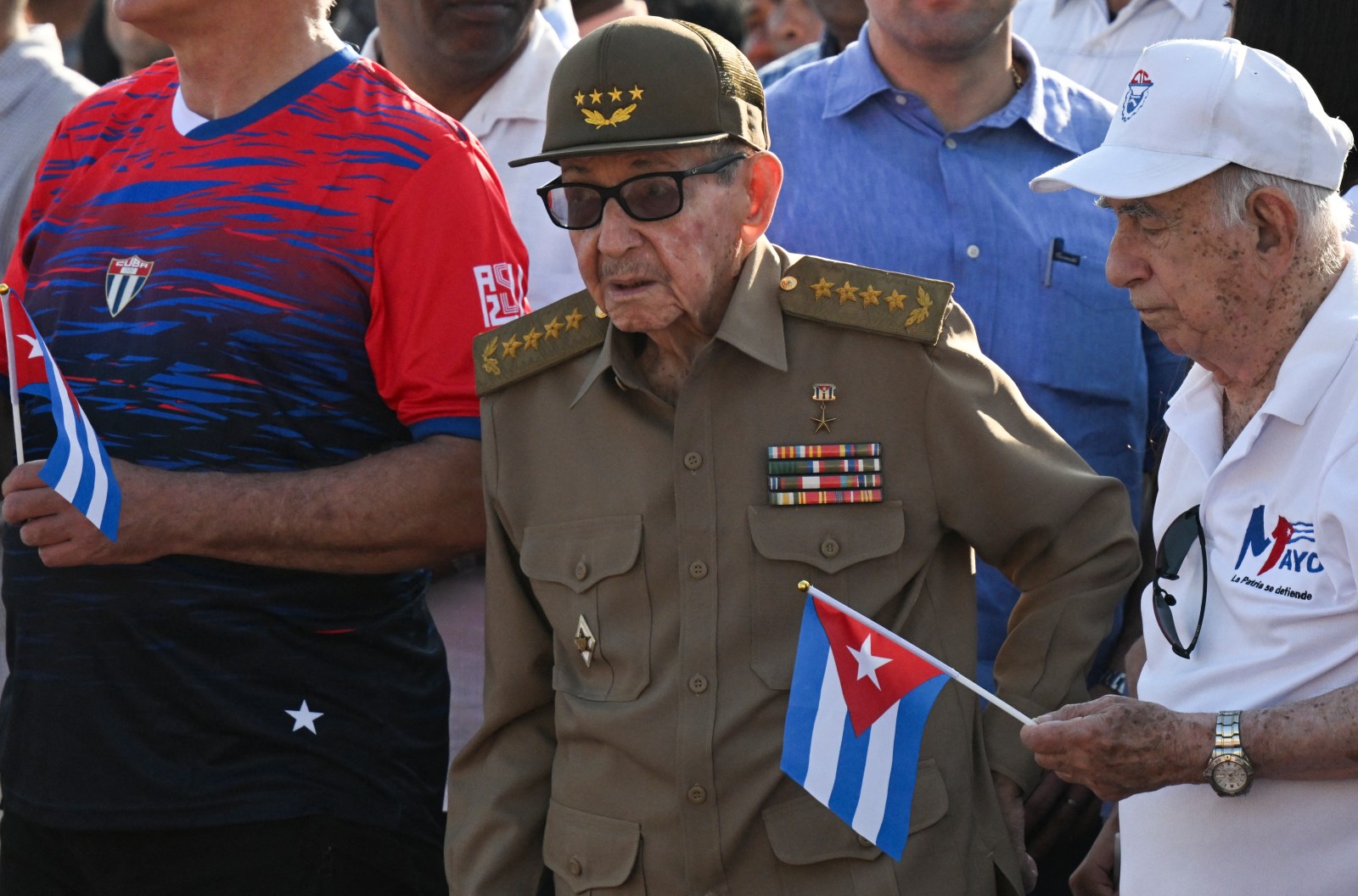
Criminal Charges Brought Against Raúl Castro
The United States has brought criminal charges against former Cuban President Raúl Castro, in connection with the 1996 incident involving the shoot-down of two civilian planes. Pressure from the Trump administration on Havana has activated these long-dormant charges.
Castro, who led Cuba from 2008 to 2018, remains a prominent figure on the island. While charged, the U.S. lacks the jurisdictional power to arrest him in Cuba. Justice Department officials allege that Castro, serving as defense minister at the time, ordered the attack on Brothers to the Rescue, a Miami-based Cuban exile group. The 1990s indictment arose after the incident, which worsened U.S.-Cuba relations and led Congress to strengthen the embargo.
This action aligns with the Trump administration’s increased pressure on Cuba through economic blockades and military threats. Secretary of State Marco Rubio offered $100 million in aid directly to the Cuban people during Cuban Independence Day.
The Incident and Charges
On February 24, 1996, Cuban MiG fighter jets shot down two small Cessna aircraft operated by Brothers to the Rescue while conducting a humanitarian mission. Four individuals, including three Americans and one Cuban American, perished in the attack.
Cuba justified the shoot-down, citing more than 25 violations of its airspace by the planes between 1994 and 1996. The U.S. claimed the planes were operating in international waters on a rescue mission. Tensions escalated, leading Congress to strengthen the embargo against Cuba.
Cuban Official Response
Cuba’s embassy disputed the indictment, arguing the shoot-down was a response to repeated airspace violations. They stated that each violation was formally reported to U.S. and international authorities.
Cuba’s embassy questioned whether diplomatic channels were exhausted before resorting to force, insisting all violations were formally denounced and communicated.
Trump’s Stance on Cuba
President Donald Trump, reacting to the indictment, emphasized America’s intolerance for a hostile state close to its shores. He has not dismissed the possibility of military action against Cuba.
Since March, the U.S. leadership has suggested taking advantage of Cuba’s weakened state following Venezuela’s disrupted oil supply to the island, impacting its small economy.
Cuban Preparedness and Potential Conflict
Cuban President Miguel Diaz-Canel announced the country’s readiness for conflict, warning that a U.S. invasion would result in significant bloodshed. Recent intelligence suggests Cuba has enhanced its military capabilities with attack drones acquired from Russia and China.
Marco Rubio’s Message
Marco Rubio addressed the Cuban people in a video, offering a ‘new relationship’ and substantial financial aid. He criticized the Cuban government’s management and corruption for the ongoing crises, not the U.S. blockade.
Rubio, who has familial ties to Cuba, heavily criticized GAESA, a key Cuban state corporation.
The Economic and Humanitarian Situation
The island faces severe economic challenges, with electricity shortages and scarce food supplies. The U.S. blockade, threatened sanctions, and loss of fuel supplies exacerbated the power outages.
The Trump administration’s actions are part of broader efforts to facilitate regime change in Cuba. The U.S. leaders have hinted at targets for disrupting the Communist government.
Cubans have adapted through resourceful approaches such as solar lighting and battery-powered devices. However, many continue to endure significant hardship. Rising temperatures and humidity worsen conditions, leading to increasing public discontent.
Blackouts have persisted, with some regions facing prolonged outages. While the demonstrations in spring show growing frustration, they remain peaceful.
A Havana resident expressed that while the infrastructural collapse feels familiar, the oppressive heat is a new, challenging factor adding to the difficulties faced by ordinary Cubans.