
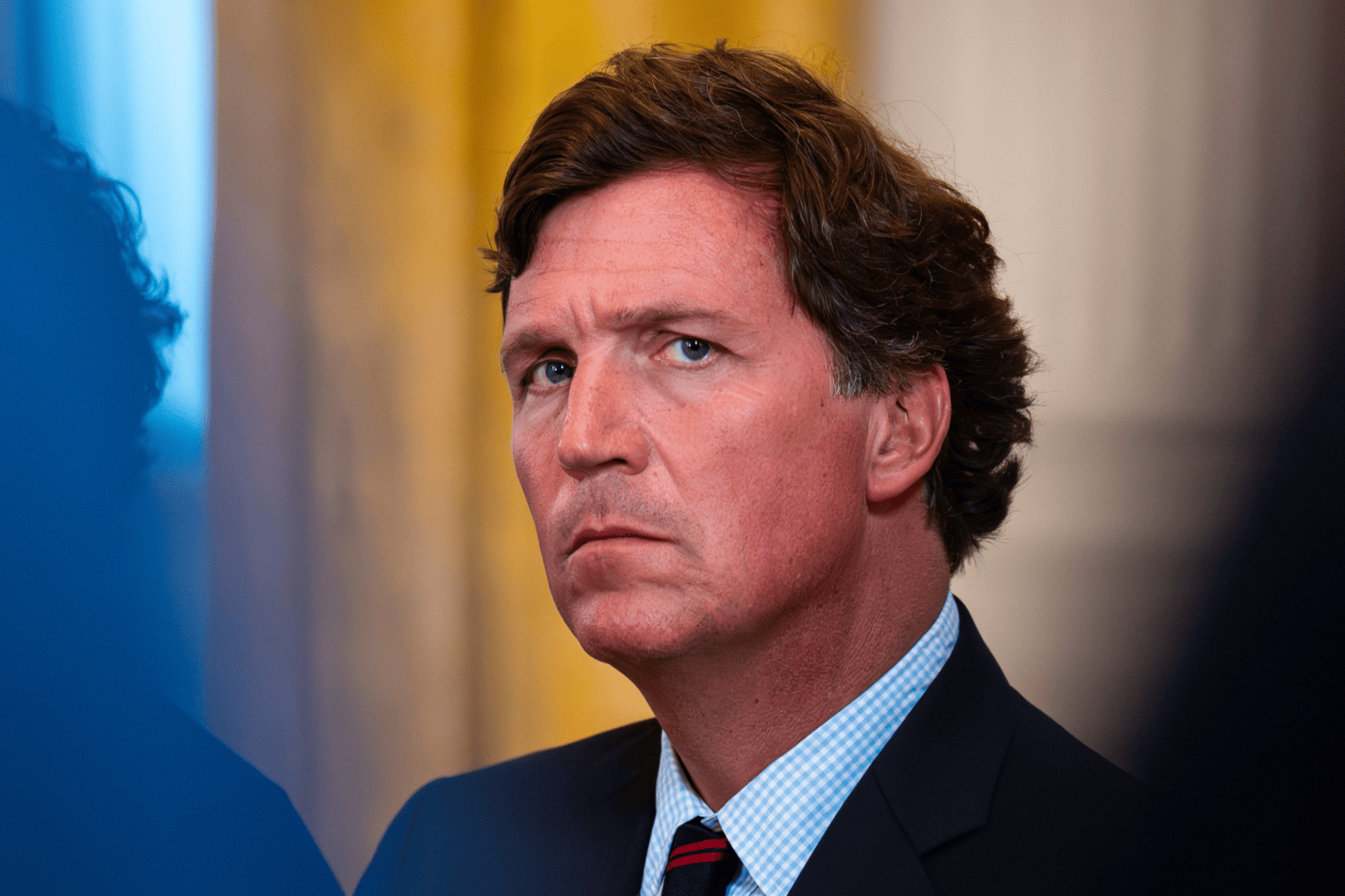
Tucker Carlson recently ignited controversy within conservative circles by questioning Britain’s involvement in fighting Nazi Germany during World War II. His comments were part of a discussion with former British lawmaker Sir Jacob Rees-Mogg centered on the potential for a conflict with Russia and broader historical military engagements.
Controversial Remarks
In the conversation, Carlson challenged the widely accepted view of British involvement in WWII. He asserted that the decision led to the decline of Britain’s imperial power without clear benefits for its citizens. Rees-Mogg, however, argued that the fight was a clear-cut battle between good and evil, essential to prevent German rule over Britain.
Carlson made it clear that he was not defending Hitler, stating, “I’m certainly not here defending Hitler.” Instead, he focused on questioning the strategic merit of Britain’s wartime decisions and the resulting human cost.
Responses from Conservative Figures
Prominent conservatives reacted strongly to Carlson’s stance. U.S. Ambassador Mike Huckabee criticized Carlson for suggesting that allowing a Nazi takeover might have been preferable, reminding him of the atrocities committed. Former Member of the European Parliament Lance Forman expressed disbelief, while Texas Senator Ted Cruz emphasized the beneficial outcome of the Allies’ victory.
British commentator Christopher Snowdon highlighted a perceived inconsistency in Carlson’s argument on sovereignty. Meanwhile, Meghan McCain suggested parodying the exchange, calling it one of the “dumbest conversations ever filmed.”
Underlying Issues
Carlson’s comments reflect a noninterventionist perspective; he argued that governments should demonstrate tangible benefits to their citizens before engaging in conflicts. Rees-Mogg countered that opposing aggressive dictatorships is a reward in itself. This debate encapsulates a broader disagreement over military intervention and national interest.
Broader Discussion Topics
The interview also covered Britain’s military support for Ukraine, with Rees-Mogg asserting that readiness deters aggression. The conversation touched upon historical events such as the atomic bombings of Hiroshima and Nagasaki, NATO, immigration, and free speech. Both participants agreed on the importance of preserving freedom of speech, with Rees-Mogg suggesting that British policies were restricting this right.
This interview, produced with the help of Martyn, AI at Newsweek, indicates the enduring complexity of balancing historical perspectives with modern geopolitical considerations.
For further inquiries, contact Newsweek editor Edward Pearcey.