
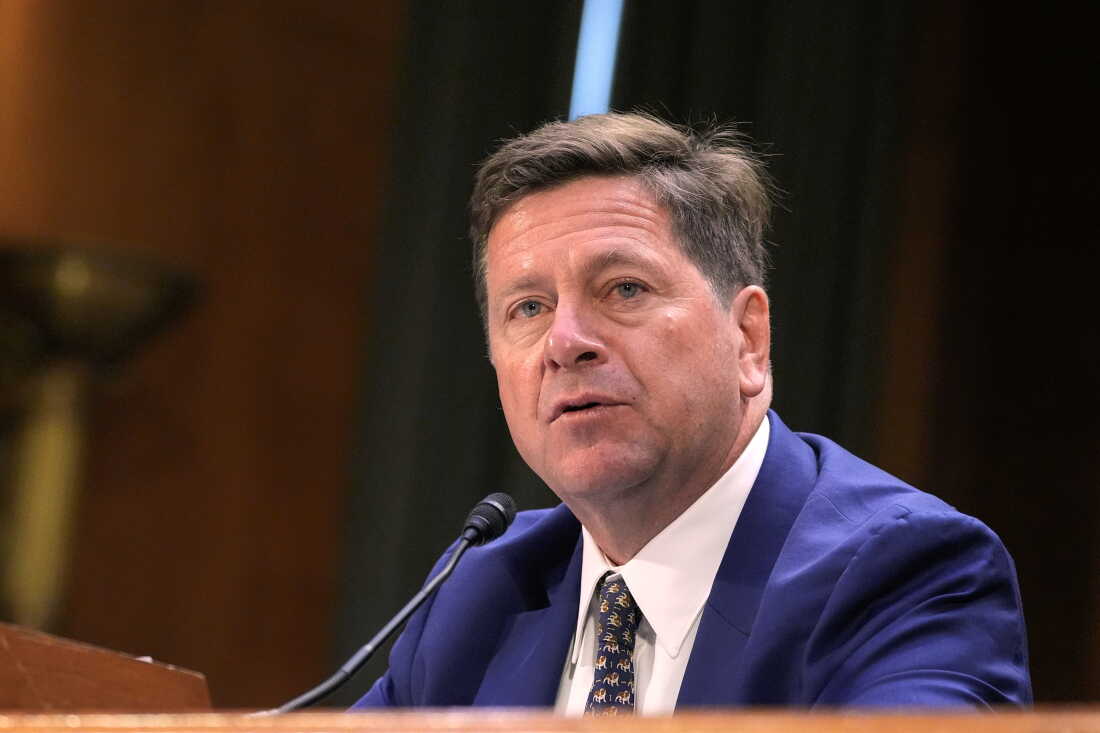
Jay Clayton, previously the Director of National Intelligence, was announced by President Trump as the new AI czar for the White House. This announcement was made via Trump’s statement on Truth Social, highlighting Clayton’s leadership of the “Super Intelligence Force.” The group’s objective is to maintain America’s leadership in what Trump calls “super intelligence,” differing from the common term, “artificial intelligence.”
The “Super Intelligence Force” is tasked with coordinating federal engagements across various sectors, including consumers, public interest groups, and AI companies. Clayton, before his confirmation as director, was the United States Attorney for the Southern District of New York and chairman of the SEC.
This announcement follows concerns expressed by tech leaders over the potential risks of rapidly advancing AI technologies. Despite these warnings, Trump has downplayed fears and shifted the focus to policy development. He recently met with AI company executives, resulting in a voluntary accord for internal and external work reviews.
Additionally, a redesigned government website, America.gov, was launched with content sourced using AI from official government sources. Trump’s social media disclosure also mentioned other key figures in the “Super Intelligence Force,” including Andrew Ferguson from the Federal Trade Commission and Emil Michael from the Department of Defense.
The ramifications of Clayton’s new role on AI policy remain uncertain, as federal regulations on AI are limited. In contrast, states like California have established transparency measures for AI use. Clayton previously described super intelligence as a “national security issue” and opposed calls to pause AI development, citing global advancements as reasons against such a strategy.
In his earlier role, David Sacks, appointed as AI and crypto czar, had similar responsibilities until he stepped down to co-chair the President’s Council of Advisors on Science and Technology. Sacks supported tech leaders’ concerns about AI and encouraged slowing its development while urging them to act independently in their efforts.