
President Donald Trump has renewed his promise to prevent Iran from acquiring nuclear weapons. He recently engaged in a discussion with Mark Wallace, CEO of United Against Nuclear Iran, focusing on the hidden ‘Pickaxe Mountain’ nuclear facility. This site allegedly contains centrifuges and enriched uranium, posing a significant threat.
Pickaxe Mountain Under Scrutiny
Trump threatened to target Iran’s Pickaxe Mountain. Previously, the U.S. avoided striking this deeply buried facility, leaving questions regarding the change in strategy. The site, located over 100 meters underground near the Natanz nuclear complex, was built to replace a destroyed above-ground plant for advanced centrifuge assembly.
Iran claims the replacement facility is bigger and more advanced. Experts believe it may eventually house efforts related to nuclear weaponization. Despite this, the U.S. has not confirmed if centrifuges were moved there or why it now requires attention.
Military Strategy and Concerns
Military experts have differing opinions on whether a U.S. strike could dismantle the facility or simply block its entrances temporarily. The deep underground chambers may be out of reach of America’s current bunker-busting weaponry. However, attacking the site’s entrances might restrict Iran’s access without destroying internal components.
Trump indicated potential military action against Pickaxe Mountain, citing Israeli intelligence regarding the possible movement of centrifuges into the site. The U.S. lacks confirmation of this transfer, focusing instead on Iran’s enriched uranium, which can be weaponized if further enriched.
Current Enrichment and Monitoring Status
According to the International Atomic Energy Agency, Iran had amassed significant enriched uranium by June 2025. The stockpile is believed to be stored at Isfahan, Natanz, and Fordow, with no confirmed movement to Pickaxe.
The U.S. administration has not verified Israeli claims about centrifuge storage inside Pickaxe. A facility without installed, connected centrifuges does not amount to an operational enrichment plant.
Satellite Observations and Analysis
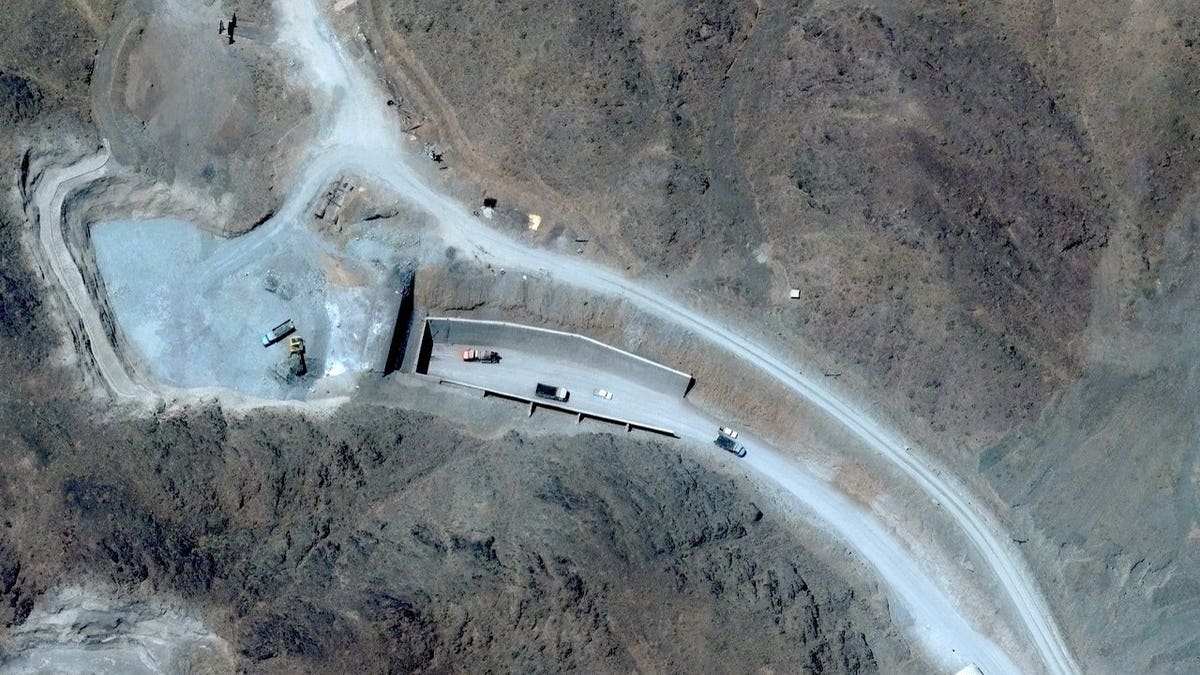
Satellite imagery shows ongoing construction at the site without evidence of its operational status. Reinforced structures around tunnels suggest efforts to fortify the facility. Analysts noted possible signs of interior outfitting but could not confirm related activities.
Spencer Faragasso from the Institute for Science and International Security asserted there was nothing inside Pickaxe previously to warrant the use of deep-penetrating weapons. However, Israeli intelligence reports suggest centrifuges might have been transported covertly, making them plausible yet unconfirmed.
Potential Military Actions and Outcomes
Trump’s focus on Pickaxe Mountain possibly stems from it being among the last large, nuclear-linked sites unscathed by attacks. He mentioned targeting the site in a radio interview, expressing a readiness to act.
The U.S. administration has not explained whether this attention aligns with new intelligence or a shift in nuclear strategy. Experts like Nicole Grajewski argue that eliminating the facility through airstrikes could prove nearly impossible.
Instead, planners might opt to obstruct Iranian utilization by denying access or personnel deployment. Satellite data identified possible ventilation shafts as potential weak points for targeting. Collapsing tunnel entries might limit Iran’s operations without outright destruction.
Long-term Strategy and Diplomatic Implications
Collapsing facility entries could prevent immediate access, forcing Iran into clear excavation efforts, possibly triggering further strikes. Iran’s history of reopening attacked sites implies persistent surveillance and action might be necessary.
While a strike on Pickaxe Mountain may offer a symbolic victory for the U.S. against prominent Iranian nuclear endeavors, it would not dismantle Iran’s broader nuclear ambitions, Grajewski concludes.