
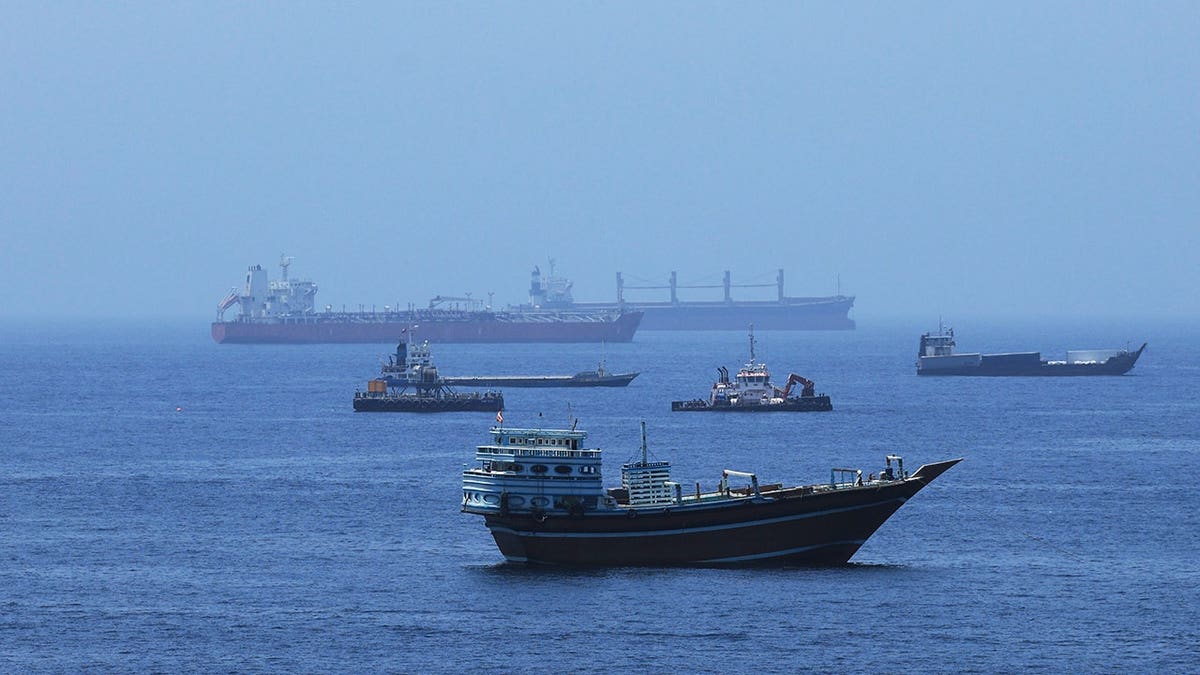
President Donald Trump has considered declaring the Strait of Hormuz a U.S. territory to ensure security against Iran, especially for vital oil passageways. By doing so, Trump’s administration aims to protect maritime shipping routes and impose strategic economic sanctions.
President Trump has long maintained that Iran does not control the passage through the Strait of Hormuz, despite Iran’s claims of authority over the area. U.S. Central Command supports this by stating that the strait remains an international maritime route that commercial vessels transit with U.S. military oversight.
“Iran does not control the Strait of Hormuz,” said CENTCOM spokesperson Capt. Tim Hawkins. “The strait is an international waterway that commercial vessels continue to transit with U.S. military assistance.”
The Trump administration is facing a potential shift in policy due to Iran and Oman discussing a framework that could exclude military vessels. Despite Iran’s aspirations to establish control over the Strait through a proposed toll system, the U.S. Secretary of State Marco Rubio views these actions as illegal and unacceptable.
The White House has declined to comment on whether American military vessels will comply with any new proposals from Iran and Oman. This silence comes after months in which the administration challenged Iranian control and insisted on U.S. terms for the strait’s reopening.
U.S. forces, according to Capt. Tim Hawkins, have assisted nearly 1,500 vessels in transiting the strait since early May. However, oil movement through the strait remains diminished, impacting global oil supply and economy. The current flow, around 5 million barrels per day, is significantly less than the pre-war figures of 20 million barrels per day.
Iran is working with Oman on a framework that includes a temporary navigational corridor and mine-clearing operations. While Iran seeks control, U.S. officials are expected to counter any movements that threaten American military operations.
The fate of U.S. military access remains unclear, with Iranian officials claiming progress in negotiations, while Oman remains vague on critical aspects like transit fees and control arrangements.
Deputy Foreign Minister Kazem Gharibabadi explained that the temporary plan routes commercial ships through Iranian waters, indicating exclusion of military vessels if finalized. The emerging framework might enable Iran to limit American military activities in the strait, though the Trump administration has yet to respond decisively.