
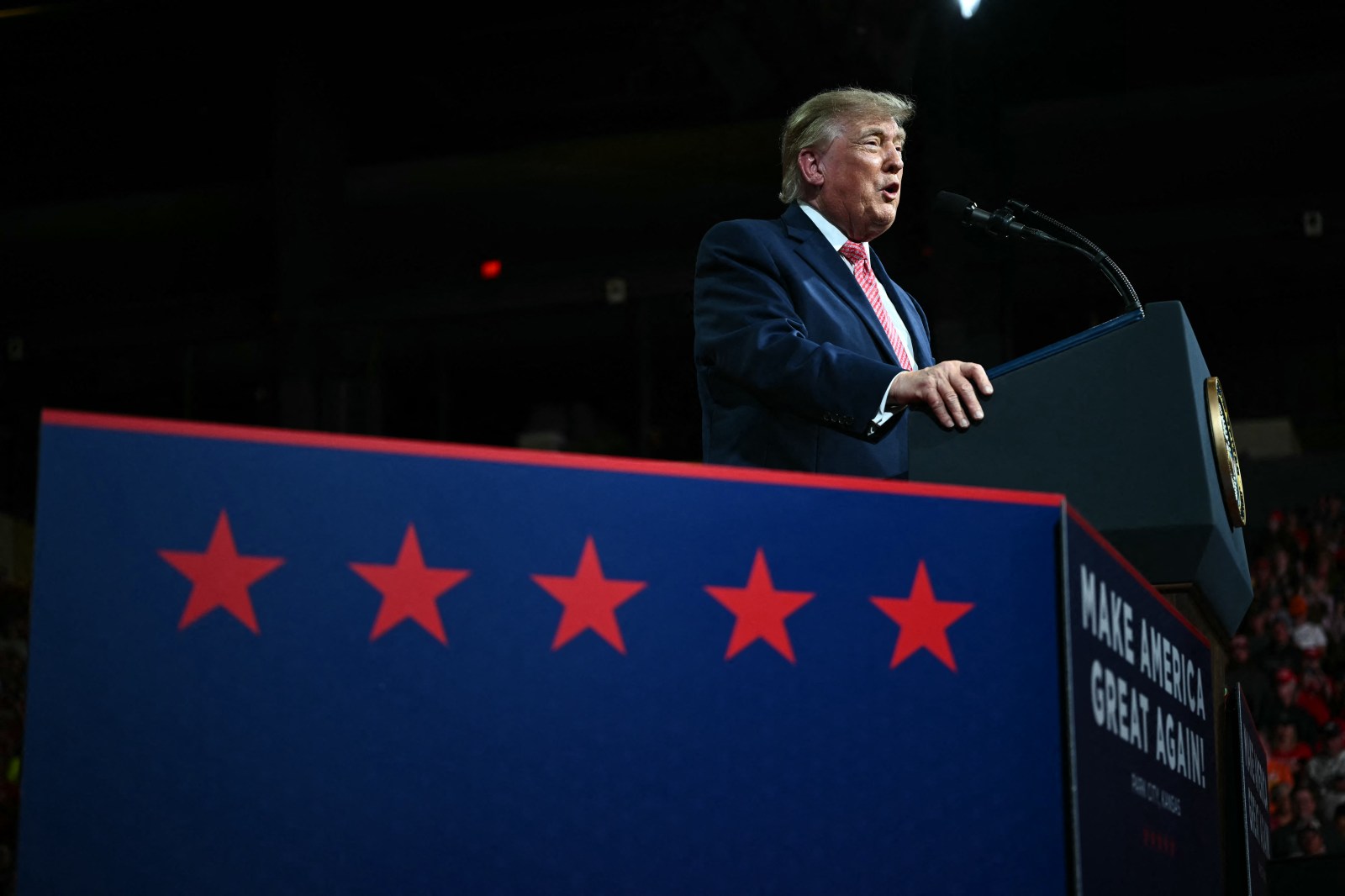
Trump’s Major Investment
President Donald Trump has committed significant financial resources to support Republican candidates for the November 3 midterm elections. He stated that he plans to spend over $400 million, contributing to efforts such as advertising, voter contact, rallies, and get-out-the-vote initiatives. Trump emphasized his financial involvement as crucial for Republican victories and linked spending to his political agenda and beliefs.
According to Truth Social, more than $300 million has already been spent on various campaign elements like direct and indirect voter engagement, election integrity programs, and more. Reuters reported campaign finance filings showing Trump’s super PAC, MAGA Inc., and the affiliated No Going Back PAC have spent at least $226 million, although the full $400 million is yet to be independently verified.
Bloomberg’s Democratic Donations
In contrast, former New York City Mayor Michael Bloomberg has allocated roughly $80 million to Democratic causes. Bloomberg aims to help Democrats secure a significant majority in the House, focusing funds on House races with substantial contributions to groups such as Everytown for Gun Safety and the House Majority PAC.
Bloomberg’s spending extends beyond House campaigns, directing millions toward environmental advocacy, gubernatorial candidates, and supporting Democratic scientist and doctor candidates. His role reflects a significant impact on Democratic efforts, showing commitment to influencing competitive elections.
Midterm Spending Trends
The announcements represent a broader trend of escalating midterm election expenditures. Advertising data indicates Republicans have allocated around $2.2 billion since September 1, while Democrats have spent about $1.8 billion, showcasing the intense financial competition.
Independent groups are notably active, contributing over $1.2 billion in competitive congressional races. This highlights the leverage of external organizations in election spending alongside formal campaigns, emphasizing the growing influence of financial contributions in electoral processes.
Challenges in Battleground States
Trump’s spending coincides with polling challenges in several key states. Recent surveys reveal low approval ratings, indicating potential difficulties for Republicans in Senate and House races. A Reuters/Ipsos poll showed 31 percent approval versus 66 percent disapproval of Trump’s job performance.
Democrats have focused ads on Trump’s leadership and policies, spending over $163 million mentioning him to sway voter opinion. This is compared to the $11 million allocated by Republicans, underscoring how Trump’s image is central to campaign strategies this election.