
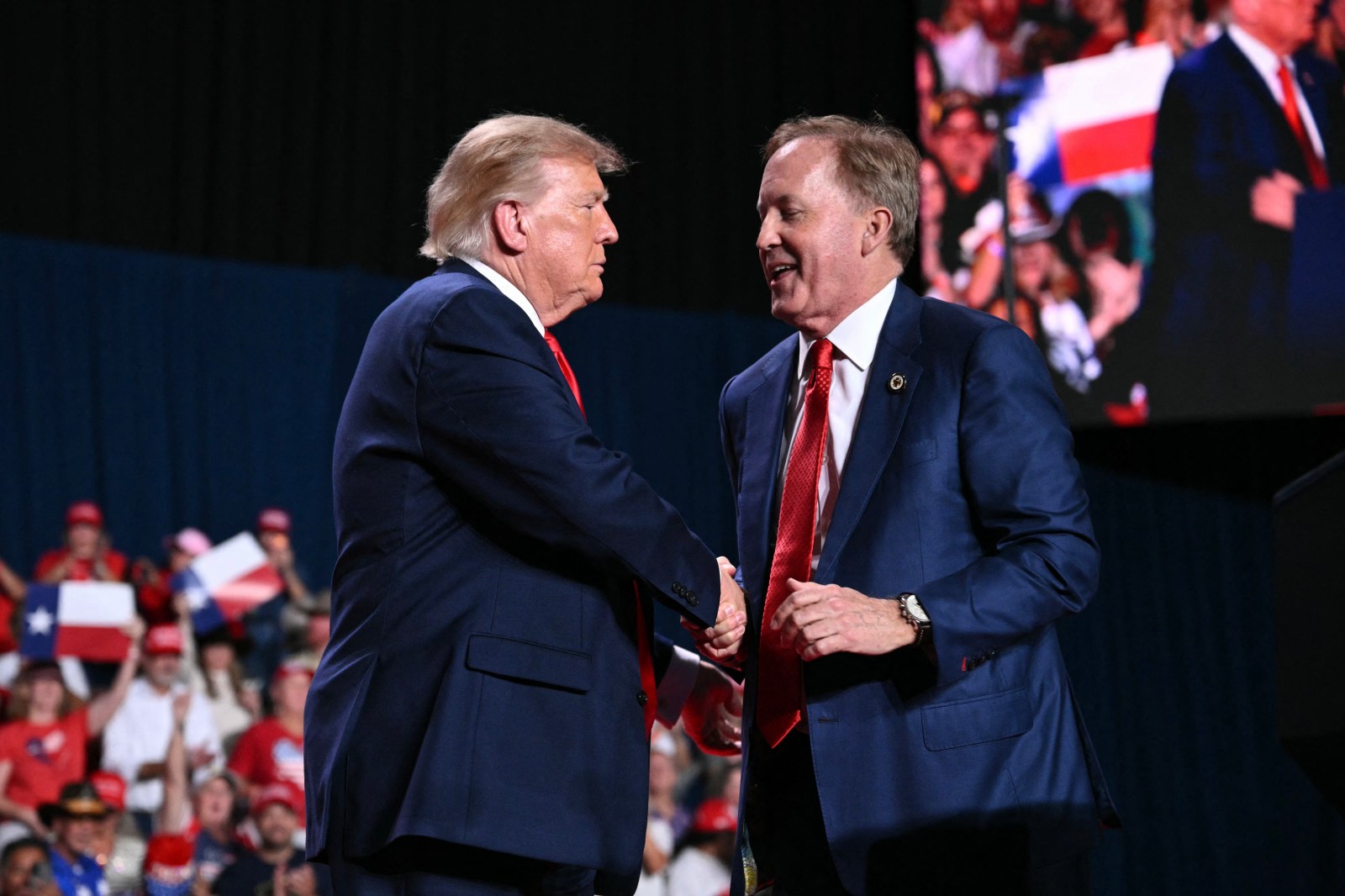
President Donald Trump is actively campaigning across the United States, aiming to strengthen conservative support for the upcoming midterms. His campaign trail will bring him back to Texas on October 27 to support Republican Attorney General Ken Paxton. Despite Democratic optimism, the race between Paxton and Texas Democratic hopeful James Talarico remains closely contested.
Talarico, a state representative, is striving to be the first Democrat to secure a statewide position in Texas since 1994. He has consistently led Paxton in polls by narrow margins. Paxton has faced significant challenges, including a 2023 impeachment and acquittal, as well as resolved securities fraud charges from 2024, yet the polling data continues to reveal a competitive race.
Concerns have emerged among GOP members that Trump’s involvement might negatively impact candidate performance due to his declining approval ratings. Voters are expressing dissatisfaction with issues like gas prices, the cost of living, and conflicts abroad, such as the Iran war. In Texas, a historically Republican stronghold, Trump’s appearances appear not to have harmed Paxton as polls tightened following his rallies in Dallas and San Antonio.
Nick Maddux, senior adviser to Paxton, stated, “AG Paxton appreciates the support and understands Texas’s crucial role in maintaining the majority, which is why he is constantly engaging with Texans, raising funds, and delivering his message directly to them.”
Texas Senate Polls Before and After Trump’s Rallies
Newsweek conducted a comparison of surveys from the same pollsters before and after the Dallas convention and San Antonio rally. The findings demonstrate a narrowing of the race, although a recent advertising surge may have influenced the figures as much as Trump’s visits.
Trump defended his campaign efforts to reporters, saying, “Since my involvement, these rallies have altered the dynamics.” Polling data surrounding the convention showed minimal movement. Texas Public Opinion Research had Talarico up by 6 points in late August and 5 in mid-September. Emerson College reported a transition from a 1-point Paxton lead in August to a 1-point Talarico advantage in September.
After the San Antonio rally, shifts in polling became apparent. Marist’s lead for Talarico dropped from 6 points in September to 2 points in October, with Talarico holding 47 percent against Paxton’s 45 percent among likely voters. InsiderAdvantage indicated a decrease to a 1-point lead for Paxton in mid-October. The Republican-aligned Trafalgar Group showed Talarico’s lead increasing from 1 point to 4 points.
Overall, polls conducted after the rally, such as Marist, InsiderAdvantage, Quantus Insights, and Hobby School, reveal a shift of about 2.4 points towards Paxton, giving Talarico an average lead of 0.8 points.
Why the Texas Senate Race Matters
The Texas Senate race holds significance for the 2026 midterm elections. Texas has not elected a Democratic senator since Lloyd Bentsen in 1988. Democrats must retain their current seats and flip four Republican seats to achieve a Senate majority.
Paxton emerged from a challenging primary, defeating incumbent Senator John Cornyn. Trump endorsed Paxton over Cornyn, despite warnings from Cornyn and Majority Leader John Thune that Paxton could be vulnerable in the general election.
Forecasts categorize the race as highly competitive, with the Cook Political Report marking it as a “Toss Up.” Early voting extends through October 30, while Election Day is set for November 3.
Trump’s Campaign Stops in Texas
The Republican National Committee announced new Texas stops in Lubbock and Waco, coinciding with Trump’s campaign activities in Kansas. These regions overwhelmingly supported Trump in the 2024 elections, indicating a focus on rallying the party’s base.
In private, Paxton has expressed concerns that Trump’s presence may have harmed his campaign, particularly during the Dallas convention. Alleged remarks from a private fundraiser revealed Paxton’s frustration over external campaign control.
Trump’s approval ratings remain largely negative, prompting some Republicans to distance themselves from his campaign presence. Paxton has faced additional challenges with Talarico, who overcame a brief campaign setback due to the flu earlier in October.
Talarico vs. Paxton Fundraising Analysis
Talarico’s campaign has achieved a substantial fundraising lead over Paxton. He reported a third-quarter revenue of $64 million, surpassing previous records set in Senate campaigns. With a majority of contributions under $100, Talarico’s total fundraising since September 2025 stands at over $134 million.
Paxton’s campaign, along with affiliated committees, raised a combined $18 million in the same period. The disparity extends into critical suburban areas, traditionally relied upon by Republicans. Newsweek’s analysis showed Talarico’s fundraising dominance in 16 of 19 major suburban counties.
Republican groups have committed significant resources to bolster Paxton’s campaign, including substantial donations from Elon Musk. These funds have contributed to a surge in pro-Paxton and anti-Talarico advertisements.
With candidates enjoying lower advertising rates than super PACs, Talarico is able to secure more airtime per dollar spent.
Trump has initiated blame towards figures such as John Cornyn and Karl Rove in connection with potential outcomes for Paxton’s campaign.