
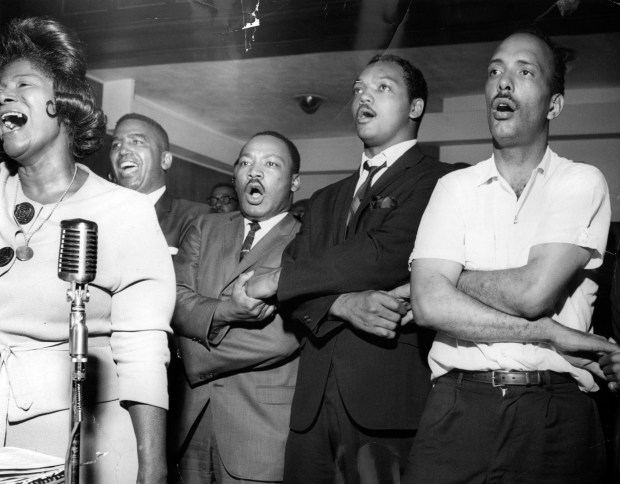
Albert “Al” Raby, born in 1933 in Chicago, transitioned from a grade-school dropout to an elementary English teacher, eventually becoming a prominent civil rights leader. His work made headlines nationwide, leaving a lasting impact on the city.
Early Activism and the Chicago Freedom Movement
Raby led the Chicago Freedom Movement, convening the Coordinating Council of Community Organizations in 1963. This initiative catalyzed a massive walkout of Chicago Public Schools students, protesting segregation and overcrowding in Black neighborhoods. His efforts drew Martin Luther King Jr. to Chicago in 1966, where King lived in North Lawndale for eight months, highlighting inequitable housing, education, and employment.
Political Influence
Raby managed Harold Washington’s 1983 mayoral campaign and directed the Chicago Commission on Human Relations under Washington. His ambitions extended to the Illinois Constitutional Convention in 1970 and globally as director of Peace Corps volunteers in Ghana from 1979 to 1982.
Legacy and Recognition
Raby’s legacy was celebrated on October 16th with the unveiling of an honorary street sign at 6300 S. Cottage Grove Avenue. Mayor Brandon Johnson declared February 19th as “Al Raby Day.” Kathy Raby, his daughter, expressed joy at the honor, emphasizing her father’s extensive community work in Woodlawn.
Raby Foundation and Continuing Impact
The Raby Foundation, run by Kathy and Katanya Raby, honors Al Raby’s legacy through community service, activism, and youth leadership. The Foundation contributes to the Chicago History Museum’s “Facing Freedom” exhibit and hosts the “Family Chats” series, inviting stories about Albert Raby and the civil rights movement.
Current projects include “Learn With Me,” where Katanya Raby explores her grandfather’s life and work, aiming to uncover and share stories. Speaking of her grandfather’s impact, she noted how his 1963 boycott led 200,000 students to demand better education, shaping the handling of youth education today.
Poetic Tribute
Urban Gateways CEO Leslé Honoré paid tribute with a poem, acknowledging Raby as a key organizer, educator, and connector in the movement. Honoré emphasized Raby’s belief in dignity for all and the importance of community involvement.