
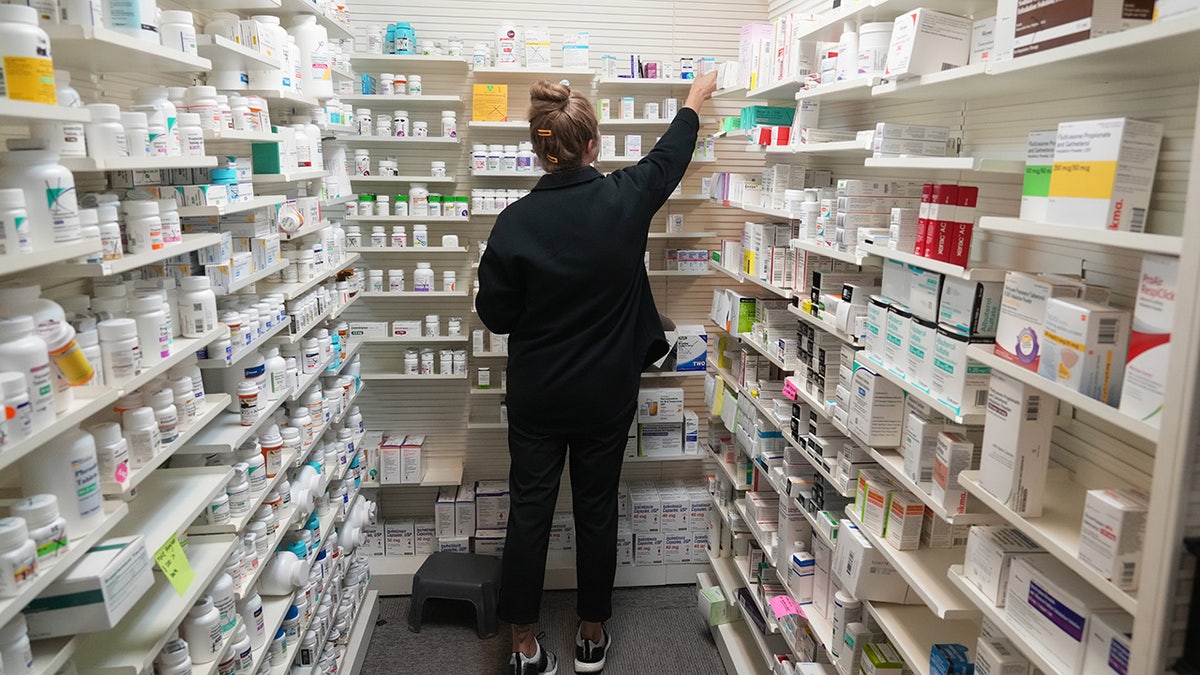
The production landscape of active pharmaceutical ingredients shows a stark contrast, with the United States contributing around 3% globally, while China dominates with 45%. A study from Johns Hopkins reveals that American manufacturers rely on China for over 60% of the essential components required for antibiotics. This dependence compromises U.S. sovereignty.
The health of U.S. military personnel, leaders, children, and neighbors is vulnerable since an adversary controls critical medication supplies, potentially weaponizing their availability and safety.
Offshoring’s Impact on U.S. Pharmaceutical Production
The situation didn’t develop by chance. Decades of offshoring have weakened the American industrial base and relocated crucial manufacturing jobs abroad. In 1981, the United States produced 25% of the world’s pharmaceutical ingredients. Currently, China possesses nearly half of the global market. A nation fails to govern itself if it can’t produce its own antibiotics or block adversary chemicals from entering.
The Council on Foreign Relations refers to this issue as a pharma choke point. This dependency is profound and expanding from generics to advanced biologics.
The Threat from China’s Control Over Supply Chains
Beijing has demonstrated its willingness to weaponize supply chains, including rare earths, semiconductor inputs, and defense-critical metals. Given this pattern, there’s little reason to believe the Chinese Communist Party would treat medicines differently in a crisis. Their chemical networks supplying American pharmacies also contribute to the fentanyl pipeline through Mexico.
Research from the University of Virginia’s National Security Data and Policy Institute highlights a single adaptive supply chain involving Chinese suppliers and Mexican cartels: cheap precursors purchased online, air-shipped wholesale, transformed into pills, and transported across borders.
Legislative Actions Against Foreign Dependence
Congress has responded with the BIOSECURE Act, signed in December 2025, limiting federal procurement of biotechnology products from foreign adversary-affiliated companies. President Donald Trump took executive action imposing tariffs on the synthetic opioid supply chain. Though these steps are significant, they don’t build manufacturing facilities.
Investing in Domestic Pharmaceutical Manufacturing
Legislation alone won’t construct factories or restore jobs, nor will it secure the nation’s pharmaceutical capacity. To counter China’s grip on the supply chain, investing in domestic producers is crucial.
For example, Ohio showcases this success model. Already a growing hub for American semiconductor manufacturing, the state combines investment, infrastructure, and a skilled workforce, which could provide the foundation for pharmaceutical production. CNBC ranked Ohio first for business and infrastructure, emphasizing the value of incentivizing American companies to develop advanced manufacturing in the Midwest.
Securing America’s Pharmaceutical Independence
The choice is clear. Investing in American pharmaceutical capacity now prevents facing dire consequences later if Beijing weaponizes the U.S. medicine supply.
The border’s security remains compromised as long as Chinese chemical suppliers support cartels. The military’s readiness is at risk if battlefield antibiotics come from nations the U.S. might confront. American safety is undermined when its medicine cabinet relies on an adversary’s goodwill.
Tricia McLaughlin served as assistant secretary for Public Affairs at the Department of Homeland Security under the Trump administration.