
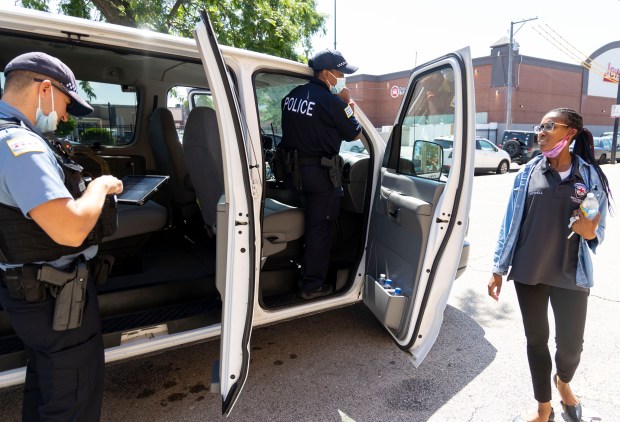
The Expansion of CARE in Chicago
After facing challenges, Mayor Brandon Johnson’s initiative to deploy non-police mental health response teams is gaining momentum. With recent media efforts, he has highlighted the increased involvement of the city’s Crisis Assistance Response and Engagement (CARE) teams. This initiative includes expanding operational hours with a second shift in the evening for behavioral health workers and EMTs. Such changes are central to Johnson’s progressive policies.
Challenges and Progress
Although Johnson emphasizes the growing demand for CARE, the increase corresponds to just over 100 emergency responses between May and August. Earlier this year, an investigation reported a slowdown in dispatches due to administrative barriers and conflicts. Despite these obstacles, Johnson continues to push forward with the initiative, supported by appointed leaders like Ald. Rossana Rodriguez-Sanchez.
During a recent hearing, officials discussed lessons learned. Arturo Carrillo, Deputy Mayor of Health and Human Services, emphasized the need for citywide availability, interdepartmental coordination, and effective dispatch channels. CARE’s response now extends to individuals aged 6 to 65, covering a broader range of crises.
Feedback and Adjustments
While some advocates argue that CARE isn’t fully utilized, Lieutenant Rhonda Anderson of the Chicago Police supports continued involvement. Anderson noted that police cooperation in certain CARE responses aims to improve outcomes. Despite critiques, a training session on de-escalation was conducted for the CARE team in August.
Union and Interagency Challenges
Union tensions have also impacted the program’s transition, as differing groups protect their roles. Johnson vowed to restore data terminals essential for live emergency monitoring after a decline in calls. Although there are technical hurdles, including the transition into a Computer-Aided Dispatch (CAD) system, efforts continue to enhance emergency response capabilities.
Measuring Program Effectiveness
Despite operational hurdles, many city leaders support improving mental health care systems in Chicago. Public dashboards, previously removed, are set for restoration to provide transparent data on CARE operations. Johnson’s administration aims to address previous declines in call volumes and enhance overall effectiveness.
Although opponents criticize Johnson’s track record, supporters highlight the long-term effort to shift public safety perspectives inspired by events since 2020. Perseverance is seen as crucial in adapting systems and culture for better mental health responses.