
The Washington Post conducted an analysis of the recent renovation of the Lincoln Memorial’s Reflecting Pool, identifying possible issues in the installation process. This challenges claims made by President Donald Trump that vandals were responsible for the damage.
Claims of Vandalism
President Trump stated vandals caused the damage, which appeared shortly after the $14 million renovation. He described extensive damage to the pool’s lining on his Truth Social platform, asserting that significant portions of the pool’s floor had been lifted by force. Interior Secretary Doug Burgum echoed similar claims, citing significant gashes allegedly left by vandals.
Evidence of Structural Failures
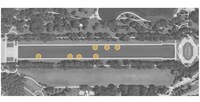
However, a thorough inspection by reporters revealed peeling in at least seven places along seams in the pool’s lining, contradicting the vandalism narrative. The material was applied in large, rectangular sections, suggesting potential errors during application. The locations of peeling were irregular, lining the longer sides of the pool, with some sections as large as six feet, and exposed concrete visible at points.
Technical Issues at Seams
Visual comparisons using satellite imagery and photos from the renovation showed all peeling occurred at seams between different application times. Four experts in waterproofing materials, with decades of experience and litigation expertise, reviewed the findings. They pointed to potential errors in application at these critical seams.
History of Sealing Failures
The Reflecting Pool lining consisted of two primary coatings by Rhino Linings. It involved an initial light blue epoxy base, Rhino 406, and a subsequent dark blue Pipeliner 5000 hybrid polyurea top layer. Records revealed overlaps in the application timing of these coatings, with significant delays, posing adhesion risks.
The analysis identified areas where the dark blue layer peeled, exposing the primer or concrete. Experts cited improper surface preparation at seams as a probable cause, suggesting sanding and angled cuts before applying new coatings to promote adhesion.
Lack of Evidence for Vandalism Claims
The White House and Interior Department disputed improper application claims without providing supporting evidence for vandalism. Industry professionals suggested various techniques could have mitigated issues at the seams, yet no evidence of special treatment application was visible in available imagery.
Contractor Statements and Accountability
Atlantic Industrial Coatings, responsible for the project’s execution, stated that identified issues were minor and did not indicate liner failure. The company acknowledged repairs were needed but maintained the waterproofing membrane remained effective. Despite additional challenges with algae blooms following the renovation, plans were announced for further repairs by the initial contractor, with financial and logistical considerations ongoing.
The renovation, part of preparations for a 250th-anniversary celebration, involved a no-bid contract to Atlantic Industrial Coatings, citing limited qualified contractors as a justification. Various parties, including Rhino Linings and involved contractors, did not comment or respond to queries from The Washington Post.