
Spanish Prime Minister Pedro Sánchez criticized European allies for their response to the migration crisis in Ceuta, describing it as “selfish, polarizing and unlawful.” He addressed these concerns in a letter to European Commission President Ursula von der Leyen. Sánchez denounced calls to suspend Spain from the Schengen area as being fueled by “prejudice, fake news, ignorance or political interest.”
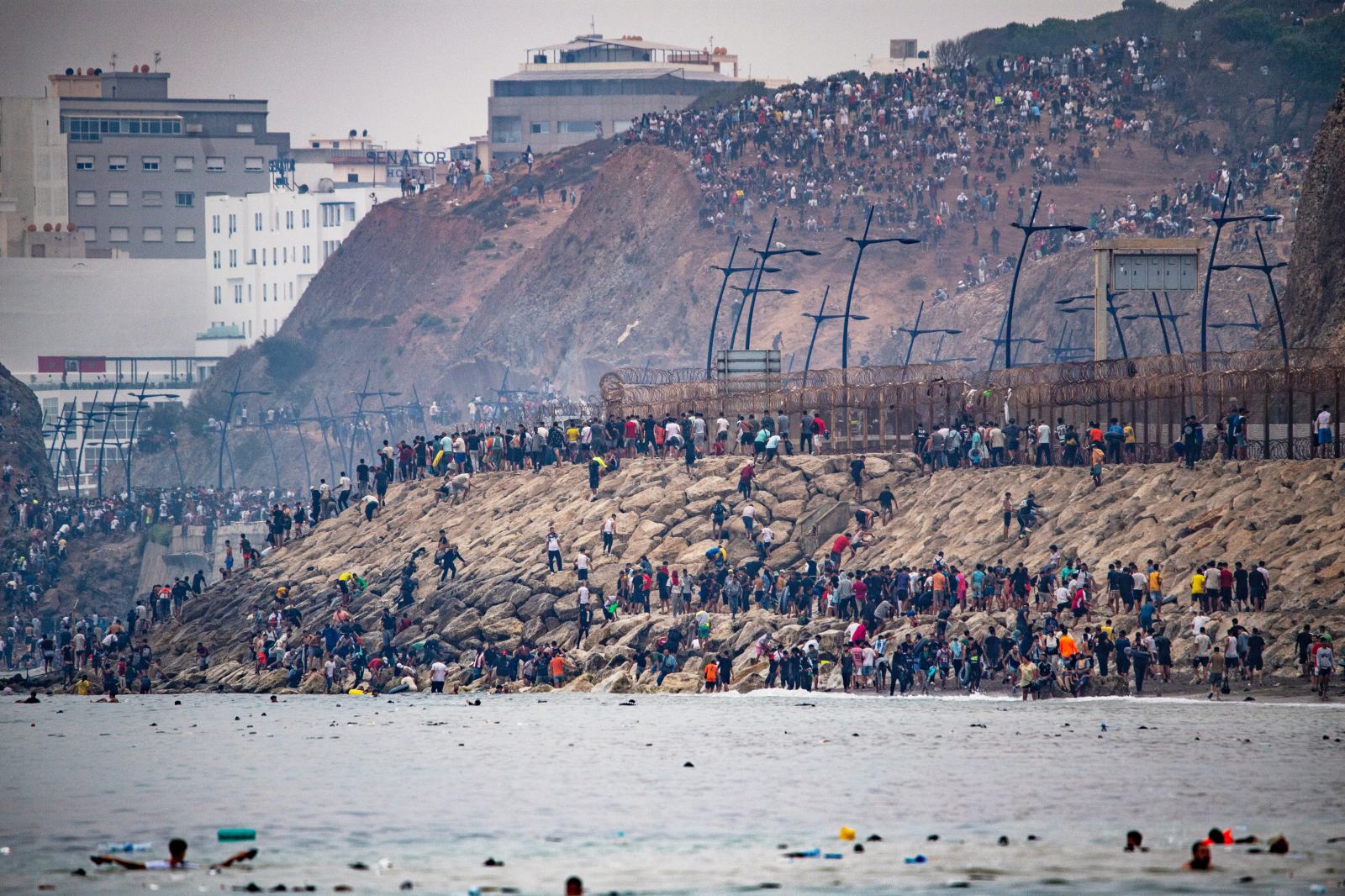
Recently, between 50,000 and 60,000 migrants crossed into Ceuta from Morocco. Most have now returned, according to Spain’s interior ministry. Tragically, the situation led to the loss of 67 lives, some due to drowning and others in a stampede near a breakwater.
Spain’s Measures in the Crisis
In his letter, Sánchez highlighted Spain’s rapid restoration of border control, its humanitarian efforts, and the return of nearly all the migrants who entered irregularly. He noted collaboration with Moroccan authorities but pointed out the lack of support from other European countries.
Italy, Finland, and Denmark suggested suspending Spain from the Schengen area due to this crisis, despite Ceuta’s geographical separation from mainland Spain. There is no evidence any migrants reached mainland Spain from Ceuta.
Sánchez’s Stance on Migration Policy
Sánchez defended Spain’s broader migration policies, stating they have significantly reduced irregular entries and strengthened the country’s position as a secure EU border. He contrasted Spain’s migration record with that of Italy, noting fewer irregular entries between 2021 and 2026.
He recalled Spain’s assistance in past European migration crises and urged for collective European action. Sánchez called for an urgent meeting of EU interior ministers to ensure shared external border security and a coordinated response to similar situations.
European Reactions
The migration crisis revealed European divisions on border enforcement and support for front-line states. Italian Prime Minister Giorgia Meloni advocated joint European action, stressing enhanced border security and smuggler prevention. Italy criticized Spain’s closed regularization program, though Spain refuted claims it encouraged trafficking.
European Commission President Ursula von der Leyen acknowledged the containment of the crisis by Spanish and Moroccan forces. She emphasized strong, yet improvable, European border control systems. France dismissed the idea of suspending Spain from Schengen, with French Interior Minister Laurent Nuñez affirming ongoing cooperation with Spain.
The Events in Ceuta
Mass migrant arrivals in Ceuta began following increased crossings from Morocco. Migrants entered via fences, around breakwaters, and by swimming. Ceuta, along with Melilla, forms the EU’s sole land border with Africa, often used as a migration route.
The large influx overwhelmed local facilities, leading to military and police deployment. Spanish authorities blamed trafficking networks, while critics linked the crisis to Spain’s regularization efforts, though this program did not apply to new arrivals. Spain installed a 500-meter sea barrier to prevent future crossings.
Soldiers remained on alert, aiding tired swimmers back to Morocco as construction continued on the new barrier.