
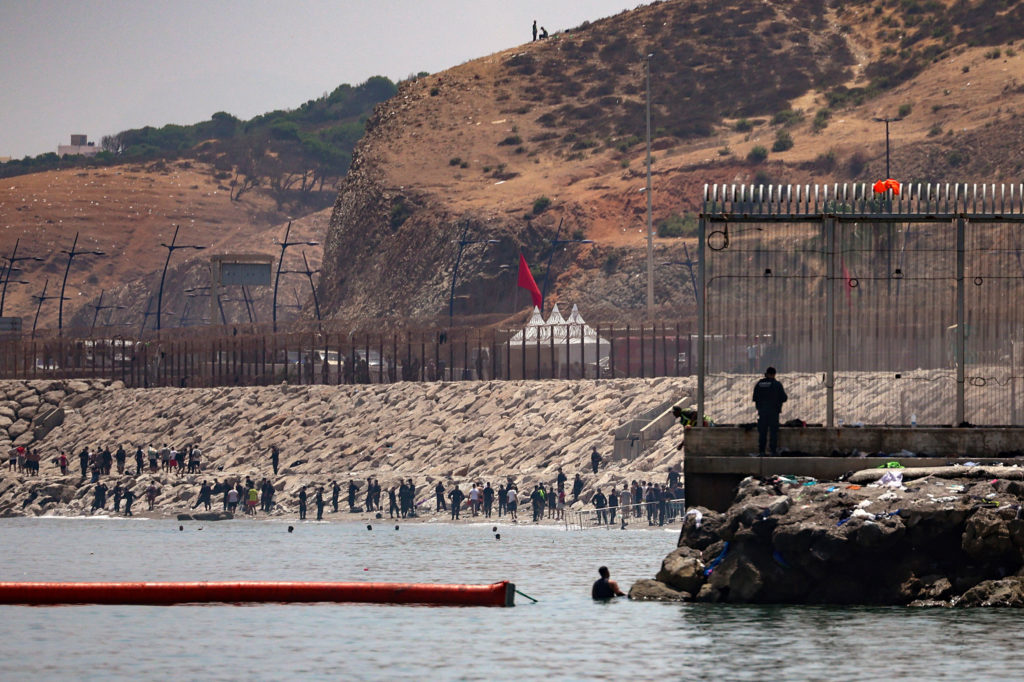
In Ceuta, Spain, a 500-meter-long barrier was installed on the sea border with Morocco after a recent massive influx of migrants. Tens of thousands entered the Spanish territory but soon returned to Morocco. Tragically, the Spanish government reported that at least 67 migrants died, some from drowning and others in a stampede.
The arrival of approximately 50,000 to 60,000 migrants between Thursday and Friday created a humanitarian crisis and sparked debates on immigration in Europe. Although many returned to Morocco, the events drew criticism of Spain’s government. Right and far-right politicians highlighted the dramatic images of crowds entering Ceuta, which is strategically located near the Strait of Gibraltar.
“We are relentless against those who break the law,” said Spanish Interior Minister Fernando Grande-Marlaska, emphasizing rule enforcement.
Spain’s current migration policy seeks to grant legal status to unauthorized workers to benefit the economy. This approach contrasts with stricter policies in other EU countries and the U.S. Prime Minister Pedro Sánchez criticized some EU leaders’ reactions, describing calls to suspend Spain from the Schengen zone as malicious and politically motivated.
Despite the crisis, Spain has experienced fewer illegal arrivals compared to Italy and Greece. On Saturday, a few migrants who swam to Ceuta’s Tarajal beach were returned by soldiers. Marlaska defended Morocco, asserting that cooperation between the nations helped manage the situation swiftly.
Calls for EU Coordination
Other EU countries requested urgent discussions and a coordinated approach. Leaders stressed the importance of maintaining migration control and preventing illegal entry perceptions. A letter from Denmark’s prime minister urged coordinated EU action, warning of potential repercussions.
The letter, signed by various EU leaders, requested a videoconference among interior ministers. Sánchez also requested such a meeting, emphasizing shared border security responsibility.
Italy’s response involved considering border control reinstatements for arrivals from Spain. Sanchez opposed such unilateral actions, calling for EU unity.
Migrants Return to Morocco
Hundreds of migrants began returning to Morocco on Saturday. Many described their experience in Ceuta as harsh, some leaving due to degrading treatment. Migrants navigated through wave breakers and a border breach to re-enter Morocco.
“I decided to come back on my own,” said Ouail Lamzeiz, a migrant, about his experience in Ceuta.
Despite their situation, migrants often slept outdoors and struggled for food. Some sought help for their journey back home, while others remained determined to stay in Spain despite the challenges.
Border Tension and Security Measures
Life along Ceuta’s border saw disruptions, as sunbathers mingled unconcerned with migrants heading for the border. Spanish forces increased their presence, while Moroccan security used strong measures to control the chaos.
Authorities deployed water cannons, tear gas, and other means to repel migrants. The aftermath was visible along the road from Fnideq, with damaged vehicles and lingering smoke.
“Life in this city has been disrupted as a result of the border incident,” noted Ceuta President Juan Jesús Vivas, highlighting regional impacts.
Some migrants, like Mohamed Hatri, expressed determination to stay in Ceuta, resisting pressures to leave.