
WNBA star Sophie Cunningham recently called for leadership changes, triggering protests outside a Brooklyn game. Activists and supporters of women’s sports clashed over the issue of transgender participation in female sports.
Tomi Lahren and her panel analyzed the growing controversy involving commissioner Cathy Engelbert.
Former WNBA player Sue Bird commented on the evolving role of politics in sports during an episode of her podcast, expressing that players wished they could focus solely on basketball. Bird explained that the players felt compelled to speak on political matters due to the intersection of issues.
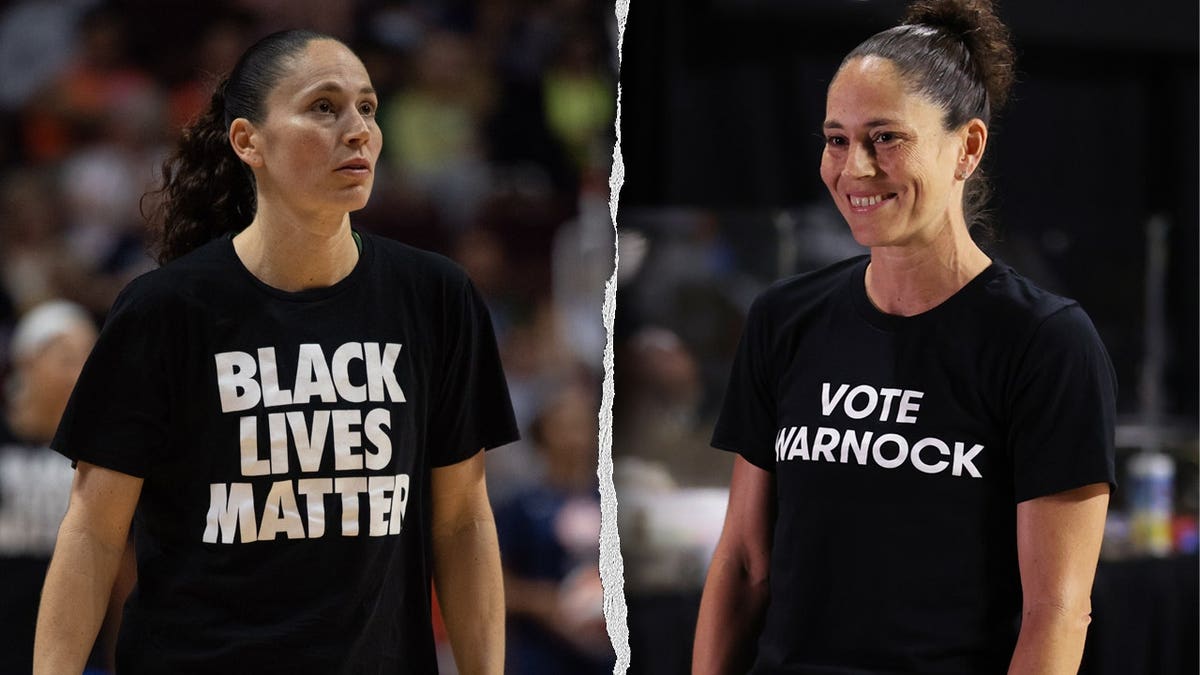
In 2020, Bird was a WNBPA vice president when the league emphasized social justice. The WNBA integrated messages such as Black Lives Matter into the courts and established movements dedicated to justice and advocacy. Bird and other players supported political causes, including a Democratic candidate for Senate through public demonstrations.
Despite Bird’s recent remarks suggesting players were forced to engage in political discourse, her past comments indicate otherwise. During a 2020 interview, Bird highlighted the importance of integrating social justice into the WNBA season, calling it a nonnegotiable aspect.
The WNBA players showed political support by wearing shirts endorsing Raphael Warnock during his Senate campaign against Kelly Loeffler, who criticized the league’s involvement in Black Lives Matter advocacy. Bird reportedly played a significant role in rallying support for Warnock.
In 2026, Bird expressed concern over the WNBA’s political involvement, questioning how the league could tackle intricate political issues swiftly. She suggested the league office received undue blame for such challenges.
The league’s engagement in political issues appears deliberate, rather than accidental, according to ESPN’s Ramona Shelburne. Shelburne emphasized that within the WNBA, everyone has the choice to participate in political conversations.
In summary, the WNBA and its players have actively engaged in political discourse, with Bird playing a key role both in shaping and critiquing this involvement.